Train Journey 5 – Few hours with Com. E.M.S.Namboodiripad

It was in the 1970s, probably in 1976.

P and T Co-ordinating Committee Mangalore was organising a big convention and they wanted former Chief Minister Kerala and veteran CPM(I) leader Com.E.M.S.Namboodiripad to inaugurate the same. I spoke to him and he agreed. Com.E.M.S. reached Calicut from Trivandrum by the early morning by train. He was accommodated in the Railway  room already reserved. The Non-Vegetarian restaurant owner came and told that he will arrange whatever food is required, instead of bringing it from the usual hotel in the town. He was specifically told that salt and chilli should be avoided as also oil.  EMS ate only very little quantity of  food. He smilingly confided to me that oil and salt were there and that probably the restaurant owner might have thought how a person can take food less these ingredients. The bill was paid with out complaining.

We boarded the train to Mangalore. I had booked  first class for him. I was in ordinary compartment.  In between, I went to his room and he was writing.  I did not want him to be disturbed. At Mangalore Railway Station, local P and T  comrades came with union flag and banner to receive us.  Com.EMS handed over me a cover addressed to the Chintha Weekly and asked me to post the same so that it will reach in time. He had written for his regular question and answers column in Chintha Weekly while in the train. Not a minute wasted. That was Com.EMS.

The meeting was held in the Head Post Office. Com. EMS inaugurated and touched upon general issues as well as on P & T issues. Looking to a photo hanging on the wall, EMS asked ‘whose photo’? I replied that it was the photo of Babu Tarapada Mukherjee, founder leader of Postal Movement. He commented ‘so you have your union leader’s photo also in the office?’  It was a fact that in many Post Offices, Tarapada’s photo used to be there. No body objected. It came to my mind that in all the India Coffee Houses in the country, Com.AKG’s photo will be in prominent place. He was the person who ensured existence of India Coffee Houses, through forming co-op societies, when the Coffee Board decided to close them all.

(I used to meet Com. EMS whenever he came to Calicut. I also used to visit him whenever I went to Delhi, during his stay there. He was always considerate. I will write about those meetings sometimes later).

11th July 1960 Strike – Federal Executive Resolution

” The Year 1960 will be remembered for many events, but the five glorious days of the Central Government employees struggle in the month of July will be unforgettable in the history of the India trade Union movement”  – NFPTE Federal Executive.


AUAB DECISION FOR OBSERVANCE OF BLACK DAY ON 16-07-2020- AIBDPA FULLY SUPPORTS AND EXTENDS SOLIDARITY

AUAB DECISION FOR OBSERVANCE OF BLACK DAY ON 16-07-2020- AIBDPA FULLY SUPPORTS AND EXTENDS SOLIDARITY AND REQUESTS ALL THE UNITS TO PARTICIPATE, WHEREVER POSSIBLE ACCORDING TO LOCAL CONDITION..

The AUAB meeting held yesterday the 06.07.2020 has decided to call on the BSNL employees to organise lunch hour black flag demonstrations on 16.07.2020. It is also decided that the employees should wear black badge on that day. The following are the agitational programme and charter of demands, as decided in yesterday’s meeting.

Agitational programme.

All the employees are called upon to wear black badge on 16.07.2020. Black flag demonstrations are to be organised by the employees during lunch hour on 16.07.2020, against the cancellation of BSNL’s 4G tender and against the road blocks being created in the rolling out of BSNL’s 4G services.
A memorandum is to be submitted to all the MPs during the period from 13.07.2020 to 31.07.2020, urging upon them to intervene in favour of BSNL’s expeditious rolling out of 4G network, as well as the early revival of BSNL.
Twitter campaign is to be organised on 05.08.2020, demanding immediate rolling out of 4G network by BSNL and implementation of the assurances given in the Revival Package.

Demands:

BSNL should immediately be allowed to roll out it’s 4G Services.
BSNL should take immediate actions to upgrade the 4G compatible BTSs.
Add on order for 4G equipments as per Phase VIII.4 tender should be issued immediately.
In the matter of procuring new equipments and upgrdation, there should not be any discrimination, between BSNL and other private telecom service providers.
The Government should immediately implement the decisions contained in BSNL’s Revival Package, like extension of Sovereign Guarantee for the issuing of Bonds.
Urgent measures should be undertaken by the BSNL Management for immediately improving the quality of service.
The Management should ensure that the salary payment of the employees is made on the last working of every month.
The Management should immediately take steps to ensure that the employees get cashless treatment from empanelled hospitals during Covid 19 pandemic. The Management should pay Rs.10 lakh to the family of the employees who die due to COVID-19. Based on the instructions issued by the DoT, the Postal Department has already introduced such a scheme to it’s employees.
(BSNLEU WEBSITE)

Train journey 4 – The story of an old umbrella.

1978 March 13. Journey from Trivandrum to New Delhi to attend National Council of Joint Consultative Machinery (JCM), Departmental Council. K.K.Express has started running and AC compartments introduced. I was in AC compartment, eligible for journey to attend JCM. Both Shri Kadannappally Ramachandran M.P. and Shri Henry Austin M.P. were in the same coach. Only limited number of flights were eligible for M.P.s in a year and they travelled mostly by trains, keeping the flight coupons for emergency purposes. That time, First Class and AC compartment were inter-changeable, but most preferred AC though the facilities in the First Class were more, but without AC. Since we were sitting nearby and time was available in plenty, we talked about so many things. Later they started speaking political issues, and I remained mum.

After some time, Henry Stephen gave me a small packet and spoke in confidence that he has got sugar problem and sometimes he may fall down or become unconscious due to low sugar. My job was to immediately put the sugar in his mouth. I readily agreed. I was full of tension, fearing that any moment he may become unconscious or fall down. For the entire journey, nothing happened and I was relieved.

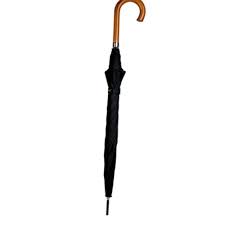
On the return journey, when it reached Ernakulam, Com. K.Prabhakaran, NFPTE leader, came to the compartment and handed me an old long handed umbrella with a big long handle. I thanked him. We spoke for some time about union matters and the train started. Co-passengers were curious. I told the story of the umbrella. I had forgotten the same in the train when I got down from train at Quilon on an earlier journey from Trivandrum. I phoned to Com.Prabhakaran from Quilon and requested him to go to the station at Ernakulam and collect it if it is still in the compartment which I had travelled. Prabhakaran collected the same. He repaired it, put a new handle and had brought to me now. Co-passengers joked why so much trouble for a very old umbrella, the telephone call from Quilon to Ernakulam etc might have been costlier than the old umbrella. No mobile phone at that time. (They might have forgotten that I was working in the telephones).

On reaching Trivandrum Railway Station, hurriedly I got down, went outside, got in an auto riksha and reached the Lodge room where I was staying. After some time, I remembered about the umbrella. Again, I have forgotten to take it from the train. It was very difficult to inform the same to Com. Prabhakaran, but as a matter of fact, I told him later.

When I told the matter to my wife, she was not at all impressed or surprised. She knew about my ‘great memory’ and loss of more than one umbrella, and money purse earlier. Still I can claim that I maintain that ‘great memory’, may be it has become ‘greater’.

Sustained Struggles to save BSNL -23 JAC Revives Agitational Programmes.

JAC Revives Agitational Programmes.

The Joint Action Committee which met on 9th June 2010 reviewed the latest developments including the assurances given by the Communications Minister, Secretary DOT and CMD BSNL on the strike agreement on 20-04-2010. The meeting expressed its utter disappointment at the lethargic manner in which the issues were being dealt with. Instead of 93.3 million GSM tender, only 5.5 million tender was floated. BSNL was compelled to pay spectrum charges of Rs. 10,186 crore and BWA spectrum charges of Rs. 8,313 crore. This will take away almost all the cash reserve of BSNL. 78.2% IDA was not paid to staff, though that was part of the agreement. Revision of Pension for BSNL pensioners with effect from 01-01-2007 also was not settled. Under these circumstances, the JAC decided to revive the agitational programmes. Accordingly the following programmes were decided:
1. Lunch Hour Demonstrations on 14-06-2010
2. Dharan at C.O/Circle/SSA levels on 16-06-2010
These programmes were effectively implemented.

The JAC leaders met the Secretary DOT Shri P.J.Thomas on 18th June 2010 and discussed, but none of the issues was solved. JAC met the full BSNL Management Committee on 21-06-2010 and had detailed discussion. No results.

Under these circumstances, the Joint Action Committee met again on 21-06-2010 and decided to ensure that maximum efforts should be made to save BSNL. The following action programmes were decided:
1. Post Card campaign – All employees should send Post Card to Dr. Manmohan Singh, Prime Minister with the following demands written on it:
Respected Sir,
Kindly ensure financial viability of BSNL by reimbursing 3G and BWA Spectrum charges of Rs. 18,500 crores paid by BSNL to enable it to implement the socio-economic commitment of the Central Government.
Yours Faithfully, Name, Designation, Signature.
These cards should be sent by all the employees by 5th July 2010, so that more than 3 lakh Post Cards will reach the Prime Minister.
2. A National Convention to be held at New Delhi on 21st July with massive participation of employees. The JAC decided to hold similar conventions in major cities also.
3. Meetings with Finance Minister, Communications Minister and Prime Minister to be sought for pressing our demands.
4. JAC should be formed at Circle, SSA and Branch levels immediately to organize the progammes effectively and successfully.
A detailed circular was issued by the JAC signed by Coms. V.A.N.Namboodiri (Convener), P.Abhimanyu (BSNLEU), Prahlad Rai (AIBSNLEA), S.P.Sharma (BSNLWRU), (FNTO), (NFTE), G.L.Jogi (SNEA), D.P.Patwa(AIBCTES), Suresh Kumar (BSNLMS), Rana Pratap (BEA BSNL), R.S.Yadav((ATM), N.D.Ram (SEWA BSNL) and Ram Kishun Ram (BTU BSNL)

Meeting with Communications Minister A.Raja on 24-06-2010 at Coimbatore

With a view to stop BSNL’s actual payment of Rs. 8,313 crore towards BWA Spectrum charges, the JAC leaders held an emergency meeting with Communications Minister A.Raja, who was attending the World Tamil Conference at Coimbatore on 24-06-2010. Coms. V.A.N.Namboodiri, Convener, P.Abhimanyu (BSNLEU), G.L.Jogi (SNEA) and Prahlad Rai (AIBSNLEA) attended. The following issues were discussed.
1. Procurement 10 million mobile equipment
2. Reimbursement of Rs. 18,500 crore to BSNL which was the charges paid by it to Government for allotment of 3G and BWA Spectrum charges.
The meeting was cordial and the Minister agreed to favourably consider the same. (To be continued).

P and T TU Movement in India during II World War and thereafter (1939 – 1954) ( by B.N.Ghosh ) CHAPTER : XIV FIRE SPREADS

CHAPTER – 14 FIRE SPREADS

The Joint Council of Action in Calcutta felt necessity that with a view to making the strike a short lived one, it should spread throughout the country so that the government be forced to come to them. Accordingly, Sri.Keshab Ganguly and Sri. Sisirlal Sen Gupta , that two energetic members of the executive committee of the reorganization party were sent to Bihar and Uttar Pradesh. They left to Calcutta on the 30th dressed as up-country-men with fictitious names of Kesho Singh and Debi Singh .They addressed meetings in Hindi at Patna , Banaras ,Allahabad and Agra and tried to impress upon the P&T workers on the need of joining the struggle. As the All India Telegraph Union had already served the Government with strike notice and Telegraph workers of Bengal and Assam were already on strike, it was easy for Sri. Ganguly and Sri. Sen Gupta to persuade the Telegraphists to join the strike. The Telegraphists of Agra and Lucknow were already on strike, credit for which goes to comrades B P Banerjee and S N Misra, and as a result of this new effort, the strike is spread amongst the telegraph office staff of Bihar and most parts of UP. It is worth mentioning that wherever the Telegraphists under the A.I.T.U has gone on strike, those under I.T.A left their association and joined the strike.

The Postal Class III Employees of Patna and Lucknow had gone on sympathetic strike . The RMS P Division workers of Patna under the able leadership of Comrade. G.P. Gopal however became full pledged strikers and where on strike for full 8 days under protection of the Bihar Provincial Trade Union Congress with which the RMS P Division Union, a branch of the All India Postal and RMS Union , got itself affiliated . The strike later on spread amongst the RMS workers of A Division at Allahabad. Besides, Com. V.G.Dalvi, Com Dharia and Susil Kavelkar took active part in conduction the strike at Bombay. Com. P.M/Krishnan was at the helm of Strike Committee in Madras while Delhi strike was conducted by Com. Y.D. Sarma and by Com.Mehaboob Hussain, Vice President of Delhi Provincial branch of the Post Men Union. Comrades S P Anand and Mohd Hayat , Vice President and Secretary of Punjab and N.W.F Province , conducted the total strike in that Circle. The specialty of strike in Calcutta and Bombay was that not a single postman and lower grade staff had attended the office from the 11th July onwards.

The strike at Delhi was also virtually complete. In New Delhi, out of 156 postmen only 2 were at work on the first day and in Delhi, out of 184 postmen only 10 attended duty on the first day and on subsequent days there was further dwindling down. The over-whelming majority of post man and lower grade staff of Bombay, Madras, Bengal and Assam UP, Punjab and NW FP Bihar and C.P joined this unit struggle which was a struggle for existence.

The Government false prestige stood in their way to agree to come to settlement with the Post Men Union , but from the 21st midnight, from whence the entire P & T workers of all arms of service of Bengal and Assam struck work, the situation completely changed. Sri. Krishnaprasada, ICS Director General of Post and Telegraphs left Delhi and reached Pune on the 22nd and met Sri B G Kher, the Chief Minister of Bombay State and discussed with him the question relating to bringing about an amicable settlement between the Government and the strikers. (To be continued)

Train Journey 3 – Journey with a Celebrity.


After being elected as the Kerala Circle Secretary of All India Telecom Employees Union Class III (NFPTE) in 1977 Kottayam Conference, I was nominated to the Circle Council of Joint Consultative Committee (JCM), of STR /STP Circle  with  head quarters at Madras. The meetings were expected to be held every three months, but some times it may be delayed. In these meetings, as a Member, I was to participate.

It was for such a meeting I was going to Madras. Since JCM Members are eligible for I Class travel, I had booked ticket in first class. AC compartments have not been introduced. I was in waiting list, even then I was allowed to travel in first class. It was a four berth coupe. By about 10.00 pm all were ready to sleep. Since I had no berth, I spread a sheet on the floor and started to lie down.

There were two Europeans, one gent and one lady in the compartment, may be husband and wife, may be not. But they told me that they will sleep in one berth (the first class berths are wide enough) and I can sleep in the other. I was surprised by their generous offer and of course accepted and thanked them.

While returning from Madras next day, I was alone in the first class compartment till the last moment. All of a sudden, there were a lot of people rushing to the compartment with much luggage and a bundle of  journals. Except one person, all others left before the train started. With surprise I could recognise that my co-passenger was none other than famous cine star Shri Prem Nazir. The other two berths were vacant. Probably he might have booked them also, I don’t know.

A chance in a life-time. I introduced myself and we started discussing many matters. He was going to Calicut for some programme. I could understand that he was interested in reading. Then I asked him whether there is any intention on his part to enter in to  politics, as reported by the news papers at that time. He laughed and told me ‘no such plan’. He added that Kerala is not like T.Nadu, where many cinema stars entered  politics.

In the morning I got down at Tirur to attend a meeting there, after saying good bye to the actor.

Train Journey 2 – Jhansi Fort and Lepers’ Colony

1966 March 12. Travelling to Lucknow through Madras – Jhansi to participate in the All India Conference of All India Conference of E.III Union (NFPTE) at Lucknow along with Com.K.Bhaskaran Nair, leader of NFPTE at Calicut. Since no direct train from Kerala, we went to Madras first. Only one train from Madras to Delhi route – Grand Trunk Express. No reservation since it will take at least one day in queue to reach counter. Even then no chance. As usual, we will travel in ordinary compartment. We managed to get in the compartment with our hold-all in the heavy rush, but failed to get seats. Started travelling by standing.
At Vijayawada, got down to platform, took meals from Railway Canteen and returned, but again no seats. In the night also we had to continue standing even without moving space. No sleep. Exhausted completely. Reached Jhansi in early morning of 15th at about 04.00 hours. We got down there with the intention to visit Jhansi Fort, take a bath and then proceed by next available train to Lucknow. Since we had unreserved ticket, can travel by any train.
It was winter and very cold. We took bathing towels, soap etc, put luggage in the locker room, had very sweet hot tea ( almost complete milk ) and hired a tonga to go to the Jhansi Fort. By about half an hour he stopped and told that we have reached the Fort. Got down and carefully looked the surroundings. It was still dark, but we could see some old buildings nearby in the dim light. We entered the premises, went inside the building. Rooms were large, nobody was there, but very foul smell, beyond toleration. Dirty clothes bundled here and there. Total atmosphere made us sick, we rushed outside. By the time, sun has risen and there was light. We were sure that this was not the Jhansi Fort, but some other old dilapidated fort or big house.
We started walking back to the road. The compound was dirty, muddy rain water was every where. Near the dilapidated gate to the road, there were about thirty men and women with disfigured bodies in rags watching us with anger and distrust. They might have thought that we are thieves and had come to steal their possessions. We understood to our dismay that this was a lepers’ colony and that we are trapped. To reach the road we have to pass through the gate where they stood. If we are caught and kept there? A life with lepers?
Bhaskaran Nair was a man of action, quick to find out answers in any tricky situation. He told that we will calmly walk up to the gate with out showing any fear and once near, run with all our might to the road. That exactly is what we did. When we started running they were startled and we could pass them without difficulty. Anyway, they could not have outrun us. The nightmare was over.
We got another tonga and proceeded to the real Jhansi Fort. We reached there shortly. A major portion was occupied by military, but we could visit other portions of the fort. We found out a small temple and a tank deep down inside the fort. We got down in the hope of taking a bath, since we were feeling very dirty not only because of the coal dust of the train, but also of visiting the lepers’ colony. There was a poojari in the temple. He told that only the royal family can take bath in the tank. We told him that we have come far from Kerala to visit the temple and that we can have darshan only after taking bath and offered him dakshina. He was happy, allowed us to bath and then we had darshan. We also were happy.
We returned to the station, had breakfast and started to Lucknow by the next train.

60th Anniversary of the Glorious 5 Days Strike of CG Employees in 1960.

July 11th, 2020 is the 60th anniversary of the start of the Historic Five Days Strike of the Central Government employees in 1960.

The strike was for acceptance of Need Based Minimum Wage per the 15th Indian Labour Conference approved formula as also for grant of automatic DA whenever the cost of living index is increased, as demanded by the unions. It was also against the retrograde recommendations of the II Central Pay Commission which only denied the justified demands of the workers and the unsympathetic stance of the central government.

Under the Joint Council of Action of the Central Government Employees Federations (AIRF, AIDEF, Confederation and NFPTE), the biggest Indefinite Strike in independent India started on the night of 11/12th July 1960, the anniversary of the 1946 P and T Strike. The government refused to negotiate despite continued efforts of the JCA, as also many Members of Parliament including Shri Feroze Gandhi, M.P.( Husband of Smt.Indira Gandhi). The government was adamant. Prime Minister Pandit Jawaharlal Nehru called the strike as ‘Civil Rebellion’ and utilised the entire government machinery to crush it. Essential Service Maintenance Ordinance (ESMO) was promulgated and thousands of workers were arrested, convicted, dismissed, suspended, terminated and charge sheeted. All India leaders were arrested and put in Tihar Jail. NFPTE Secretary General Com. P.S.R.Anjaneyulu was paraded through the streets of Delhi while sending to Tihar Jail. Never before India has seen such brutal attack on any strike in the country, not even in 1946 Postal Strike, when the British were the rulers.

It is to the credit of the workers and their loyalty to their organisation that the strike continued for long five days, despite severe repression and manhunt. The entire Railways, Postal and Telecom services- all were all badly affected. Unable to continue against the brutal attack of the government and victimisation, the strike was called off on the fifth day.

5 Railways workers in Dohad were killed by police firing. They are Coms. Ranjit Singh, Sakharam, Sitaram, Kripa Shankar and another comrade whose name is not known. Two comrades in Kerala, Com.Ekambaram from Telephones Palakkad and another Comrade from Trichur Postal Division, whose name is not known, committed suicide unable to face the victimisation and termination from service. Many workers were punished with rigorous imprisonment. Public, trade union leaders and outsiders were arrested for supporting the strike. Recognition of the federations/unions were withdrawn.

The workers faced these attacks with full confidence in their organisation and leaders. They knew that there is no other way to defend their rights and achieve justified demands. They saw the most cruel face of the so called ‘Socialist Pattern Government’.

PTTI and many other foreign trade unions as also the trade unions in the country supported the strike and demanded the government to vacate victimisation.   In the Parliament, Nehru government was put on the dock by eminent Members of Parliament like Comrades A.K.Gopalan, S.M.Banerjee, Nath Pai and many others, who demanded justice to the workers and vacation of all victimisation.

It took more than three years for the vacation of victimisation and re-recognition of the unions and federations. But the scars remained for a long time.

Though crushed, the 1960 strike was not in vain. For that matter, no struggle is in vain. The government was compelled to act against the price rise, appoint two Committees one after another to consider the demand of DA and has to start discussion with the unions on the constitution of negotiating machinery, the Joint Consultative Machinery(JCM).

As a participant of the historic strike, I have my own experiences, which I may narrate some time  later.

The 1960 strike has many lessons for the working class. The determination, dedication and sacrifice of the leaders and workers who were part  of the great struggle will ever be remembered.

The Central Govt. employees are once again on the struggle path. The working class are on struggle against the curtailment of trade union and labour rights, imposition of more working hours, privatisation of Public Sector Units etc. etc. Utilising the Covid situation, Mody Government wants to steam roller its anti – people policies.

On this 60th anniversary of the epic strike of 1960, Red Salute to all the participants of the strike and especially to those who sacrificed their lives in the struggle! 1960 Strike has given the message that the workers will never surrender to the anti-worker policy of the government.

Homage to Com.Jyoti Basu on 106th Birth Anniversary!


8th July 2020 is the 106th Birth Anniversary of Com. Jyoti Basu, the veteran leader of the CPI(M) and Chief Minister of W.Bengal for long 33 years from 21-06-1977 to 05-11-2000. He was one of the PB Members of the CPI(M) from its formation till his death. He was one of the founders of CITU and was its Vic-President since its inception.

Com.Jyoti Basu, as a trade union leader was closely connected with the trade union movement in P and T. He has mentioned about the 1946 Postal Strike and the mammoth Rally held in W.Bengal on July 29th 1946 in support of the strike called by AITUC, the only national trade union on those days. He inaugurated the P and T House, union office of NFPTE, Kerala  in Trivandrum on 27th September 1989. He attended and addressed many Conferences of the  NFPTE Unions.

I remember the opportunity I got as the General Secretary of the BSNLEU to meet him in a Conference and discuss with him about the telecom issues and request him as the Chief Minister to ensure telecom services in the government offices in W.Bengal fully from the BSNL. He was very sympathetic and assured to do the needful.

He was one of the tall leaders of the Left in the country. The opponents were so jealous and afraid of his popularity that they made more than one attempt to murder him, but failed. He was a the leader who effectively and strategically put an end to the Congress misrule in W.Bengal.

Red Salute to Com. Jyoti Basu on his 106th birth anniversary!