Train Journey 21 – U.P. Tour and theft of mobile

As General Secretary BSNLEU, I was on continuous tour to the circles, one after another in preparation for the first Membership Verification in 2002, as also other office-bearers. Tour of East U.P. Circle from 2nd to 5th July in a Tata Sumo. Covered 12 SSAs including Sultanpur, Rae-Bareli, Allahabad, Pratapghar, Joanpur, Azamgarh, Mau, Deora, Gorakhpur, Bashi, Gonda and Lucknow within four days, along with veteran leader Coms.R.S.Yadav, K.D.M.Tripathi, All India Vice-President, O.P.Verma, Circle secretary, K.R.Yadav and others.

The last meeting was at Lucknow and everybody were dead tired. The leaders accompanied me to Lucknow railway station to send me off to Delhi. Since the train was to arrive at 22.00, and all were very tired, I told them to go home and rest. The train Vyshali arrived at about 22.30, half an hour late. Though the platform was long, my compartment was beyond the platform.There was rush and push, and I also managed to climb the steps of the train to get in. The suit case was in my hand and the ruskin bag was hanging from my shoulder. I thought that somebody was trying to snatch my bag and I firmly held the same.

After reaching my berth, I checked my pockets and found that the purse was safe there. But when I looked at the  ruskin bag, it was cut neat, probably by a blade. I checked inside and realized that my  mobile phone has been stolen. It was purchased in 2000, a Motorola with a small antenna, that was one of the best that time. I had put the mobile in the bag before getting in to the train. How the thief knew that the mobile was in the bag?

The train was still in the station. I put the suit case in my berth, asked another passenger to keep a watch and rushed to the platform. I met a police constable and reported the theft. He told me that he is on train duty and that  I have to complain to the police station which is in the first platform since the theft was in the platform itself. The train was in 7th platform and there was no time, no question of going to the first platform. The train would depart by that time.  I got in to the train and it moved.

I went to sleep clutching my suit case and bag. By about 01.00 hours the police constable came, woke me up and told to accompany him to the ‘train police station’. I accompanied him to the next compartment, where three police constables including one SI was there. They asked me about the theft and I told them in detail. Then I was asked to give a written complaint. I went to my berth, tore some sheets from the diary and wrote a complaint and went to the ‘police station’ and gave it. It was in English. They  said that the complaint should be written in Hindi only. Why? Any way I went back to my berth, managed the complaint in Hindi, again went to ‘police station’ and submitted. They prepared an FIR in Hindi, which took a very long time, in between asking me many questions.  It was almost early morning by the time I could return to my berth. Fortunately, my luggage were safe. Reached Delhi by 07.00 hours. As advised by the ‘police station’ I filed a copy of the FIR at Delhi Police Station.

Mobile phone has become indispensable. Bought a new instrument. Since I had the FIR with me, mobile company did not charge for the SIM card. Later I found out that even if there is no chance for recovery of the lost mobile, it is better  to file FIR, since you will not be responsible for any criminal act done through that particular sim by the thief.  Now one could block the instrument as well as the sim if they are lost, making it useless for the thief.

Sustained Struggles to save BSNL -25 Historic Parliament March on 15th November 2010 and 3 Days Strike from 01-12-2010

Parliament March on 15-11-2010

In preparation for the three days strike from 1st  December 2010, the Joint Action Committee organised a massive Parliament March on 15th November. Thousands and thousands of BSNL employees participated in the March which started from Bharat Sanchar Bhawan, the corporate office of BSNL. The March was stopped at the Parliament Street by the police, where a huge rally was held with the workers sitting in the street. Com.Basudev Acharya, M.P., who was always in support of the BSNL workers inaugurated the March. Com.V.A.N.Namboodiri, Convener, JAC spoke in detail about the details of the demands of the workers and against the anti-worker decisions of the government and the necessity of making the 3 days strike a complete success. Com.P.Abhimanyu (BSNLEU) G.L.Jogi (SNEA), Prahlad rai (AIBSNLEA), C.Singh (NFTE) and others addressed.

Strike Notice issued.

The Strike included the following demands: 1. Refund of Rs.18,500 crores to BSNL paid to govt towards 3G and BWA Spectrum charges. 2. 78.2% IDA merger for wage revision wef 01-01-2007. 3. Immediate settlement of ITS Group A absorption issue. 4.No disinvestment / IPO of BSNL. 5. No VRS  6. Procurement of adequate mobile equipments. 7. No unbundling of last mile copper cable 8. Implement government’s commitments on financial viability of BSNL given at the time of corporatisation by continuing exemption from Licence Fee, and continuation of ADC, USO Fund. 9. Effective and expeditious implementation of programmes and projects like ERP, NGN etc. Immediate fool proof measures for smooth change over to CDR. 10. Government departments and PSUs should be mandated to to take telecom services from BSNL / MTNL only. 11. Revision of Pension on IDA along with wage revision. Immediate revision of Pension revision of pre – 2007 BSNL retirees.

The Strike Notice was signed by V.A.N.Namboodiri, Convener, JAC, P.Abhimanyu (BSNLEU), C.Singh (NFTE), Suresh Kumar (BSNL MS), N.D.Ram (SEWA BSNL), G.L.Jogi (SNEA), Prahlad Rai (AIBSNLEA), S.C.Gaur (BSNLOA), Anil Kumar (BSNL ATM), K.Vallinayagam (FNTO), V.Subburaman (TEPU), Raj Kishore (WRU), R.K.Ram (BTU BSNL). A circular with details of the demands were circulated.Wall posters were printed and circulated in large numbers. Parliament members raised questions in the Parliament on the various issues mentioned in the strike notice. Press releases were issued by JAC which were prominently focussed in the news papers.

Historic Strike – Magnificient Achievement.

The 3 days strike started on 1st December 2010. BSNL offices and exchanges in the country were closed without any body attending. It was a complete strike. The press gave good publicity. Sister  unions like Confederation, NFPE, AIIEA, BEFI and others expressed solidarity and support. BSNL workers going on strike to defend the company was well received by the public.

BSNL Management as well as the government did not expect such a full strike. The Secretary DOT called the unions for discussion on 2nd December, the second day of the strike. CMD BSNL was present. After the discussion with DOT a meeting was held with the BSNL management. Agreement was reached on the demands at about 21.30 hours on the same day.

The official minutes of the meeting and the agreement are given below: (BSNL No. BSNL/7-15/SR/2010 dated 02-12-2010). Representatives of BSNL Unions / Associations met with Secretary (Telecom), DOT today where CMD BSNL was also present. A follow up meeting with BSNL Management under the chairmanship of CMD, BSNL  Shri Gopal Das was also held at 15.00 hours on 2nd December 2010 in representatives of JAC as well as from the management were also present.

In the course of the meeting, the unions emphasised on the following issues: Procurement of GSM equipment. Benefit of 50% IDA merger in pay fixation.

The Management side clarified that action is under way for procurement of 5.5. million lines to meet the immediate demand  for North and East Zones. In addition, a proposal is also being considered to procure 15 million lines for the next year.

On the issue of benefit of 50% IDA Merger in pay fixation (effectively amounting to 78.2%) CMD BSNL informed that the case has been deliberated in the 130th meeting of the Board held on 25-08-2010 wherein the Board taking in to account all the pros and cons decided to defer the implement of the benefit of 50% IDA merger for pay fixation till the company’s financial position improves considerably and there is  visible signs of recovery. On further insistence by the JAC members, CMD requested the union leaders to provide fresh inputs on this issue which could be examined by the management before submitting the case to BSNL Board for its consideration. On the remaining issues, the position is given in Annexure – 1

With this , CMD BSNL again requested the JAC members to withdraw its ongoing strike, to which the JAC members agreed.

The main point of the agreement were as follows: 1. No disinvestment / IPO for the present. 2. No unbundling of last mile copper. 3. Pension Revision note will be resubmitted to Cabinet for decision immediately. 4. ITS Absorption issue – Cabinet Note circulated to related Ministries. 5. Adequate procurement of mobile equipment will be expedited. 6. 78.2% IDA fixation will again be discussed in BSNL Board. 7. Projects and Programmes of development will be taken up. 8. Commitment of financial viability will be taken up with the government.

The agreement was signed by all the General Secretaries and Convener JAC, who have given the strike notice. Thus the historic strike was called off after the second day. The BSNL workers were happy that the management and DOT was compelled to agree to most of the demands raised by the JAC. A circular was issued by the Convener JAC and General Secretaries congratulating the workers for the excellent strike and assuring that JAC will continue the struggle for implementation of the agreement.  (To be continued).


Thanks Comrades!

I am overwhelmed by the hundreds of telephone calls and greetings on social media wishing me on my 82nd birth anniversary on 24th July 2020. (Many comrades have wished me on 12th June also since that is the date of birth in official records done by mistake at the time of admitting in school and which I missed to got changed later). I have completed 60 years in trade union field starting with participation in the glorious five days strike of CG employees in 1960, which was ruthlessly crushed by Jawaharlal Government.
Since the later part of 1970s, I have been functioning as an office bearer of the all India Union, as Asst. General Secretary, General Secretary, President and Patron respectively and now as Advisor of AIBDPA and Patron of NCCPA. Continue as President of BSNLCCWF since its formation in 2006. Now the SCFWA in
Kerala has honoured me by electing as its President in the last Conference. Our comrades, colleagues, friends and of course my family, have extended all support, encouragement and help in discharging my duties. I thank all of you for the love and affection shown to me during all these years. I assure you that I will to continue my responsibilities and duty to the society as before. Red Salute Comrades!

From the Past – Punjab Tour in 1995

From the Past – Punjab Tour in 1995

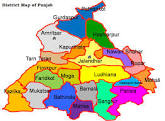
It was the time after Thiruvananthapuram All India Conference of E.III Union (NFTE)in 1994. Membership Verification of unions for recognition was in the agenda. Government, DOT, NFTE combined team attacking E.III Union and mass transfers of its office bearers at all levels. Hectic tours being organized by union. Following is an example of the tour programme organized in Punjab during September 1995.

24th.Sept. – Started from Delhi at 13.00 hours – Bus from ISBT to Chandigarh. Reached Chandigarh at 19.00 hours. Circle Secretaries Com. H.S.Dhillon (E.III) and R.L.Moudgil (T.III), Gurcharan Singh, Vice President received at Bus stand. Discussion about tour. Stayed in office.

25th – Met Com. Baldev Singh, CC Member, CPI(M). At 08.00 started by Jeep along with Comrades Gurcharan Singh, H.S.Dhillon, R.L.Moudgil and Swaran Singh. Driver also union comrade. Reached at Ropar, a small exchange. Discussed with the comrades there, explained certain issues. Next meeting at Navshahar. Received by Coms. Mahajan and Banka DS. Small meeting. By about 15.00 hours Hoshiarpur. Two brief meetings at TRA and Exchange / DMT Office. Next stop at Pathankot, where Railway Comrades became martyrs in 1968 September 19 strike. Meeting held at residence of Com. Mahajan DS, T.III. since opposition by officers at office. Stay and food also there.

26th – However a meeting organized in front of Pathankot exchange. A meeting at TRAO office. Com. Satpal Singh reached. Meeting first at Gurudaspur and then at Batala. Stay at Satpal Singh’s house.

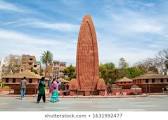
27th – Early morning started for Amritsar. City of Golden Temple and Jalianwala Bagh. Though members are very less, held a meeting at Amritsar. OPG’s followers tried to stop entering the office. Myself went to Trunk room and spoke for about half an hour. Meeting at Telegraph Office also. The to Jalandhar. Big city. Meeting there also. Stayed at office.

28th – Started for Ludhiana, big manufacturing city. Separate meetings at GMT(O), TRA etc. Very big meeting at telephone exchange. Place of Com. Gurcharan Singh, All India Vice-President. That of Coms. Balbir Singh and Balbinder Singh. Next meeting at Moga participated by a large number of workers. Dt. Secretary Com. Jaswant Singh. Two more meetings at Faridkot and Firozpur. Stay at Kamaljit Singh’s home at Moga.

29th – Continues journey from Moga and attended meetings at Kotkapura, Muktsar, Malot, Bhatinda and reached Sangrur. Stay at office.

30th – Very good meeting at Sangrur in the morning. Next meeting at Patiala. Though the fort of the revisionists, held meeting. Questions answered. Many joined our union. Returned to Chandigarh in the evening. In the night by bus to Delhi and reached next day morning.

Almost all the important centres covered in Punjab in seven days and meeting held at about 30 centres. Sometimes lunch, otherwise snacks or fruits to save time. Hectic tour. Punjab which was a strong state of revisionists, within years came to our side. Thanks to the Punjab Comrades!

Train Journey 20 – Psoriasis and KSO Coltar Soaps

Train journey from Calicut was first through Madras only. Then through Jolarpet touching Vijayawada, Itarsi, Jhansi, Agra etc. A regular point where I got down was Itarsi junction. One or two comrades will be waiting there, near the place where my compartment will stop. I will be standing at the door with a package which will be handed over to them. Since the train will stop a few minutes, we will have tea, discuss union matters. Signals on, I get in to train.

The package was two dozens of Coaltar (carbolic) Soaps manufactured by the Kerala Soaps and Oils Ltd, the state owned soap company with HQ at Calicut. It was intended for Com. S.R.Nayak, Asst. General Secretary and Circle Secretary of AITE Union Class III, M.P.Circle, who was staying at Jabalpur. He was the comrade, who fought against the revisionists and built up a strong base for the progressives in M.P. His struggle in the union for correct policies is an epic itself.

Why Coaltar Soaps for Nayak? He was one of AGS of E-III elected at Bhopal AIC in 1991, in which I was elected as President and started staying along with Com. Moni Bose, GS. Com. Nayak as AGS used to come at CHQ now and then and help in the work. Later, other AGSs like Com.M.N.Reddy, P.Abhimanyu, P.Asoka Babu, P.Appaji, Debashish Dutta Gupta and many other senior comrades had been at HQrs helping in the union functioning. It is to be mentioned here that all of them came taking their own earned leave and spending all expenses from their own pocket. Union could not bear the expenses being in difficult financial position. No fund was handed over by the defeated leadership. For me, their presence was helpful in more than one way. I am a poor cook and depended mostly on hotels. Breakfast will be from a nearby small tea shop with four pieces of bread with heavily coated butter. Lunch from nearby dhaba, mostly Chole Batture, very tasty but full of oil. Both were not good for me, but somehow managed. Sometimes when I get time, I will cook rice, vegetables, chilly, etc all put together in the cooker, boil it and eat with curd and salt. Not very tasty, but good for health. When our comrades will be there, they will prepare tasty breakfast, lunch and dinner. Com. Abhimanyu used to make excellent tasty food.

Com. Nayak was in Delhi during his turn at HQrs during the 1990s. He had forgotten to bring bathing soap. I had additional coal tar soap of Kerala Soaps and I gave it to him. After some days he confided to me that he is feeling better after using the soap. He was suffering from actute psoriatic arthritis which will cause much itching, swelling of joints,damage to nails etc. After using the soap,the pain was reduced and feeling better. From then on whenever, I return from Calicut, I used to bring the soaps for him which will be collected at Itarsi by his comrades.

In between, Kerala Soaps and Oils Ltd. was closed due to loss. I used to purchase the soaps from Factory itself, which was near my house at Vellayil. Since it was closed, I went to the shops and purchased. Then again I started to go to many shops to purchase whatever they got. At last I again went to the factory, with help of some union comrade, collected whatever old dry soaps were there. That was the last time I could supply the soaps to Com. Nayak. I spoke to Com. Suseela Gopalan, State Minister, who assured that every effort is being made to reopen the factory.

In between I took to Nayak some coaltar soaps from a Mangalore factory, but it did not clinch. The ingredients may be different. On way to Cuba to attend WFTU Conference, we delegates from India had a stop at Jordan for one day. I bought soaps and creams made from the mud and waters of Dead Sea which is world famous for skin diseases. I gave them to Com. Nayak, but they also were not beneficial. My journey to Calicut also reduced after my wife came to Delhi after retirement.

Com.Nayak passed away on 8th August 2013 at AIIMS at New Delhi after aggravation of the disease. His sacrifice to the union can not be overestimated.

P and T TU Movement in India during II World War and thereafter (1939 – 1954) ( by B.N.Ghosh ) CHAPTER : XX – BIRTH OF NFPTE

CHAPTER – 20
BIRTH OF NFPTE
Since 1953 onwards events took a turn. The U.P.T.W under the leadership of Com.K.Ramamurti was already relentlessly trying for realignment and Shri.Dalvi, leader of the Postmen Union was also ever in favour of realignment and establishment of one organization of P&T workers. The All India Conference of the U.P.T.W which met at Nagpur from the 25th to 30th October, 1953, was attended by Shri.Dalvi and Shri. W.B.Kulkarni, a representative from Bombay branch of the Telegraph Traffic Staff Association (Ministerial). In the open session of the Conference there was thread-bare discussion on realignment and a decision was taken to begin with effecting realignment with renewed vigour. The All India Telegraph Union which was all through giving stubborn opposition to any unity move ceased to do so since the headquarters was transferred to Delhi and Shri. P.S.R.Anjaneyulu became the General Secretary, who in right earnest began working for unity move. Shri.Birendra Nath Ghosh .M.A.B.L., General Secretary of the All India Postal and R.M.S.Union in consultation with a section of its members who were in favour of some sort of realignment, came out for negotiation . Com. Ramamurti was already ever ready for negotiation with all. Com.Ramamurti and Shri. Birendranath Ghosh with a view to laying down the background for realignment, entered into a bilateral agreement which is as follow:
“The Union of Post and Telegraph Workers and the All India Postal and R.M.S. Union are of the opinion that a united front of the P&T Workers can best be formed by mutual agreement between the Unions themselves, and that the pattern of such unity should be of the nature of establishment of autonomous sectional Unions and a Federation of such sectional Unions. The end in view can be achieved by transforming the Union of Post and Telegraph Workers as a Federation to which the Sectional Unions shall be compulsorily federated.
“The All India Postal and R.M.S.Union and the Union of Post and Telegraph Workers are, further, of the opinion that, with a view to enable practical realization of the objective, and expedite the building up of such unity, it will be advisable to initiate the transformation of the UPTW as a federation in stages it not forthwith, achieve unity in each and thus ultimately convert the UPTW as a full-fledged federation.
“In pursuance of the above programme of establishing a united front of the P&T workers, the All India Postal and R.M.S Union and the Union of Post and Telegraph Workers agree that, with effect from in schedules I,II and III by the appropriate bodies of the two unions (1) the UPTW shall function as a Federation in respect of the All India Postal and RMS Union and as a Union in respect of other Sections and (2) the All India Postal & R.M.S Union shall function as a Union federated with the U.P.T.W.
“On conclusion of settlement with other Unions, the U.P.T.W shall function progressively as a Federation and ultimately convert itself as a full-fledged Federation.
“In token of the above terms of agreement arrived at subject to rectification by appropriate bodies we affix our signature below on the 9th April 1954 at New Delhi.”
Sd/- (K.RAMAMURTHI) SD/- (BIRENDRA NATH GHOSH)
Secretary General General Secretary,
Union of Posts and Telegraph Workers All India Postal & R.M.S Union
(Central headquarters) Camp- Delhi 9/4/54
The main defect of the above agreement was that it was signed by signatories in their personal capacity. None of them had even consulted their Working Committee before negotiating, drafting and signing the agreement. Members of those Unions expressed their surprise at reading the contents of the agreement. According to many, had this agreement been implemented , it would have resulted in fully rebuilding the All India Postal and R.M.S.Union and liquidation of U.P.T.W at the same time, it was doubtful if the very name U.P.T.W would have survived as the name of the Federation while another Federation duly recognized by the Government was already in existence.
The Working Committee of the U.P.T.W met in Kali Bari, New Delhi from the 15th April, 1954 under the Presidentship of Com. B.N.Ghosh to discuss the Ramamurthi-Biren Ghosh agreement on realignment. The Working Committee however adopted a resolution recommending ratification of the agreement to the Supreme Council, but it was the Government’s schemes on realignment are out which were in the offing.
During the pendency of the Working Committee meeting, I as President of the U.P.T.W had the occasion to lead two deputations of the Working Committee members to the Hon’ble Minister, Shri. Jagjiwan Ram and to the Director General, Shri. H.L.Jerath. The deputation had general discussion on realignment and there was general agreement almost on all points. It was declared by the Hon’ble Minister that those of the Unions which will not join the realignment scheme of the Government will not be allowed to enroll new members and they would die their natural death. Shri. H.L.Jarath also repeated the same thing.
During April, May and June 1954, the different Unions had series of discussions amongst themselves and also with Government and on the basis of those discussions ultimately the Government’s proposal on realignment of Unions were released vide D.G.P&T letter No.SPA-351-20/47 dated 2-7-1954.
The Director General of Posts and Telegraphs realignment proposals as contained in his letter No. SPA.351-20/47 dated the 2nd July 1954 were as follows;
“With a view to enable the representatives of the staff to associate themselves with the administration and with a view to provide a suitable machinery for discussions of subjects concerning general policy and the welfare of the staff, the question of realignment of all the existing Unions was mooted in 1948 and discussed in a conference. Not much head way could, however, be made then. Fresh attempt were made in 1951, when the matter was again discussed but had to be given up as a complete agreement could not be reached. A renewed attempt was made early this year and a scheme of realignment was circulated to the Unions to elicit their opinion. Replies received have been very encouraging and show that a majority of them have expressed in favour of the scheme outlined by Government. Government have, therefore, felt that the time has now come to realign the Unions on these lines:-
(a) There shall be:
(1) One All India Union of Class III employees (excluding postmen etc.) of the Postal arm of service. This will be called “The All India Postal Employees Union –Class III.”
(2) One All India Union of Postmen (employees of allied cadres ) and Class IV employees of the Postal arm of service. This will be called “The All India Postal Employees Union Postmen and Class IV”.
(3) The All India Union of Class III employees (excluding Mail Guards etc.) of the R.M.S arm of service. This will be called “The All India R.M.S Employees Union –Class III”.
(4) One All India Union of the Mail guards etc. and the Class IV employees of the R.M.S service. This will be called “The All India R.M.S Employees Union Mail Guards and Class IV.”
(5) One All India Union of Class III Employees of the Telegraph Traffic arm of Service. This will be called “The All India telegraph Traffic Employees Union-Class III.”
(6) One All India Union of Class IV employees of the telegraph Traffic arm of service. This will be called “The All India Telegraph Traffic employees Union –Class IV.”
(7) One All India Union of Line Staff and Class III employees (excluding Line staff) of the Telegraph Engineering arm of service. This will be called “The All India Telegraph Engineering Employees Union Class III.”
(8) One All India Union of Line staff and Class IV employees of the Telegraph Engineering arm of service. This will be called “The All India Telegraph Engineering Employees Union –Line staff and Class IV.”
(9) On All India Association of the employees of all administrative offices (including T.R.A.Os.) This will be called “The All India administrative Offices Employees Association –Class III&IV.”
(B) There will be corresponding Branches at the circle and Divisional levels except in the case of the All India Administrative Offices Association which will function as on All India Association only. The All India bodies alone will form into a Federation. The Federation will be called the National Federation of Posts and Telegraphs Employees.
(1) The Question of formation of Unions for Industrial Workers and a federation for such Unions will be dealt with separately.
(2) The new Unions except those referred to above will not be recognized by Government hereafter. There will be only one Federation. The Unions which accepted the realignment scheme will be deemed to have surrendered their recognition automatically. Affiliation shall not be denied to any legally constituted local Union.
(3) The constitution of the realigned All India Unions and the Federation will follow the lines of democratic organizations, broad details of which are given in the annexures. The Constitution of the Unions at the circle and Division levels will be formed by the Federation.
(4) The Federation shall not have the powers to disaffiliate or expel any Union. The Federating Units shall not have the right to secede from the Federation.
(5) The questions of disposal of assets and liabilities etc. of the existing Unions would be left to the Unions to decide between themselves in consultation with the members by a majority of vote after re-elections take place.
(C) No Union should take up individual cases.
(D) All the Unions will have almost an identical Constitution. An outline of the Constitution for the Federation and each of the All India Unions referred to in para (A) above is appended.
(E) The Unions will function under democratic principles as broadly indicated in the annexures. The Federation shall have no power of interference in the internal management of the Unions except in so far as may be specified in the Constitution and /or invited to do so by the affiliated Unions.
2. Channel of communications: All the nine All India Unions and the Federation shall have the right of representation to the Director General. In case of disagreement with the D.G, the Federation will have the right to represent the matter to the Minister of Communications through Director General. At the Circle level all the Circle branches of the Unions will correspond with the Head of the circle. At the Divisional level only the Divisional Branch of the Union will correspond with the Divisional Heads. Other local branches in a Divisional unit, if any, will correspond with the Divisional Head only through the main Divisional branch of the Union.
3. In order that this scheme may be implemented without loss of time it has been agreed that the Realignment scheme should start from the Divisional levels. The Branch Secretaries of all the present unions may form an ad-hoc body to conduct the elections to form the realigned Unions in a Divisional Unit. If the Unions so desire the service of the Director, Postal Services concerned would be made available to them to act as a Chairman to this body for the first election purpose only. These elections will be held within two months of the announcement of the Scheme by Government. With in the third month all the newly formed branch Unions may elect their representatives to the Provincial bodies. The Circle Secretaries of the Circle Bodies of all the present Unions may form an ad-hoc body at the Circle level and will supervise the elections of the branches. If desired the head of the Circle would be made available to act as Chairman of this body for election purpose only.
4. An ad-hoc body will also be formed at the All India level consisting of the General Secretaries of all the existing Unions and they may draft and give such directions on the majority of votes as may be suitable to the Circle ad-hoc bodies in regard to the conduct of the elections under the Scheme. The Senior Deputy Director General will be made available if desired to act as Chairman to this ad-hoc body.
4(a). The ad-hoc bodies at the different levels would decide on the disposal of the assets and liabilities of existing Unions.
5. The election for the All India bodies under the Realignment Scheme should be finalized within three months of the formation of the new Provincial Bodies under the Scheme. For preparing the electoral rolls of all the members of the existing Unions in a Division/CTO/DTO, each union will be asked to intimate in writing the names of its members belonging to each arm of service to the Director, Postal services who will then draw up an amalgamated list of officials of each arm. They will then elect their office bearers. Those who were not members of any union on 1-7-54 will not take apart in the elections.
6. Simultaneously with the formation of the All India bodies, the Federation will also be formed on the lines the Constitution indicated in the annexure to this Circular.
7. During the interval and until the realigned Unions are formed at the Circle and Central levels, the ad-hoc bodies will manage the affairs as the duly constituted managing body of the realigned Unions. At the branch levels amalgamation of membership will take place immediately after the elections.
8. After the realignment is implemented, officials of one arm of the service will be eligible to join the recognized realigned Union of that arm only.
9. The process of implementation of the Realignment Scheme, referred to in para 1 above will commence from 1st August 1954. Election to the Divisional bodies, Circle bodies, the All India Bodies and the Federation may if possible be completed by 1st October 1954 at the latest to synchronize with the All India Postage Stamps Centenary celebrations and the inauguration of the International Stamp cum Postal Exhibition.
10. I may mention that it has been my cherished desire to associate the workers in the administration of this great public utility department. This whole-hearted co-operation of the majority of the Unions has offered me an opportunity to fulfill the mission of my service in the Department. I do hope that the P&T Unions and the staff will now enthusiastically implement these instructions in the larger interest of the staff so that the next step of establishing Whitley Councils may be taken up.”
Sd/- H.L.Jerath DIRECTOR GENERAL

My reaction on the D.G’s circular found its way in the form of the stirring appeal appearing in “The Telepost” of July, 1954, which runs as follows:
“The long expected scheme of Government on realignment of P&T Unions is now before us. There is no denying the fact that much to our satisfaction, the scheme has envisaged a democratic procedure for affecting unification of numerous unions into a single Federation of nine Unions without the right of secession by the constituent units. But there are many loop-holes which are likely to defeat the very object of the prospects which has reached this present stage after hard endeavour of six long years by all the Unions in existence, under constant pressure and urge from their mass of general membership. The task before us today is not to reject the scheme straightaway, but to make further effort for improvement of the scheme through joint effort of all Unions and their general members who, and not the Government, hold the key for achieving unity by minimizing the number of unions and for compelling all to come under the banner of the Federation.
”On behalf of the Union of Posts and Telegraph Workers, I earnestly appeal to the leaders of all P&T Unions to take stock of the present situation , rise to the occasion and make every possible endeavor to bring unification of the Unions on a permanent basis through this scientific process of realignment under a rigid Federation. I earnestly appeal to the P&T workers in general and members of all the Unions in particular, to rise the occasion and exert themselves so that the unity move materializes and the legitimate demands for security of service, establishment of full trade union rights and other rights guaranteed by the Constitution of India are fully realized through the common single machinery to be established.
“I appeal to all unions to take immediate steps to call forthwith at a common place the meeting of Central executives of all Unions for the purpose , take a collective decision and approach the Government.”
The All India Telegraph Union at its meeting held at Bombay on the 16th July 1954 accepted the Government’s realignment scheme with certain reservations.
The Supreme Council of the U.P.T.W which was held in the Free Masons Hall, Janpath, New Delhi, from the 5th to 8th September 1954 was presided over by me. There was a proposal moved by Shri. B.P.Chatterjee for having one Union of Postal and R.M.S.Workers and another proposal was moved for continuance of the U.P.T.W. Both the proposals were rejected by the House. From the Chair I read the resolution regarding acceptance of Government’s proposals for realignment which was approved by all amidst cheers.
September 1954 was loaded with history. Union after union was marching along a straight road to broader form of unity by accepting the proposal for realignment. Shortly after the All India Postmen & Lower Grade Staff Union at a meeting held at Delhi accepted the realignment scheme. And during September almost all the major unions accepted the scheme and surrendered their recognition.
Consequently, the Government vide their Memo No. SPA.351-20/47 dated 18-10-1954 withdrew recognition of the following unions:-
1. Union of Posts and Telegraph Workers.
2. All India Postal and R.M.S union.
3. All India Postmen and Lower Grade Staff Union.
4. All India Telegraph Union.
5. All India Telephone & Telegraph Engineering Union.
6. All India Telegraph Workmen’s Union.
7. All India Telegraph Line staff Union.
8. Federation of P&T Unions.
In view of the agreement concluded by the Telegraph Traffic Staff association (Ministerial) with the Unions which had accepted Government realignment scheme on the Telegraph Traffic side, the right of entertaining references and other privileges appertaining there to granted to them was also withdrawn vide the same memo of Government.
Just with the withdrawal of recognition of the Unions, ad hoc committees were formed at the Central, Circle and local levels to function during the interim period. It was originally decided that realignment would take place on the 1st October, the Postage Stamp Centenary date but as some of the Unions were still thinking as to whether to accept the realignment or not, matters were delayed. The All India Telephone Revenue Offices Union came later on to join the realignment scheme, and the Central body of the All India Administrative Offices Employees Association did not join although the branch unions in most of the places expressed their desire to join the realignment scheme.
It must be admitted in this connection without any hesitation that Com.K.Ramamurthi, Secretary General of the U.P.T.W acted as the high-priest in working for bringing the realignment scheme into reality and most of the credit goes to him. Other Union’s leaders joining the realignment scheme had also contributed largely towards its implementation. Shri.V.G.dalvi since 1948 onwards had always worked for bringing the realignment scheme into reality and thereby set a new era in the field of P&T trade union movement.
According to the schedule time prescribed the All India Ad Hoc Committee held all the All the India Conference of all realigned Unions at Vinaynagar, New Delhi from the 21st to 24th November 1954 to complete formation of the nine Unions and the National Federation of P&T Employees.
The Joint session of the nine All India Conferences of the realigned P&T Unions was held at Vinaynagar, New Delhi at 5 pm on Sunday the 21st November 1954 to mark the fulfillment of the long cherished desire for establishing one organization for the entire P&T Employees in India. One thousand delegates representing three lakhs of P&T workers mustered strong in the Conference to give their verdict in favour of establishing nine All India Unions compulsorily federated in the “National Federation of P&T Employees “which was also unheard in the into existence during the pendency of the Conference. The deliberations of this great assemblage were conducted by a presidium consisting of Sarbasree Dewan Chamenlal , Rohini Roy , Harin Shah, Bhupendra Nath Ghosh and Mrs. Nayama Haider.
This grand assembly was inaugurated by Shri.Jagjivan Ram, Minister for Communications , who in his inaugural address, expressed heartfelt satisfaction to see the long cherished dream for P&T Unity coming into reality.
The members of the presidium one after the other addressed the conference. Shri.B.N.Ghosh in the course of his address thanked the authorities and the workers for working together in bringing the realignment scheme into a reality.
Shri.Ramamurti in the course of his speech offered his warmest tributes to the martyrs and warriors of the P&T trade union movement and thanked the authorities for helping the unions in bringing about the realignment.
Shri.V.G.Dalvi, Shri.G.C.Khanna Shri.Dholoo Ram , Shri.Harminder Singh Shri.P.S.R.Anjaneyulu Shri.P.S.Mukherjee and Shri. Basant Singh, the General Secretaries of the realigning unions also spoke. The session terminated amidst loud cheers of “Long Live P&T Workers Unity.”
Thereafter the nine All India conferences were held separately from the 22nd to 24th November 1954 under the Presidentship of Sarbasree G.P.Gopal, B.N.Ghosh, Ambika Prasad, M.A.Jabbar, Baldev Prasad Srivastava, Rohini Roy, K.G.Bose, C.P.Venkataraman, and Mrs. Nayama Haider. Lively scenes were noticed in all the nine Conferences.
The nine Conferences adopted constitutions of the respective nine Unions, elected office bearers and one hundred Federal Councillors. Thus nine autonomous Unions came into existence.
On 24th November 1954 at 4.30 P.M one hundred Federal Councillors representing the nine federating Unions met at Vinayanagar, New Delhi under the Chairmanship of Veteran P&T Union Leader, Shri.K.S.Pitkar.
Shri.K.Ramamurti moved the following resolution:
“This meeting of the Federal Councillors representing realigned P&T Unions resolves that the National Federation of P&T Employees be hereby established on this day, the 24th November, 1954.”
The resolution was seconded by Shri. G.P.Gopal and carried unanimously.
Thus the National Federation of P&T Employees came into being.
The Council adopted a constitution and elected the following office bearers:-
Shri.V.G.Dalvi, Bar-at-Law President
Mrs.Nayama Haider, M.L.C Vice President
Shri.K.S.Pitkar Vice President
Shri.B.N.Ghosh Secretary General
Shri.D.G.Nanotkar Secretary
Shri. Makhan singh Treasurer
From the 25th November, 1954 onwards the Federation and the nine federating Unions simultaneously began functioning. The Nine Unions already stood recognized and the recognition of the Federation was yet to be got from the Government. The Federation on the 14th of December applied to the D.G.P&T for grant of recognition.
After a hard struggle of long 30 years the P&T workers of India were able to set up a single organization in the shape of the National Federation of P&T Employees which sprang up through the will and determination of nine All India Unions to federate—never to secede nor ever to be expelled but to work for the benefit of the workers as a perpetual monument.
On assuming the charge, I issued the following statement under the caption “Tasks Ahead”:-
“The immediate task before the National Federation of P&T Employees which represent two lakhs and fifty thousand workers of the great public utility department is to educate each and every one of the workers as to how to increase efficiency of the Department-motto being “service Before Self”- and to consolidate and co-ordinate the activities of the federating Unions in a way as would bring about complete solidarity amongst the rank and file of the workers so that this organization may grow rapidly into a fighting force- to fight against all injustices, to counteract all retrograde steps which are believed to be in contemplation and to protect the rights and privileges hitherto enjoyed including absolute security of service. As soon as the Federal Executive meets and outlines its policy and programme, it should be the task ahead of each and every member of the Federation to implement them within the scheduled time.
“Introduction of assistant Inspectors’ post, direct recruitment of Class II Officers in Telegraph Traffic, New Recruitment Order , R.M.S. Reorganisation, Post -51candidates case, counting of entire dearness allowance as special pay, I.P.O Examination of 1952, Reinstatement of victimized workers of P&T Unions and last but not the least the Revision of scales of pay of all categories of staff including the E.D.As vis-à-vis demand for a Second Pay Commission are matters of moment and need be given top priority. The separation of P&T Budget, rationalisation of rates policy are already on the agenda and yet this list is in no way exhaustive. Let us, therefore, consolidate all our energy and devise ways and means as to how and in what way success can be achieved on all issues and problems awaiting solution.
“P&T Federation- Zindabad”
(Concluded)
———————————————————————————————————

s

Train Journey 19 – Accident on Uppal – Warangal route

Kerala P and T Joint Circle Conference was going to be held at Kollam on 13 -16 of May 1992. I had to attend. Chennai comrades wanted me to cover Chennai on the way and to attend some meetings. Hence started from New Delhi at 22.30 hours on 7th May  by T.Nadu Express along with  Com.K.M.Pillai. Some CITU books given by Com. E.Balanandan to be delivered to Kerala. I spent time reading a Sherlock Holmes purchased from Railway Station.

Unfortunately there was a serious  accident on Uppal – Warangal route, before our train reached Warangal. All trains were delayed for many hours. Food supply affected. No food in the night. The train which was to reach at Madras in the morning, reached there by 22.30 on 9th, delayed by 10 hours.

Com. J.Renganathan, Federal Councillor, C.K.Narasimhan, Hariharan and other leaders were waiting at the station. They were disappointed. All the three meetings and receptions arranged in Madras, expecting that we will reach there in the morning had to be cancelled. What to do!

Of course, we had discussion next day morning in which Coms. A.K.Saramma, All India vice-President, JR, and others participated. They came to the station and  gave a warm send off to us. I boarded the West Coast Express at 12.00 hours and started for Calicut. No reservation, but  RMS comrades in the station ensured that I get a comfortable seat in  the ordinary compartment.

I could anyway attend the Kerala Circle Conference.


REMEMBERING COM. M.S.RAJA by K.K.N.Kutty

On 14th July, evening at about 7.00 PM my telephone rang. The voice on the other side was of Com. Pijush Roy from Kolkata. He phoned to know whether what has been conveyed to him about Raja was fact or not. It was totally unbelievable and terribly sorrowful when Raja’s death was confirmed by Com. Sreekumar, President of the All India Audit and Accounts Association. Only a few days back I had a telephonic talk with him.. He appeared to be keeping fine. On 14th he had to go to the hospital for he was having some discomfiture. He suffered a massive heart attack and collapsed at the hospital itself. He could not be saved despite the best efforts of the Doctor.

During his long stay at Delhi, he had not suffered any ailments warranting hospitalization. He was however in constant difficulties of back-pain and got some relief from the massaging treatment he took from the Ayurvedic hospital at Trissur. He had no known cardiac problem so long as he was at Delhi. His untimely death was very sorrowful to his friends and his family members. It was really sad that neither his wife nor his son could be near him when he met the death on 14th July, evening..

Com.M.S.Raja took voluntary retirement in November, 2019, a few months before the end of his service career on superannuation. From 2004 to 2019, he was on foreign service on deputation to work as the Secretary General of the All India Audit and Accounts Association, New Delhi, to which position he had been elected continuously in all the triennial conferences held since 2004. He had been staying alone at the Audit Association’s Head quarters at Ghaziabad. Only when his son, on completion of his education and having received employment at Gurgaon, Com. Raja had some solace and company.

Com.Raja came forward to take over the post of Secretary General of AIAAA in 2004 pretty well knowing that he will have to leave his family, (his wife and son )at Mumbai. Ms.Nandini was employed at the Custom Department, Mumbai and she was not able to go over to Delhi, having the responsibility of looking after her aged father. Com.Raja was the natural choice of all the delegates of the all India Conference of the Association.

Com. Raja was fully aware that the position of the Secretary General of AIAAA was a seat of thorns. By 2004, the AIAAA which had been one of the mighty, militant and united organization of the CGEs had begun to slide down . It was a herculean task even for a leader like Com.Raja who had the highest level of conviction, courage, dedication, mass appeal, sense of sacrifice and the capacity to work hard to bring it back to its past glory.

I came in intimate contact with comrade Raja only after his election to the position of the Secretary General of AIAAA, though on many occasions earlier, I had the opportunity to meet and interact with him at Mumbai . He was an extremely straight forward person, a quality perhaps not in demand in the present day world. He never minced words. He had the capacity to tell what he felt without any sophistication, rather bluntly. The very fact that such admirable character will fetch few friends and more foes did not daunt him at all. Nor did he make any attempt to change it. There were many factors that led to the organizational weakness of AIAAA. Some of them were consequences of earlier decisions. But the most important was that the Government and the C & AG administration played an extremely pro-active role to ensure its units are either made defunct or weakened. Its chequered history was full of the life and struggle of quite a number of eminent persons, to be emulated by all those who are connected with the trade union movement.

Maharashtra unit of AIAAA was at Mumbai. It had played a sterling role in the building up of the organization. It is from this unit the leaders like com. E.X. Joseph rose to the eminence. He was one of the founding members of the all India Association. When Com.Raja took over the leadership of the Mumbai Unit, it was a pale shadow of its glorious past. It was the sagacity, courage and leadership qualities of Com.Raja that changed the scenario.. He could bring the movement of the Audit and Accounts employees of Mumbai to its premier position. It emerged under his leadership as one of the best performing units of AIAAA. His sterling personality and unique position made him the natural choice for the post of the General Secretary of the Co-ordination Committee of CGEs, the state unit of the Confederation of CGE & W. Perhaps next to Delhi and Kolkata, Mumbai had the largest number of Central Government employees as most of the GOI departments had their offices at Mumbai. This apart, the biggest unit of Atomic Energy Commission, BARC was located in Mumbai. Being the biggest urban agglomeration in the country, Mumbai had its peculiar problems. In the united struggle of the working class, initially against the LPG and later against the neo-liberal economic policies, the Audit Employees movement under the leadership of Com. Raja had played a vital role. He was closely associated with all the Central Trade Union Centres at Mumbai and had a warm relationship with the movement of State Government employees and Railway workers. He was a well known figure amongst the leaders of all organizations of Mumbai.

It was with that rich experience he landed at Delhi. Within no time, however, he could realize that working from the CHQ , divourced from the exhilarating crowd support, that are ever present at the work spots in the field formations, was a different cup of tea. The demonstration of the sheer strength of the movement often opens the doors of even unwilling authorities at the field formations for a meaningful negotiation. The discussions with an adamant bureaucracy at the apex level were mostly procrastinating and fruitless. As an astute person, he realized that unless the units which are varied both in size and attitude are brought into a minimum level of functioning, insurmountable though, it was difficult to bring the organization to its past glory. It was to accomplish this daunting task he spent most of his time as the Secretary General of the All India Association. He undertook extensive tours to know the reality of the situation obtaining in various Units and mobilize them to ensure that the collective decisions are uniformly carried out. He succeeded to a great extent is borne out of the extensive participation of the employees and officers in the mass casual leave programme organized in 2010.

His tenure as the Secretary General of the Association had been turbulent. The C&AG administration unleashed the worst form of victimization. It appeared that the Govt. and the C& AG Administration had jointly decided to wipe out the organization. Even peaceful demonstration to express resentment of the employees was met with stern, strong and unheard of reprisals. The extensive victimization giving charge sheet to about 12,000 employees must have been an unprecedented action. The utter un-tenabilty of many of the vindictive actions could be seen from the way these cases were got quashed by the courts in the country. But the purpose ostensibly was to create a fear psychosis and terror in the minds of the ordinary employees and thereby weaken the organized functioning of the Association. It must be said to his credit that he could and did withstand the onslaught with conviction, courage and determination. Pretty well knowing that the response from the members and units in the given situation might not be good, he thought it right and need of the hour to commit the organization to the path of struggles while endorsing the call of the Central Trade Unions for strike action against the neo- liberal economic policies of the Government. On a quite number of occasions I was witness to the sheer lack of appreciation for his efforts both from his colleagues and undoubtedly from his permanent critics. That however, did not dither him nor did he waver from the chosen path. The organizational weakness which surfaced especially after the heavy doze of victimization unleashed by the authorities had its adverse impact on the financial stability too. His stay at Delhi leaving his family behind was also beset with financial difficulties and he had not been able to draw his salary every month. That had been the nagging problem till his retirement.

He had been a tower of strength for all of us, especially for me, in the day to day functioning of the confederation. Beset with innumerable problems and financial difficulties, he found time to work for the confederation. The place Com.Vyas was living, some time at Mandir Marg, then at North Avenue and lastly at Feroze Shah Road, was the centre for all of us to meet and discuss the issues concerning the CGE movement. Com.Raja unlike others had to travel quite a distance to reach the city as he was living in Ghaziabad. It used to take not less than 2 hours to traverse the distance. It was only when the Metro was extended to Vaishali, his travel problems eased to some extent. Despite all these problems he used to attend the meetings and contribute immensely to the decision making process.

At the time of preparation of the memorandum to the 7th CPC, the centre of activities was shifted to Manishinath Bhawan, Rajouri Garden, where the ITEF CHQ had been located . Com.Raja stayed there on a number of days as most of the discussions had to be conducted during night sessions. After the death of Com . Vyas, Com.Raja succeeded him to the Standing committee of the Staff Side in the JCM., National Council. His contribution during the preparation and formulation of issues, while tendering evidence before the Commission and later at the negotiation with the Government had all been praiseworthy.

One of the special and sterling qualities, I could notice in him and wanted to imbibe but failed miserably, was his ability to tell what he felt without any sophistication and follow it up with a wonderful laugh to make the ambience normal and jovial. Like his mentor Com.Vyas, Com.Raja was also fond of preparing good food. I do not know whether it was by compulsion of circumstances or really he enjoyed it. I had on innumerable occasions stayed with him at his residence in Ghaziabad. In fact I had found solace in his company and those were really unforgettable days. It is during those days, I could get a fair picture of his life, his family and the ambience in which he spent his childhood. Having born in a feudal landlord family of Kerala, he was supposed to have a wonderful and joyful childhood. That was not the case was the truth. He was a very active participant in student movement of Kerala. From St. Thomas College, Trissur, he was elected as a councillor to the Calicut University. He was also a member of the District Committee of SFI during his college days. His commitment to the ideology, which he realized to be the best for the humanity, had been his forte. He never dithered at any point of time, and also had no hesitation to express his differing opinions and views on contemporary issues quite bluntly.

He had often expressed his wish to settle down at his native village, construct a house on the plot which he had inherited, to be in the midst of his old friends and spend the evening of his life away from the maddening crowd of cities and towns. He was to begin the construction of that dream house. He went over to Trissur with that in mind but got bogged down due to corona Virus . Those remained as mere wishes.

His death has saddened all those with whom he had come in contact and established friendship. It is quite impossible for them to obliterate his image from their minds as he had such a strong and pleasing personality. His immortal and inimitable style of loud laughter to dispel the smog of despair in the ambiance shall linger on as an indelible impression of his personality, perhaps without death. It is only with sorrowful tears I can bid adieu to you, comrade.

-K.K.N.Kutty

Train Journeys 18 – Journey to Mansa, Bhatinda

1992 April 17.
A few months only have passed after Bhopal AIC of E.III Union and Com.Moni Bose and myself elected as General Secretary and President of the Union, defeating the four decades’ GS Com.O.P.Gupta and his team. Workers all over the country were enthused that a new progressive leadership has come. Every circle wanted the new leadership to attend their conferences. Bhatinda District Union leaders invited me to attend their Conference to be held on 18th and 19th April 1992 at Mansa. I agreed.

Started for Mansa in the morning train by ordinary compartment. The train was going very slowly, stopping in almost all stations. After some time the train stopped and even after much time did not start. Engine break down. Another engine was connected much later and train started. It was an old type of engine, steam engine running on coal. I had thought that such old engines were gone. But no. Slowly, slowly it reached Mansa at about 20.00 hours. The station was only dimly lit. Real cold though winter season was almost over. Everybody in woolen dresses, but I did not bring. I got down waiting for our comrades. Five – six persons, their faces covered, with long country made guns approached me. I was terrified. It was the time when there were continued confrontations between police and terrorists. It turned out that they were our comrades welcoming me. We got introduced. They told that it was not safe to go out in night without guns. I was thinking that they will arrange stay in some hotel, telephone exchange or Gurudwara. They said it is not safe and took me to the residence of Com. Prathap Singh. The houses were built in such a way that the partition walls seemed to be same. It was spacious inside and after food, I slept heavily. I was very tired.
By about 06.00 hours, the host came to the room with a cup of hot tea telling that his wife told him that Kerala people will take tea very early morning. Women always are aware of such small and intricate matters. It was very good tea.
The Divisional Conference went on for two days. Com. N.K.Jeet was the District Secretary, who always stood with our progressive group. (Now he is Advocate in Punjab High Court, I am told).Returned next day to New Delhi.

Date for submission of Life Certificate of SAMPANN Pensioners extended up to 30-11-2020 as requested by AIBDPA

AIBDPA HAD DEMANDED EXTENSION FOR SUBMISSION OF LIFE CERTIFICATE OF SAMPANN PENSIONERS UPTO 30-11-2020.
NOW DOT HAS ISSUED CLARIFICATION EXTENDING THE DATE FROM 30-06-2020 UPTO 30-09-2020 .