Medical Allowance for BSNL employees – Restore original order

Tags

, ,

After much protest and persuasion, the BSNL Management has restored the Medical Allowance without voucher for out-door treatment. But the management has reduced the quantum. This is not acceptable.
The Management should restore the Medical Allowance for pensioners as earlier. Otherwise it will be treated as an insult and against senior citizens as provided in the Maintenance and Welfare of Parents and Senior Citizens Act 2007.
AIBDPA General Secretary has already taken up the case with the CMD BSNL.

‘GDS’ Court case in CAT – Next date 12-09-2018

The Central Administrative Tribunal (CAT) has fixed the next date for hearing as 12-09-2018 in the case filed by NFPE and AIPEU-GDS for grant of ‘Civil Servant Status’ to GDS. The postponement was due to paucity of time.

Federation and AIPEU-GDS have been long demanding for grant of Civil Servant Status to the GDS, who are working for years together in the Postal department.The central government was compelled to accept the recommendations of the GDS Committee, only after a glorious strike for 16 days by the entire GDS workers and solidarity strike by the Postal employees.

A Saga of Struggles, Sacrifices and Achievements (2) – Bhopal All India Conference, Start of A New Era.

Tags

The All India conference of All India Telecom Employees Union Class III, the biggest affiliated union of National Federation of Telecom Employees (NFTE), was held at Bhopal, the capital city of Madhya Pradesh, from 24th to 29th October 1991. Along with our comrades from Calicut (Kozhikode), where I was working at the time, we started two days in advance so as to tour the nearby places as also to meet the delegates in advance to discuss organisational matters. Comrades M.Balasubramaniam, wife Rojana, V.Nalini, M.V.Sadanandan, P.V.Nambissan, K.Damodaran, C.P.Sadanandan, Radhakrishnan, my wife Pankajam and many other comrades were with me. It was a two day journey by train and after reaching Bhopal Railway Station, we stayed at a nearby hotel as the Reception Committee had not yet arranged the accommodation etc.
The two days before the AIC was utilised to meet the delegates coming by train and discussing with them about the organisational issues, mainly the support being given by Com. O.P.Gupta, General Secretary of the union to the anti-working class policies of the government as also the anti-democratic functioning of the union itself. Many comrades agreed with our opinion.
In between, we also found time to visit the ancient caves nearby, the famous mosque in the city etc.
The AIC was being arranged by constructing a very big pandal in the extensive maidan, New Dasra. Though there were provisions in the constitution of the union for the number of delegates to the AIC, the convention was that all those who came and remitted the delegates fee were accommodated as delegates.
There were about 3,000 delegates including a large number of women. Many have come with family and were interested to visit places of attraction, even when the proceedings are in progress. Only about half of the delegates will be present most of the time, while others are either in the dining hall for taking breakfast/lunch/dinner, or were out for sight-seeing. Families will sit there one day or so and then leave the place. There was enough scope for doubt that this kind of situation was created purposely to avoid any serous discussion in the AIC.
However, there used to be serious discussions, debates and fight on the issues, the organisational matters and agitations. There used to be bitter fight on the policy to be adopted in settling the issues of the workers. The inner struggle was always there in E.III Union. This is what happened in the Bhopal AIC also.
The Conference was presided over by Comrade Homi Daji, M.P., President of the union. It was the convention of most of the unions in NFPTE from the start to elect a Member of Parliament to be the President. Many were the top T.U. leaders and M.P.s who were Presidents of the unions. Comrades S.M.Banerjee, Mahesh Dutt Mishra, N.K.Bhatt, Subhadra Joshi, S.B.Das, Homi Daji were some of them. One reason was that these leaders could raise many of the issues in the Parliament and focus them for settlement. This was stopped by the government later, but still certain unions continued the system for some more time.
Comrade Homi Daji was the General Secretary / President of All India Trade Union Congress (AITUC) and was elected more than once to the parliament from the Indore constituency in Madhya Pradesh. He used to preside in the AIC from the first to the last, instead of a token presence only.
Open Session
The open session was held in the main pandal, which was attended by about 5000 including the delegates and public. Chairman, Telecom Commission H.V.Wagle, Advisor (HRD) V.Rajagopalan, CGM M.P. D.K.Gupta, GS T.3 Union P.S.Raman Kutty, GS Line Staff Union Chandrasekhar, GS RMS – 3 Union N.M.S.Rao, GS T.IV Union Sagir Mohammed and other leaders addressed.
(to be continued)

India may lead world in population by 2030

A recent report indicates that India may become the most populated country in the world by 2030 or so. India is having a population of 133,43,50,000. It is the second most populous country with China leading with 139,29,50,000. While China is having 18.20% of the world population, India have 17.5%. The estimate for population in India is 152.8 crore while for China it is 141.6 crore. The world population present is estimated to be 734.5 crore

The increase in population have a close connection with the standard of living and almost all other matters. In a developing country like India, plans and development become completely below the requirement due to high increase in population. Unless plans are executed considering the growth, benefits will not accrue to large section of the people.

Inflation shoots up highest since December 2013

Tags

,

While Modi government praises itself for the growth of economy, the actual fact is that more and more miseries are being piled up on the people. During last month the inflation has gone up for a four year high  in June 2018 – 5.77%. The main reason is the continued increase of petrol and diesel prices. Petrol has up more than Rs. 80 per litre in almost all the cities.

We hope that the opposition parties will raise up these issues in the Parliament session which is going to start shortly.

WFTU Legal Committee meets at Athens.


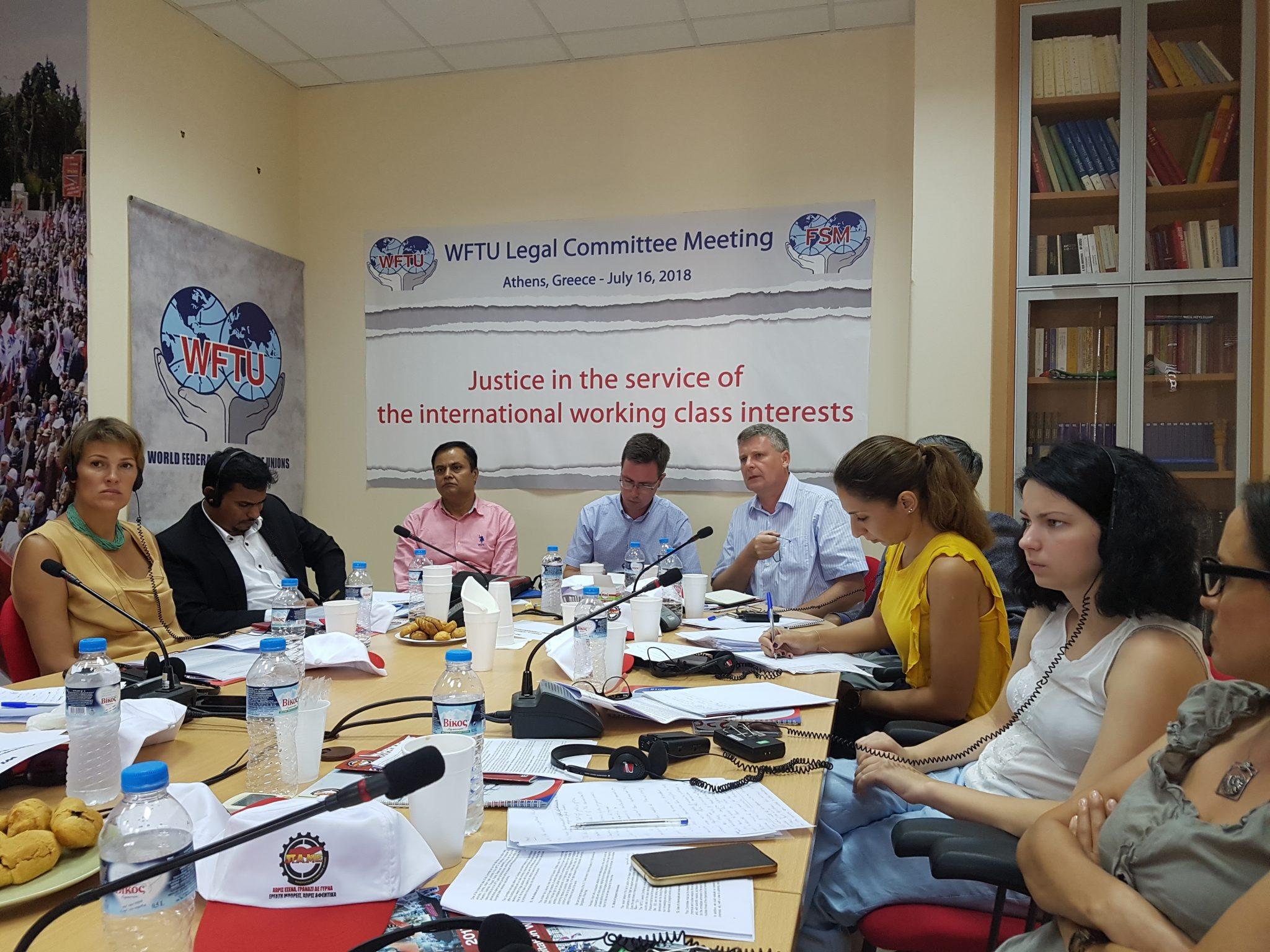
The WFTU Legal Committee Meeting started its works on July 16th in Athens, Greece

Today, July 16th the WFTU Legal Committee meeting started its works in Athens under the slogan “Justice in the Service of the International Working Class Interests”.

Twenty lawyers form all the five continents of the world are gathered in Athens and discussing about the strengthening of the class struggle and the contribution of the militant lawyers in this cause.

The keynote speech was addressed by Janaka Adikari, member of the WFTU Presidential Council.

In the meeting the WFTU leadership is represented by the WFTU General Secretary George Mavrikos and the WFTU Vice-President Valentin Pacho.

Nostalgic Memories of Telegraph/ Telegram Services

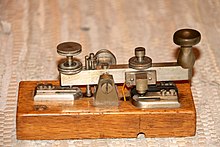
Morse Key Board for sending telegrams.

Five years have passed since the government of India closed the Telegraph / Telegram services in India. Despite strong protests from the union and the public, the telegraph / telegram services were closed on 15th July 2013 by the Government of India. BSNL Employees Union organised protest actions, but the decision was already taken by the government stating that the service is in loss. It is true that telegram services lost its attraction and use to a certain extent after the mobile services and various message applications started, but it was a record for courts, banks and such organisations. Our plea that at least it should be kept in the four metro cities of Delhi, Mumbai, Kolkatta and Chennai in which Central Telegraph Offices a minimum of at least about 500 messages were received and dispatched was also not conceded. However, our demand for a Telegraph Museum was accepted and is now situated in former CTO Building, Kolkatta.

The history of telegraphs started long back. The electrical telegraph was invented in 1775. The first commercial telegraphs were introduced by the Western Railways in Britain in the 1830s. It was introduced in India in 1854 along with the railways.The telephones were not invented and the fastest communication system was the telegraphs. Only the Britishers were employed as telegraphist both in Railways and in Telegraph Offices in the initial stages due to its utmost importance and secrecy. The Britishers used the telegraphs and Railways effectively to crush the First Independence War of 1857, which they called as ‘Sepoy Mutiny’. The Telegraphs grew fantastically during the second part of the 20th century and there were telegraph offices in all important cities and towns. In small places, the services were manned by the Postal officials called ‘Singnallers’, who kept the connection between the cities and the villages through telegraph wires.
Telegrams were sent by government as also by public to inform urgent and important news. The CTOs in the metro cities used to have about 100 or 200 telegraphists at the same time and round the clock. The telegrams were taken as official records in the court etc. It was authentic and clear. Since the charge for sending telegram was on the basis of the number of words, the message was constructed briefly with minimum number of words. The message may be of great happiness or that of sorrow like death or disease. The unions used to organise ‘telegram campaigns’ as a method of protest sending the same in large numbers to the concerned authorities.

After the growth of telephones and mobile services, the importance of telegraphs started to wane. By the second decade of 21st century it was almost limited to certain official messages. According to the government and the BSNL, there was much loss and it can not be continued as a viable service.

When the government decided to close the telegraph offices and telegraph/telegram services from 15th July, BSNL Unions put up strong protest and organised protest meetings. As President of the Union, I went to Mumbai and Kolkata offices and held press conferences for getting the support of the people at large for continuing the services.

Telegraph is a heritage service and accommodated in heritage buildings in the big cities. CTO buildings in Mumbai, Delhi, Kolkata etc. are heritage buildings, which have to be maintained as such. Lakhs and lakhs of documents connected with the history of the Mughal, British rule etc. are there in the old documents of the telegraph offices. Just like Western Court building in Delhi is occupied by a hotel, there are proposals to turn these heritage buildings also in to such posh hotels. You can see that many of the historic palaces have already been converted in to hotels.

A PLI case was filed in the court, but did not get any relief. It can only be said that the BSNL management had taken an unwise anti-people decision as also without taking in to confidence of the unions, which were trying to improve the services and make the company financially viable.

Despite all efforts to ensure that the telegraph services are kept as a token of the past, as in the case of trams in Kolkata, neither the government nor the BSNL agreed. It was finally decided to close it on 15th July 2013 forever.

Nobody expected what happened on the day. It was a pleasant surprise. Thousands of people gathered in front of telegraph offices to send their last telegrams to their near and dear ones. Even after midnight of 15/16 July, the queue did not stop and many people had to return disappointed that they could not send the last telegram. Their spontaneous response on the last day showed their love and appreciation of the telegraph services.

Five years are over after closure of telegraph services. The people have almost forgotten the ‘telegram’. The new generation may wonder what is ‘telegraphs’ and ‘telegram’. But those who knew telegram and sent or received it will always remember the same – A nostalgic memory!

Scotland also protest Trump’s visit

After protest by the British people against the visit of Trump to their country the people of Scotland also held a large anti-Trump banner and other signs while the U.S. President is visiting Trump Turnberry Luxury Collection Resort in Scotland as people gather to protest during his visit to the United Kingdom on July 14, 2018 in Edinburgh, Scotland. The President of the United States and First Lady, Melania Trump on their first official visit to the UK after yesterday’s meetings with the Prime Minister and the Queen is in Scotland for private weekend stay at his Turnberry.

Telecom Trade Union Movement – A Saga of Struggles, Sacrifices and Achievements (1) The Historical Bhopal All India Conference

Telecom Trade Union Movement – A Saga of Struggles, Sacrifices and Achievements (1)
The Historical Bhopal All India Conference

More than 26 years are over after the All India Conference of All India Telecom Employees Union Class III (affiliated to NFPTE) held at Bhopal on 24th to 29th October 1991, which heralded a new progressive and militant leadership in the organisation.
The new leadership with Com. V.A.N.Namboodiri as President and Com. Moni Bose as General Secretary was elected defeating the four decades revisionist leader Com. O.P.Gupta and his camp, who were in the leadership of the union since 24th November 1954, when National Federation of P and T Employees (NFPTE) was formed merging all the existing unions in Telecom department with 9 affiliated All India Unions, including AITEE Union Class III. The change was heartily welcomed by the vast majority of the workers.
Back ground
We have to go back a little to find out the importance of the AIC and the election. As already stated earlier, NFPTE was formed in 1954, but P and T unions existed from the first decade of 20th century and has a long and great tradition as one of the pioneers in the country. Postal service in India started in 1756 and the Telegraph service is 1854, both under the British rule. Telephone service started in the early 20th century, in a limited way which developed fast. The service conditions were very strict and offensive and the wages very meagre. Though there were some spontaneous agitations in the last decade of 19th century in Poona etc., the unions were formed only after 1900.
Formation of Unions
Indian Telegraph Association (ITA) was formed in 1908 under the leadership of Henry Barton, an Anglo-Indian Telegraphist, who was also called Harry Barton. Almost at the same time, Babu Tarapada Mukherjee formed the All India (including Burmah) Post Office and R.M.S. Union, although it functioned earlier as Calcutta Postal Club, since the Department did not allow unions to be formed. Both the unions were formed in Calcutta, the capital of India at that time. However, the All India Postmen and Lower Grade Staff Union was formed in Bombay under the leadership of Shri V.G.Dalvi, Bar-at Law, a well-known Advocate. Another union, All India Telegraph Union (AITU), was formed in Calcutta. All these unions organised agitations for bettering their service conditions and wages.
The Postal Strike of 1946, which continued for 22 days, was withdrawn only after the British rulers accepted all the 12 most important demands raised by the union. It was a great victory for the workers. The appointment of the First Central Pay Commission, separate memorandums submitted which were contradictory and the unsatisfactory recommendations –all convinced the leadership of the various unions to join together in to one union. Accordingly, the Union of P and T Workers (UPTW) was formed on 13th August 1947, two days before India’s Independence, merging almost all unions.
NFPTE was formed on 24th November 1954, merging all the existing unions, including UPTW. Nine All India Unions were formed affiliated to NFPTE, two each in Postal, Telegraph, RMS and Telephone section, one for class III and another for class IV. One union for both the class III and Class IV in administrative offices was also formed. Unification or Realignment, as it was called, was a very important and favourable development. The first Secretary General was Com.B.N.Ghosh, respectfully called Dada Ghosh.
The 5days of strike of CG Employees from 11/12th July 1960 and the One Day Token Strike on 19th September 1968 were historical in all ways, including the number of participants, the brutal victimisation, the sustained fight against dismissals, termination, arrests etc. More than two dozen comrades became martyrs in these struggles shot dead by the police or run over by the trains during the strike period. Two persons committed suicide unable to bear dismissal/termination.
There have been serious differences in NFPTE on the policy and programme to be adopted. One section wanted to fight against the anti-worker policy of the government tooth and nail through militant struggles. The revisionist side did not want to fight against the policies of the government, but wanted to limit it to only on some benefits to the workers and no struggles. The crisis resulted in a hard fought election in the Federal Council in 1970 at Vijayawada where the revisionists lost and the leaders of the militant section were elected with Com. K.G.Bose as President and Com. A.S.Rajan as Secretary General. In the next Federal Council at Calcutta in 1971, the defeated section floated a parallel list of office-bearers, well knowing that they cannot win. The government utilised the opportunity and recognised the fake list. The result was that while the KG Bose section went on strike in the 1974 Bonus Strike, the section led by Com.O.P.Gupta opposed the strike and did not participate.
The impasse continued till the end of National Emergency declared in 1975 by Smt. Indira Gandhi. After sustained discussion and adjustment unity was restored in NFPTE by 1976.
NFPTE was bifurcated in to NFPE and NFTE in 1986 consequent to the bifurcation of the Department in to Postal and Telecom. There was no other alternative, though the workers wanted a united organisation.
In NFPE, the militant leaders Coms. K.Adinarayana, N.J.Iyer and others took the lead, while in Telecom, the leadership of the revisionists under Com.O.P.Gupta continued. The workers were not happy about the revisionist leadership and each and every opportunity, including the Circle and All India Conferences were utilised to fight for the correct policies.
It was in this context that the All India Conference of All India Telco Employees Union Class III was held at Bhopal was held from 24th to 29th October 1991. (to Be continued)
(NB: ‘The History of the P and T Trade Union Movement’, a book published by this author has described in detail all these developments till 1986.Copies of the book are available with Com. R.N.Parashar, General secretary, AIPEU Group ‘C’, Dada Ghosh Bhawan, 2151/1, New Patel Road, New Delhi – 110008, who published the same. The Price is Rs. 100/.)

Hima Das, the athletic champion – Congratulations!


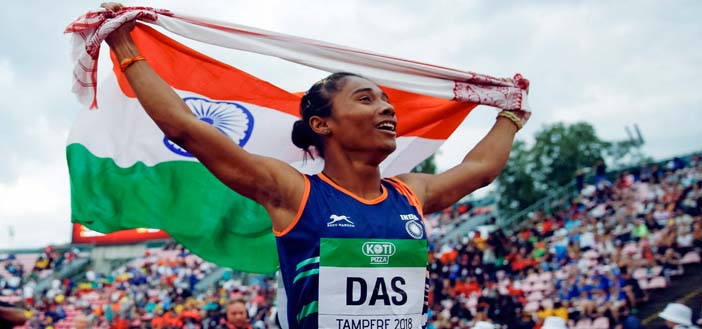
New Delhi, Jul 13 : “I am living a dream”, said Hima Das as she tried to put in words her remarkable journey from being a stubborn footballer in a nondescript Assam village to becoming the first Indian woman world champion in athletics.
The 18-year-old Das, daughter of farmer parents at Kandhulimari village at Nagaon district, has become the toast of the nation after she won a gold at the IAAF World U-20 Athletics Championships in Finland yesterday.
She is also the first Indian — male or female — to have won a gold in a track event at the world level.
She joined Neeraj Chopra who won a gold in javelin — a field event — in the IAAF World U-20 Championships in the last edition in 2016 in Poland. (Courtesy: Ganashakti)

CONGRATULATIONS! YOU HAVE BROUGHT INDIA IN TO ATHLETICS HONOURS!