China pays tributes to Dr and Mrs. Dwarakanath Kotnis.

China today paid rich tributes to wife of legendary physician Dwarkanath Kotnis, Guo Qinglan, saying she spent her life promoting Sino-India ties.     96-year-old Guo, a Chinese woman who married Kotnis in November 1941, died yesterday in Dalian, a coastal city in northeast China’s Liaoning province.     Expressing condolences, Chinese Foreign Ministry spokesman, Hong Lei, told media briefing here that Guo spent her whole life promoting exchanges and cooperation between China and India.     Dr. Kotnis, came to China in 1938 along with an Indian medical team to render medical assistance when China fought against the Japanese invasion.     He joined the Communist Party of China (CPC) in 1942 and died the same year, state-run Xinhua news agency reported.     Kotnis sacrificed his youth and life for China’s national salvation, Hong said, adding “we will always remember their (Guo and Kotnis’s) important contributions”.     His medical assistance during the difficult days of Chinese revolution were deeply praised by Chinese leader Mao Zedong.     Dr. Kotnis, who hailed from Sholapur in Maharashtra died of epilepsy in China at the age of 32 years. His statues were also unveiled in some of the Chinese cities in recognition to his services.     Guo, herself a nurse, hailing from China’s Shanxi province married Dr. Kotnis in 1941 a year before his death in China.     She has been an honoured guest at many high-level diplomatic functions between China and India. She was a regular invitee at the Indian Embassy functions in China.     Though she got married again later, she retained her name as Guo Qinglan Kotnis.     India and China have instituted a joint medical mission in his honour. Recently eight Indian doctors visited China under special bilateral programme to study rural medicare here (Courtsey: Ganashakti)

The great sacrifice and service by Dr. Kotnis and his wife will be remembered ever, which had strengthened the Indo-China relations also.

Attitude towards historical monuments.

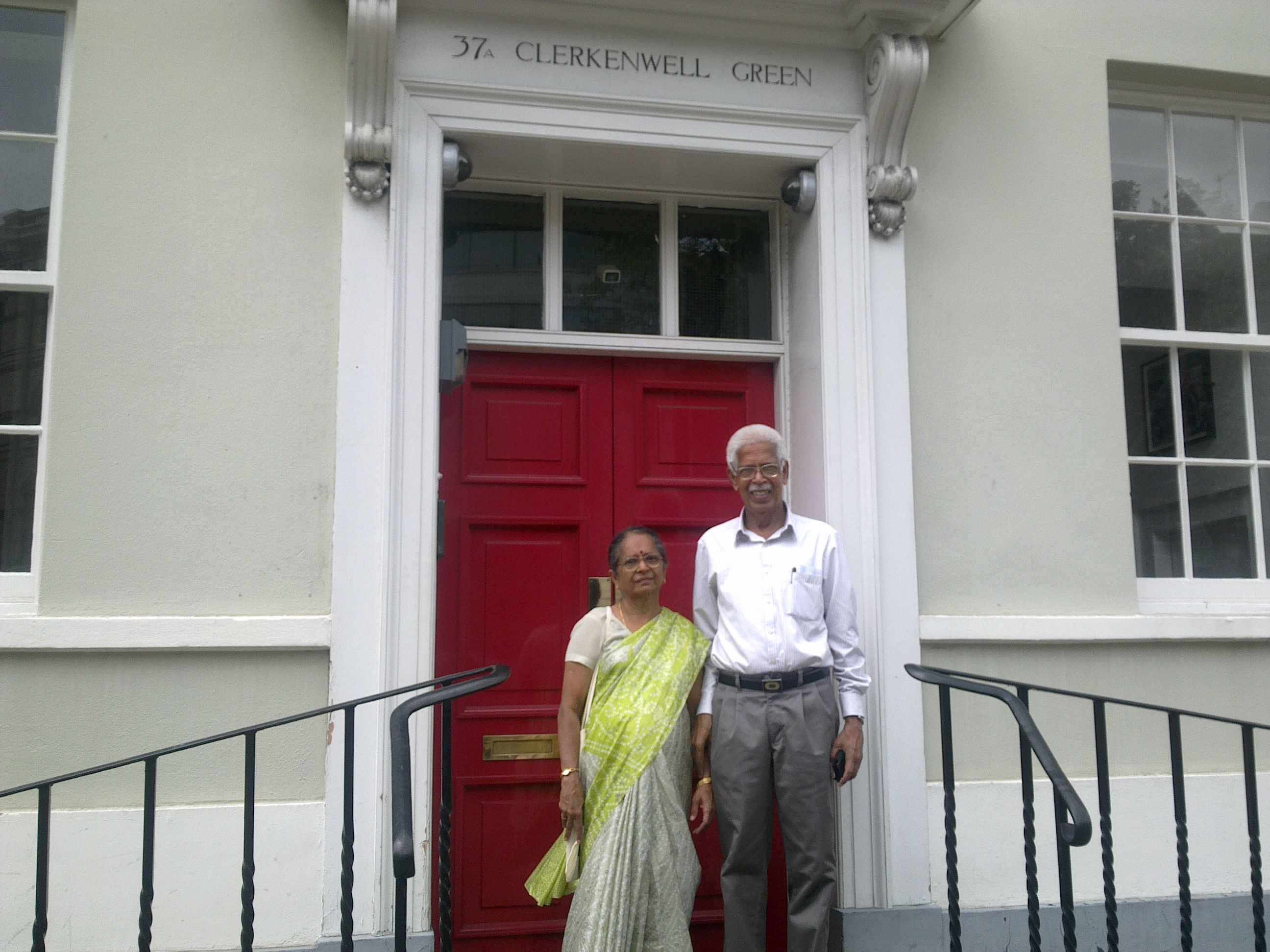
During my stay in UK I found that the British are very much eager and anxious to keep their traditions and historical monuments safely and with respect. They also have a methodical way of maintaining written documents about  these.Whether it is about a place, a building, a village church or anything like that. Even constructing a building in the village has to be according to the tradition of that area. The large number of museums and memorials are also in the same line. A lot of tourists are also coming from all countries to visit these places.

But what about our own country, India? Take the instance of Delhi alone. It was the capital of 7 or 8 dynasties and each had their separate capitals with forts and other connected buildings etc. During the growth and expansion of Delhi, many of these have been demolished, vandalised, occupied and also constructions made on these. It is the same with many historical things.

We, Indians, have to change our attitude and keep things for the future generations.


Redeem humanity from bondage of capitalism – Shaheed Bhagat Singh

Shaheed Bhagat Singh was not only an example of supreme sacrifice for the independence of the country, but was even in his young age a well-studied person with clear ideas about the future tasks and also how to change the country and the world. It was his slogan “Inquilab Zindabad” (Victory to Revolution) which still rings loud throughout the country and the world. I am reproducing two paragraphs from his statement submitted to the Sessions Court Delhi on 6th June 1929 in as accused in the Assembly Bomb case along with Batukeswar Dutt (He was only 23 years when he was hanged by the British   on 23rd March 1931) as an example of the high level of understanding he has reached even by that time.

“The whole edifice of this civilisation, if not saved in time,shall crumble. A radical change, therefore, is necessary and it is the duty of those who realise it to reorganise society on socialistic basis. Unless this thing is done and the exploitation of man by man and of nations by nations is brought to an end, suffering and carnage with which humanity is threatened today, can not be prevented. All talk of ending war and ushering in an era of universal peace is undisguised hypocrisy.

” By Revolution, we mean the ultimate establishment of an order of society which may not be threatened by such break-down, and in which the sovereignty of the proletariat should be recognised and a world federation should redeem humanity from the bondage of capitalism and misery of imperial wars”

Rani Lakshmi Bai of Jhansi, the Great Fighter of First War of Independence.

It is on 17th June 1858 that Rani Lakshmi Bai of Jhansi sacrificed herself on the battle field of Gwalior fighting against the British during the First War of independence. She was only 23 years at the time of her death.

Born on 19th November 1835 to a Maharashtrian warrior, she was brought up by her father since her mother died when Manikarnika (original name of Lakshmi Bai) was only four. She was given the name  Lakshmi Bai after her marriage to the Raja of Jhansi in 1842. Their son born in 1851 died in 1853 followed by the death of Raja also. Before his death, the Raja adopted child Damodar Rao, but the British rulers did not accept the adoption and annexed the kingdom to the British empire. Rani was given a pension of Rs.60,000 and dethroned.

The eruption of the First War of Independence ( 1857-58) was utilised by the Rani to recapture the Jhansi Fort and restore the kingdom. But however the large military force under the British Major Ross attacked the fort and she had to flee when her force could not stop the superior British force from taking over the fort.  Along with Tantya Tope, another great warrior, they took over the Gwalior fort and continued the struggle. Her early training in martial arts, horse riding, sword fighting etc. took her in good stead in her fighting with British. It is told that she fought with swords in both hands riding on the horse with the reins held by teeth and her small adopted son in the back of the horse. She was mortally wounded in the battlefield and as per wish was given funeral there itself. Thus ended the young life of the valiant fighter and leader of the First War of Independence.

Rani Lakshmi Bai of Jhansi is remembered for her valour, fight for the country and patriotism. Netaji Subhas Chandra Bose named the Women Regiment of Azad Fauj as Rani Lakshmi Bai Regiment in memory of the Rani.

On her day of sacrifice for the country, all of us pay homage to the memory of Rani Lakshi Bai of Jhansi!

The rise of the people of the Caribbeans

The people of Caribbean Islands have been the victims of the brutal exploitation by the colonial powers, mainly Spain,  for  the last  500 years or so. The ‘finding’ of the ‘new world’ by Christopher Columbus during the 1490 started this inhuman exploitation for Gold, Sugar and Slave. Thousands were made slaves, those who opposed were hanged or burnt  and  the females sexually exploited. This continued for a long period of five centuries till one after another these countries won independence through hard and sustained struggles. Victory of the Cuban Revolution in 1959 was a big step forward. By the time USA has taken over the remote control of many of these tiny islands  through force and tactics. Socialist Cuba was isolated by the imperialist countries, mainly USA.

However, during the last 10 years, there has been a new awakening in the Caribbean countries and governments against imperialism are being elected one after another in these countries. This is a big step forward.

This change is to be welcomed by the entire progressive forces all over the world.


Vasco Da Gama – the messenger of doom

It is more than five centuries after Vasco Da Gama reached India. It was on 20th May 1498 that he reached Kappad, near Calicut. Within days, he met the King Zamorin of Calicut and requested for doing business and exchange of commodities.

History has it that it was the starting point of the British and other European countries reaching the fertile India and not only capturing the markets, but capturing the country through treachery, making kings fight each other, and also by using force with their advanced military power. The European dominance, mainly the British, ruled the Country for about two centuries.

Vasco da Gama was one of the visitors of doom for the country. After getting Independence in 1947, even now such messengers of doom are visiting the country. The US and its MNCs are trying to subjugate India financially and  on  policy matters. Unless we resist such attempts and take our own decisions in the interest of the country, the future will not be bright. It should be our endeavour for an independent policy based on co-operation and mutual trust.

Homage to Com.Moni Bose on his 2nd death anniversary

19th May is the second death anniversary of Com. Moni Bose, the veteran leader of the telecom workers and the Central Government employees. It was under his leadership that the revisionist leadership was defeated in the historic Bhopal All India Conference of All India Telecom Employees Union. That started a new awakening in the telecom movement. After formation of BSNLEU in 2001, he was elected as one of the Patrons of the union. He toured all over the country and mobilised the workers for sustained struggles against the anti-worker policies of the government. He left us on 19th of May 2010.

My respectful homage to Com.Moni Bose on his second death anniversary. I personally conveyed my homage to Com. Gautam Bose (Pappan) and requested him to convey to his mother  and family.

In Kolkatta meetings with large attendance was  held in memory of Com. Moni Bose.