CHQ gave the call only on 2nd December for Solidarity Dharna/ Demonstration preferably on 4th December in support of the agitating farmers. In many places, our comrades had participated in the Solidarity programmes called by BSNLEU, CITU, Farmers Co-ordination Committee etc.
In Tamil Nadu and Kerala there was heavy rain and threat of Buravi cyclone. In Kerala nowadays the Corona Virus infection is increasing and restrictions are strictly imposed against gatherings. In spite of all these odds, our Comrades have shown their commitment to the cause of the farmers. In most of the districts of Kerala, our comrades staged Dharna at their homes with family members.
BSNL corporate Office had asked the circles to intimate the requiremnt of funds to clear the pending medical claims of retirees.
Kerala Circle has promptly sent the required details and allotment of fund is received for clearing the pending medical reimbursement bills, both indoor and outdoor, upto 31-03-2019.
However, no fund is allotted for payment of medical allowance. There are certain SSAs in circles like Maharashtra where not a sigle installment of medical allowance is paid after medical allowance was restored. We strongly protest against this discrimnation to those who opted the allowance.
Circle Secretaries are requested to contact their respective circle office and ascertain the poition and intimate CHQ for further action in the matter. (aibdpa website_
MY LIFE AND STRUGGLES – 8TEACHING EXPERIENCES (Contd.)It was the practice to hold official meetings of all teachers in the area on second Saturday every month, presided by the Asst. Educational Officer. Teachers who could not attend had to apply leave. Since one leave will be lost in case of absence, all teachers used to attend, especially since AEO will be present. AEO will address, government circulars will be read, a model class will be taken by a teacher and discussion on the class will take place. For conducting these meetings and keeping records etc., a teacher will be selected as secretary of the official Teachers Association. My elder brother was the earlier Secretary. After he left, I was selected for the post. It was convenient for me, since the meetings used to take place in our school. Could also meet AEO at Mattanur, on way home.Orders of state government that all teachers should take LIC policies for a minimum amount of Rs.1,000 were issued during this period. It was discussed and decided that for the convenience of all, one teacher may take LIC agency and help all teachers. I was selected for the job. Took an LIC agency. It was not an easy task. Filling up application forms, collecting premium, paying it to LIC had to be done. Of course, Commission was received from LIC, which was satisfactory.During this period, the beloved leader of the Freedom movement and the first Prime Minister of India, Pandit Jawaharlal Nehru visited Tellicherry (present Thalassery) to address a hugely attended meeting. I went to Tellicherry to hear him and if possible to get an autograph from him. Had a box camera with me and posed as a photographer and got allowed to reach near him and take his photo. Requested for an autograph and got it. I was so happy to meet him and get the autograph. It was almost a dream come true.Pen friends were a craze then. I had some pen friends in USA, Britain and Germany. The German friend had sent me the box camera as present, with which I took the photo of Nehruji. The US friend sent me a very big and heavy stamp album with bundles of used stamps. I could not afford to give such costly presents. I sent them some books, instead.During my teacher days, I got connected with the Bhoodan movement started by Shri Vinoba Bhave. It was a movement to pressurize big landlords to donate land to the landless. The leaders of the movement went and got lands for distribution. A camp was organized at Thodannur near Badagara during 25-04-1958 to 15-05-1958, which I attended. S/Shri K.Kelappan, Ikkanda Variar and T.V.Anandan were the organizers. The routine was strict. Early morning, after bath etc. breakfast will be served. No tea or coffee; instead Jappi will be given, which is a combination of drink with pepper, ginger etc. Before taking breakfast, prayers of Hindu, Muslim and Christian will be recited by all – ‘Sarvamatha Prarthana’( All Religions Prayer).After breakfast, we move to the donated land. The main tasks were to dig well, construct road, break the rocks to enable construction of roads, cleaning the water tanks etc; it was service to the people. Part of Sarvodaya task. In the afternoon, classes will be conducted by the leaders.Jay Prakash Narayan and Vinoba Bhave were the leaders of the Sarvodaya Movement. Vinobaji had come to the camp once. I am not very sure now whether Jay Prakshji came to the camp. But got the opportunity to meet him at Patna Convention of NFPTE in 1978, when I was part of the delegation which met him at his residence. He was weak and sick. He passed away shortly afterwards.One day, after the work in the village, we went and took bath in a nearby temple tank. But the owners of the tank, high caste Hindus, objected to our taking bath. Reason – presence of so called ‘low castes’. Because of the ‘sacred thread’ on my body, they were willing to allow me to bath, but I did not want any special consideration. All of us protested and came back. We told the incident to Kelappaji. He met the trustees of the temple and got permission to take bath. There was no trouble later.One thing I realized was that most of the land donated by the landlords was unusable. There was also a line of thinking that the Bhoodan movement was started only to weaken the struggle for land.Later, I did not have much connection, both with the Bhoodan and Sarvodaya movements.Photoes (1) Loknayak Jay Prakash Narayan (2-3) K.Kelappan (4-5) Pen Friends.
As stated earlier, my elder brother V.A.P.Namboodiri was working in Manathana Peravoor U.P.School, near the eastern high ranges. Since my cousin brother, Shri A.P.Namboodiri was working as a clerk in the Assistant Educational Office at Mattanur, he could know the leave vacancies in various schools and helped me getting posted in these leave vacancies, mostly of maternity leave. Worked for a few months in Pazhassi L.P.School, Kunnoth L.P.School and lastly at Manathana Peravoor U.P.School, where my brother worked.
Since Pazhassi LP School was nearby, I could reach there by walking for about half an hour. At Kunnoth, I stayed at the residence of the manager of Nambissans D.V.Dairy Farm, who was a close friend of my cousin brother. The family gave all help in making the stay very convenient. When my brother got selected in Government Harijan Welfare School and left, I was posted in his vacancy In Peravoor School. I was working there earlier on leave vacancy. The regular posting was a great relief.
Peravoor was a small town then, on the way to the famous Kottiyoor Shiva temple, in the midst of forests. Whether from Tellicherry or Cannanore, you have to touch Peravoor to reach Kottiyoor. There will be thousands of devotees passing through the town during the period when Kottiyoor Temple festival takes place.
The school was in the centre of the town. Stayed in the upper portion line room of a hotel, from where I used to take meals. After getting salary, the monthly food bill will be paid. In the morning, I will walk about two miles to the river, swim a little, bathe and return. That was good exercise.
The condition of the teachers in the private aided schools was very much pitiful. No regular salary. Sometimes, a meager amount will be paid by the School Manager once in a year. But gradually the situation improved. The Education Bill passed during Com.E.M.S.Namboodiripad Ministry in 1957 ensured regular payment of salary and security of job. The pay was Rs. 40 and allowance Rs. 21, if my memory is correct. After meeting my expenses, the balance used to be given to mother. An amount of Rs. 10 was deposited every month in the Post Office SB Account, which came to my help later.
First I was class teacher in First Standard and later to higher classes. All subjects used to be taken by class teacher. There used to be 50 to 60 students in a class. The residents were mainly families migrated from South Kerala, places like Kottayam, Palai etc. The hilly forests and high ranges were tilled and cultivated by these hardworking people, facing much hardships. Diseases like malaria killed many. They could manage both ends meet, only if all the members put in hard work. As usual with migrants, it was not unusual to have eight to ten children in the same family. Hence, there was no dearth of students in the schools. Remember the family of famous National Volley Ball player Shri Jimmy George, whose brothers themselves formed a strong team of Volley Ball players with their father as Coach and mother as Manager. They were studying in a nearby school at Manathana.
Students will reach school in time. Parents used to meet teachers and enquire about study progress of their children. Some of them will even tell us to punish their children, if they are lazy. There was no need for any punishments; the students studied well. It is a well-known fact that these migrant families gave valuable contribution to the spread of education in the hilly areas. Many new schools were founded, especially by the Christian Church.
After attending school, used to walk in the evening watching the beautiful sceneries around the area. Spent time meeting friends in the Ayurveda Vydyasala owned by Shri Prabhakaran as also in the dispensary of Dr. Bhaskaran. Shri A.C.Shanmukhadas, who later became a leading politician and Minister in the Kerala government, used to be present. He was studying Ayurveda medicine there. Our friendship continued till his death. After dinner, used to read books. Went home on almost all week-ends. Life was simple, routine. (to be continued).
The farmers in the country are in a do or die battle against the anti-farmer policy of Modi government. They are compelled to March to the National Capital against the three agrarian acts, adopted by the Parliament in a most undemocratic manner. Modi goverment is repeating the rhetoric that the these bills are intended to benefit the farmers as claimed in the cases of monetisation, GST and change in the base year of CPI. Modi government mercilessly rejected the demand of the farmers for Minimum Support Price for their products. The farmers are fully convinced of the dangerous impacts of the provisions of these new acts; The Multi national Corporations are given freedom to dictate terms of farming, purchase, processing,storage and marketing. They naturally apprehend that in effect it will finish freedom to do farming, will increase input burden, debts, losses, farm suicides and displcement of land.
As far as the people are concerned, they will have to suffer due to the hoarding, black marketing and increased price of food products and a freedom for the corporates to exploit the maximum. As you are aware repeal of farm laws was one of the main demands of the Cetral Trade Unions for the 26th November Strike.
The farmers struggle is being spearheaded by the All India Kisan Sangarsh Co-ordination Committee in which several organisations, irrespective of political affiliation are included. Modi government tried its level best to crush the struggle by preventing them from entering Delhi. Police and Army were deployed and barricades, concrete blocks, trucks, water cannons, teargas shells were used against the farmers. They braved all these repressions and stand determined. Finally, the government had to relent and called them for negoitiation but with condition that the farmers should move to a maidan. It was rejected by the struggling farmers and the discussion held with the government on 01-12-2020 failed as the government took an adament stand. The only offer from the government was that they will appoint a committee to examine the issue which was rejected by the farmers forum.
Meanwhile more and more farmers are coming to Delhi from various states and the five highways to Delhi are almost blocked by the farmers. So the government seems to be in a sticky wicket and has called for another discussion on 03-12-2020.
This is one of the biggest struggles, the country has witnessed and gaining huge support from almost all section of the society. Comrades, the farmers are the backbone of the country and they are feeding the entire people. So we cannot reamain a silent spectator to this great struggle. (AIBDPA CHQ WEBSITE)
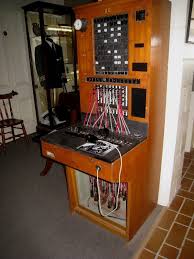
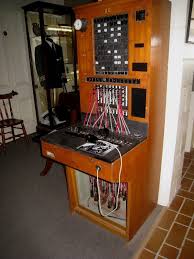
Com.K.G.Jayaraj, Secretary General, AIBDPA has addressed a strong letter to CMD BSNL regarding the difficulty being experienced by the BSNL retirees, due to the non-maintenance of the land line and broad band connections. Many retirees are feeling exasperated due to the non-repair of the faulty lines and equipment. This has been brought to the notice of the CMD in the letter demanding early maintenance.
It is reported that All India Radio / Aakasha Vani Kozhikode centre is on the way to be closed. This is a heart breaking news. AIR Calicut was one of the best, providing authentic news, cultural programmes including dramas, poems etc which was highly appreciated by the common people. It enouraged and gave opportunity to thousands of young promising artists. Hearing AIR news was a daily routine for tens of thousands of families.
AIR Calicut can take pride that many famous and beloved poets, writers, authors, drama artists and cultural leaders like S/ Shri Uroob, P.Bhaskaran, N.N.Kakkad, K.Raghavan Master, Thikkodiyan, Akkitham, Sukumaran Kappil, M.Unnikrishnan, K.A.Kodungalloor, Ahmed Koya and many others have worked and enriched its standard and popularity.
I had been fortunate to be in close contact with these illustrated sons ofKerala, of course, in another field. It was the prolonged struggle by these Staff Artists for regularisation as regular staff instead of on job on cotract. Till the successful end of the struggle, as Convener of the Workers Centre, a joint platform of central- state – public sector workers organisation, along with other comrades, I was a regular visitor there supporting the rightful struggle. At last, the central govt was compelled to regulatise all the artists. It was a great victory.
The move to close this AIR centre is against the interests of the common people. A movement needs to be organised against this ill motivated decision of the Central govt.
I hope the political parties, trade unions, cultural leaders and activists will take initiative in organising a strong movement, so that this legendary AIR centre contues its functioning as before.
Tens of thousands of farmers are at the border of Delhi, demanding cancellation of the three anti-farmer laws and for supportive actions from the central government. More and more farmers are reaching the border from the various states. Almost all political parties and trade unions have supported the demands except BJP and BMS.
Farmers are the producers of the food for the country and their just and right demands can not be ignored. The government should their demands without delay.
Social systems and practices are born out of necessity, or forced by the powers that be at that particular period of time. Sometimes due to compulsion or by pressure of the new emerging forces, they change for the better.
The Independence Struggle, the Second World War (1942 – 46), the tragic famine which took away crores of lives and the Independence itself resulted in a lot of changes in the country. The decayed old social system based on the Brahminic order was certain to be changed and that is exactly what happened. But the disintegration took many years to take place.
Social reforms had started in Kerala much earlier. Sree Narayana Guru, Ayyankali, Sahodaran Ayyappan, Pandit Karuppan, Vagbhadanandan and many other great personalities have initiated the process of renaissance and strong movement against untouchability, religious superstitions, obnoxious practices, social stigma and so on. The influence of Gandhiji had spread all over the country.
Within the Namboodiri community itself, a strong movement arose under the leadership of V.T.Bhattathiripad, Premji, E.M.S.Namboodiripad and many other youngsters who wanted the namboodiris to wake up from the somnambulism in which the community was lying for decades. The anacharams or obnoxious practices like child marriage, polygamy, lack of modern education, darkness of the kitchen where the women were almost closeted – all had to be changed to convert the Brahmin to a normal human being. School education was necessary. The struggle was intense between the die-hards of the old order and the youngsters of the new order. It was in such changing times that I was born and had my early days.
Com.E.M.S.Namboodiripad in his autobiography has explained in detail the difficult and tragic situation in which the Namboodiri women, children etc. had to live. In a more or lesser way, all these decayed and obnoxious systems continued in our area also.
Since there were no Namboodiri families very near to our home, we used to play with children belonging to other castes. Whenever we had to enter home, take food etc. we had to take bath having played with children of other castes. When we go to the temples or to the house of relatives through the narrow path in the paddy fields, people belonging to certain castes have not only to give way, but keep away themselves for a particular defined distance. Kerala was a bhrantalaya in this respect, as Swami Vivekananda had stated.
Women, including anterjanams, were not allowed to wear blouse when entering the temple but can only cover themselves with some piece of cloth or bath towel. There was discrimination in taking bath in the temple tank. There were two ghats covered with thatched roof, one for Namboodiris and the other for anterjanams. Others, women as well as men, were to take bath in open ghats. Discrimination existed almost in all matters.
My mother was comparatively liberal and not very strict in observing these obnoxious practices. She would go to other Brahmin homes alone, of course with the marakkuda (umbrella made of palm leaves and bamboo handle used by anterjanams whenever going out of home). She used to work with the servants in husking the paddy as well as performing other domestic chores. She used to look after the children in a very caring way.
Till being admitted to the school, there was no tuition or coaching as is the system now. No LKG or such pre-admission classes. The education starts after admission to the first standard in the school. Of course, the children will be initiated to education on Vijaya Dashami by the parent or Guru writing with a gold ring on the tongue of the child. This system is still observed not only by Brahmins, but by all, irrespective of castes.
Everyday mother used to read the Maha Bhagavatham for some time and I used to sit nearby. Mother will explain, whenever there is a story in it. In the Karkkidaka Month, Ramayana also will be read.
My eldest brother Kesavan Namboodiri was working as a teacher near Cannanore. He was a Gandhian and used to wear only khadi. At that time khadi dhoti, shirts etc were not for sale. One had to spin thread from the Charkha and the bundles of thread will have to be given to the Khadi Sarvodaya Sangh. They will send it to the Payyanur weaving unit and the woven cloth / dhoti will be supplied after they are ready. Even the coolie charges will have to be given in yarn. It took about one month to get the same. Mother, sisters and we all knew how to spin thread. Two- three charkhas were in our house. Purchasing of the cotton bundles, cleaning it, making it in to spindles and then spinning – all were tedious work, but had to be done so that eldest brother can get khadi clothes to wear. (to be continued)
The countrywide General Strike called by the 10 Central Trade Unions and Independent Federations on November 26, 2020 turned to be the largest Strike in the world. It is reported that more than 25 crore workers have participated in the Strike. The strike was responded by all sections of the workers and farmers and in some of the states like Kerala it was complete Bundh. So the working class in the country has created another history and it will be marked as a great milestone in the struggles of the country.
In BSNL also the strike , called by the 8 unions under the leadership of BSNLEU ,was held successfully. AIBDPA salutes all the participants in the strike.
The pensioners under the auspices of NCCPA have organised Solidarity Dharna very successfully all over the country in support of the General Strike. All the units of the affiliated pensioners organisations have also sent email to the Finance Minister supporting the Strike and raising the important pensioners issues on 25-11-2020.
The General Strike was necessitated due to the anti-worker, anti-farmer and anti-people policies of the Narendra Modi Government. The Government completely neglected the genuine demands raised by the Central Trade Unions and never took the initiative for a negotiated settlement. This has cleralry exposed the undemocratic stand of the ruling class.
No doubt, the spectacular success of the strike is a befitting warning to the Modi government and more intensified struggles may continue to be waged, if not the just demands are not conceded. (AIBDPA Website)