26th November Strike, A Grand Success. Congratulations!

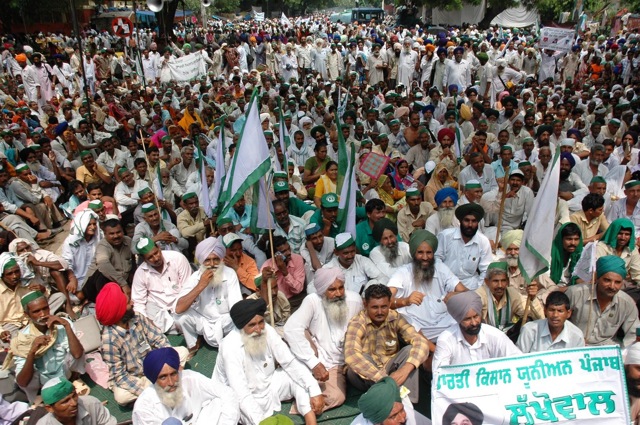
The working class in India have come to the fore with the General Strike on 26th November 2020 against the anti-people, anti-worker, anti-famer policies of the Modi Government. It is estimated that more than 25 crore workers participated. Farmers have mobilised for big demonstration in Delhi, but they are stopped at the borders and leaders arrested. All the 5 gates to Delhi is closed. The government is afraid of the workers and farmers.

Congratulations to the workers and farmers who made the strike a complete success!

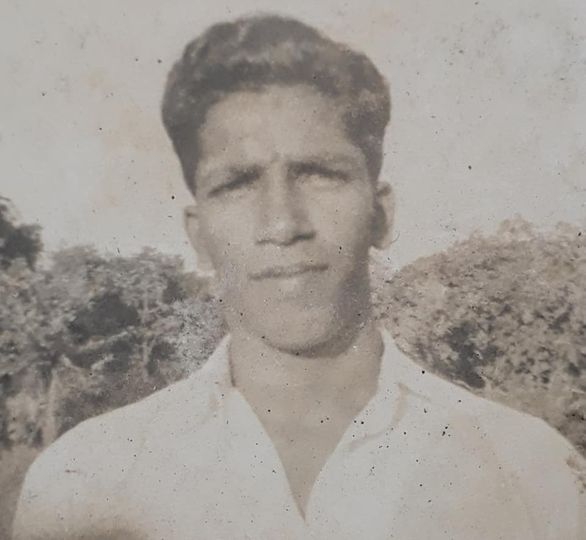
HAPPY AND SATISFIED (MY LIFE STORY) – 3 AS A TEACHER

AS A TEACHER

After passing the SSLC examination, I wanted to continue studies in college. My teachers also were in good support and prepared to help. But it was not what actually happened.

While I was in the V Form, I had joined a special course of ‘Training for Teachers’ with many other students. It was a diversified course for two years to be continued by one year in the regular Training School. Those who joined the course need not pay school fees and in addition was given special stipend for the two years. I had the option to join the training class after SSLC or return the stipend etc. and join college. A job was most important for the family at that time and a teacher’s job was the best. Hence there was no second thought and I joined the Teachers Training School. While others had to complete two years course, those who took the diversified course could complete by one year course. My elder brother has taken the same course and after training was working as a teacher.

I joined the Teachers Training School, Cannanore (present Kannur) in 1955. There was a separate class for those students who had come from Kuthuparamba High School after completing the special course. Along with other trainees, we rented a house nearby and stayed there. Every week I could go home, since it was a matter of about one and half hours by bus.

Since we were staying nearby, we could participate in extra-curricular activities, which we could not while in High School due to the long distance from home. There were excellent speakers and writers among the trainees, some of whom have come after working as untrained teachers earlier. Poet Vanidas Elayavoor and T.P.Sukumaran were two of the noted writers. I also participated in these discussions in a small way. Serious political discussions took place in the meetings.

An interesting episode comes to mind. There was competition of writing poem in connection with the Annual Day Celebrations. Since he was already a well-known poet, Vanidas Elayavoor did not participate. Shri T.P.Sukumaran (who later became a Professor and a well-known writer) got the first price for an excellent poem of about 10 lines. To my surprise, I got the second prize. Within the limited time I had scribbled about 40 lines of poem, the standard of which even I was doubtful. However, I was happy to get the prize.

In March 1956, the Public Examination was over and within two months, the results were published. All of us had passed. One year stay at Cannanore was over. A few of us were studying in the same class from standard VI to the training class. S/Shri M.Govindan, T.Kunhanandan and myself were not only in the same class since VI Standard but were in the same bench till the completion of the training. It was also interesting that one of us always got the first position in the examination. Now we were getting separated, trying to get a job in some school. It was a sad parting. Within some years, Kunhanandan had a tragic death and left us all forever.

There was acute shortage of teachers and that was why the diversified course in the High School had started. But by the time our training was over, there were five or six batches already trained and the vacancies were all filled. To get posting had become difficult. There were more trained teachers than the vacancies. A bleak future awaited us.

My elder brother V.A.P.Namboodiri had already joined Manathana Peravoor U.P.School, near the eastern high ranges. Since my cousin brother, A.P.Namboodiri was working as a clerk in the Assistant Educational Office at Mattanur, he could know the leave vacancies and helped me getting job in these leave vacancies, mostly maternity leave vacancies. Thus I workerd for a few months in the Pazhassi L.P.School, Kunnoth L.P.School and Manathana Peravoor U.P.School, where my brother worked. When my brother got selected in the Government Harijan Welfare School and left, I was posted in his vacancy. It was a great relief.

Peravoor was a small town on the way to the famous Kottiyoor Shiva temple, in the midst of forests. Whether from Tellicherry or Cannanore, you have to touch Peravoor to go to Kottiyoor. The school was in the centre of the town. I stayed in the upper story room of a hotel, from which I used to take food. After getting salary, the monthly food bill will be paid. In the morning, I will walk about two mile to the river, take bath and return. That was a good exercise.

The condition of the teachers in the private aided schools was very much pitiful. No regular salary. Sometimes, a meager amount will be paid by the School Manager once in a year. But by the time I joined, the situation has improved. The Education Bill passed during the Com.E.M.S.Namboodiripad Ministry in 1957 has ensured regular payment of salary and security of job. The pay was Rs. 40 and allowance Rs. 21. After meeting my expenses, the balance used to be given to mother. An amount of Rs. 10 used to be put in the Post Office SB Account, which came to my help later.

First I was put as class teacher in First Standard and later to higher classes. All subjects used to be taken by the class teacher. There used to be 50 to 60 students in the class. The residents were mainly families migrated from South Kerala, places like Kottayam, Palai etc. The forests and high ranges were cultivated by these hardworking people, despite facing many hardships and diseases like malaria. They can manage both ends meet, only if all the members put in hard work. As usual with migrants, it was not unusual to have eight to ten children in the same family. Hence, there was no dearth of children in the schools.

Students will reach in time to the schools. Parents used to meet the teachers and enquire about their children, how their studies are going etc. Some of them will even tell to punish their children, if they are not studying well. But there was no need for any punishments; the students studied well. It is a well-known fact that these migrant families gave valuable contribution to the spread of education in the hilly areas. Many new schools were founded, especially by the Christian Church.

After attending school, in the evening I used to walk watching the beautiful sceneries around the area. Spent sometime in the Ayurveda Vydyasala owned by Shri Prabhakaran as also in the dispensary of Dr. Bhaskaran, chatting with friends. Shri A.C.Shanmukhadas, who later became a leading politician and Minister in the Kerala government used to be present. He was studying Ayurveda medicine at that time. Our friendship continued till his death. After dinner, used to read books. Almost all week ends used to go home. Life was simple and routine.

It was the practice to hold official meetings of all the teachers in the area on the second Saturday every month, presided by the Asst. Educational Officer. The teachers who could not attend had to apply leave. Since one leave will be lost if not attended, all the teachers used to attend, especially since the AEO will be present. The AEO will address, the government circulars will be read, a model class will be taken by a teacher and discussion on the class will take place. For conducting these meetings and keeping records etc., a teacher will be selected as the secretary of the official Teachers Association. My elder brother was the earlier Secretary of the Association. After he left on appointment in government service, I was selected for the post. It was convenient for me, since the meetings used to take place in our school as also to meet the AEO at Mattanur, on the way home.

The orders of the state government that all teachers should take Life Insurance policies for a minimum amount of Rs.1,000 were issued during this period. It was discussed and was decided that for the convenience of all, one teacher can take the LIC agency and help all the teachers to take the policy. I was selected for the job and took an LIC agency. It was not an easy task. Filling up the application forms, collecting the premium, paying it to LIC had to be done. Of course, Commission was received from LIC, which was satisfactory.

During this period, the beloved leader of the Freedom movement and the first Prime Minister of India, Pandit Jawaharlal Nehru visited Tellicherry( present Thalassery) to address a hugely attended meeting. I went to Tellicherry to hear him and if possible to get an autograph from him. I had a box camera with me and I posed as a photographer and got allowed to reach near him and take his photo. Utilising the opportunity I requested for an autograph and got it. I was so happy to meet him and get the autograph. It was almost as a dream come true.

I had some pen friends in USA, Britain and Germany.  The German boy had sent me the box camera as present, with which I took the photo of Nehruji. The US friend sent me a very big and heavy stamp album with a bundle of used stamps. I could not afford to give such costly presents. I sent them some books, instead.

During my teacher days, I got connected with the Bhoodan movement started by Vinobaji. It was a movement started to pressurize the big landlords to donate land to the landless. The leaders of the movement went and pressurized to donate land, which will be distributed to the landless. A camp was organized at Thodannur in Kozhikode district during 25-04-1958 to 15-05-1958, which I also attended. S/Shri K.Kelappan, Ikkanda Variar and T.V.Anandan were  the organizers. The routine was strict. Early morning, after bath etc. breakfast will be served. No tea or coffee; instead Jappi will be given, which is a combination of drink with pepper, ginger etc. Before taking breakfast, prayers of Hindu, Muslim and Christian will be recited by all – ‘Sarvamatha Prarthana’.

After breakfast, we move to the land got donated. The main tasks were to dig well, construct road, break the rocks to enable construction of roads, cleaning the water tanks etc; it was service to the people. Part of Sarvodaya task. In the after noon, classes will be conducted by the leaders. Shri Jaya Prakash Narayan was the leader of the Sarvodaya Movement.

One day, after the work in the village, we went and took bath in a nearby tank. But the owners of the tank, high caste Hindus, objected to our taking bath, since there were so called ‘low caste’ people also. We told the incident to Shri Kelappaji, who met the Nairs who owned the tank and got permission to take bath. There was no trouble later.

One thing I realized was that most of the land donated by the landlords were unusable land. Donating land which is not cultivatable etc. There was also a line of thinking that the Bhoodan movement was started to weaken the strengthening struggle of the landless for getting land.

Later, I did not have much connection, both with the Bhoodan and Sarvodaya movement.

26th November 2020 Strike – Solidarity Demonstration by NCCPA, AIBDPA etc.

National Co-ordinating Committee of Pensioners Associations and its affiliated pensioners associations like AIBDPA, AIPRPA etc. has given call to organise demonstrations, dharna etc. on 25th November 2020 in support and solidarity of the 26th November Strike by the 10 Central trade Unions and national federations of central, state government employees etc. Make the programme a big success!

LAST DATE FOR SUBMISSION OF LIFE CERTIFICATE EXTENDED UP TO 28TH FEB.2021.

The central government has extended the last date for submission of Life Certificate by the central Pensioners from 31st December 2020 to 28th February 2021 in view of the Covid situation.

24th November 2020 – The 67th Foundation Day of NFPTE

24th November 2020 – The 67th Foundation Day of NFPTE

66 years are over after National Federation of P and T Employees (NFPTE), the mighty organization of Posts and Telegraph workers was formed on 24th November 1954.

But it was not the first organization of P and T workers. Trade unions started in the P and T in the first and second decades of the 20th century under the leadership of Babu Tarapada Mukherjee, Henry Barton  and V.G.Dalvi, Bar-at-Law. Militant struggles were organized in 1908, 1919 etc. for immediate demands of the workers, some of which succeeded.

The Postmen Strike which started under the leadership of V.G.Dalvi from 11th July 1946 continued for 22 days and engulfed all sections of the P and T workers. The British government was compelled to come down, negotiate and settle all the 12 major demands of the worker. Lakhs of workers in the major cities of Calcutta, Bombay, Madras etc. under the leadership of AITUC, the only central trade union in the country then, marched in support of the striking workers. 1946 P and T strike is considered as part of the Independence struggle as in the case with the Royal Navy Mutiny and Debhaga struggle.

The strike and the retrograde recommendations of the First Central Pay Commission (1946) resulted in an urge for a single organization and Union of P and T Workers (UPTW) was formed before India got Independence. O.P.Gupta was one of the Joint Secretaries. But still some unions were out of UPTW. A re-amalgamation of all unions were patiently organized, with the initiative of the then Communications Minister Babu Jagjivan Ram. Thus National Federation  of P and T Employees (NFPTE) and 9 affiliated All India Unions were formed on 24th November 1954 in a grand convention held at New Delhi. History was being created in the trade Union movement itself. V.G.Dalvi was the first President and B.N.Ghosh (Dada Ghosh), the first Secretary General. UPTW was affiliated to AITUC since formation and at that time the President of both AITUC and UPTW was the same person, Com. Mrinal Kanti Ghosh. After formation of INTUC in 1947, UPTW disaffiliated from AITUC and continued as an independent Federation. NFPTE also continued as such.

A strike was called for by NFPTE for the appointment of II Central Pay Commission and since it was agreed, the strike was withdrawn. But against the retrograde recommendation of the II CPC, legendary 5 days strike was organized by the central government employees under the  leadership of Confederation, AIRF, AIDEF and NFPTE. The Jawaharlal Nehru Government promulgated the Essential Service Maintenance Ordinance and arrested and jailed tens of thousands of workers and leaders including many M.P.s and All India leaders of AITUC and other left TUS for leading and supporting the strike.  14 comrades became martyrs being shot dead and purposely over-run by trains.

Again a historic one day token strike was organized on 19th September 1968, which has no parallel in history. 17 comrades became martyrs of the wrath of the central government. Again tens of thousands were arrested and jailed. In Kerala alone, 300 workers were terminated and about 500 suspended. The all India figure was much more. It is to the credit of the Com. E.M.S.Namboodiripad Government in Kerala, that it openly supported the strike and refused to implement Essential Service Maintenance Ordinance promulgated by the Central Government, even braving the threat of the Centre of being dismissed.

In the Federal Council held in 1970, the beloved leader of the P and T employees, Com.K.G.Bose was elected as the President of NFPTE, which heralded a new era of progress and militancy.

Again the Strike of 1974 for Bonus, in which the Railway Workers took the leading part.  The result came later that in 1979 Bonus for the first time was granted to Central Government employees and later to state government employees. The struggle on demands of Extra departmental employees by the entire Postal workers created another history.

Consequent to the bifurcation of Post and Telegraphs as separate departments, NFPTE was also bifurcated in to NFPE and NFTE in 1986.

Telecom was made in to a Corporation and BSNL was formed in October 2000. NFPE continues in Postal department while BSNL Employees Union (BSNLEU) formed in 2001 is the recognized union in BSNL. They continue to work in the historic tradition of NFPTE.

NFPE and BSNL Employees Union participated in all the General Strikes organized by the central trade unions since 1981. They have given call for participation in the 26th November 2020 strike also. BSNL Casual and Contract Workers Federation also has given call for strike.

All India BSNL DOT Pensioners Association (AIBDPA), All India Postal and RMS Pensioners Association (AIPRPA), National co-ordinating Committee of Pensioners Association (NCCPA) have expressed solidarity to the strike and called the organize dharnas and demonstrations of 25th November.

On this 67th Foundation Day of NFPTE, we pay homage to the great leaders who led the movement, lakhs of workers who built up the organization and the martyrs who sacrificed their valuable lives in the altar of struggle.

NFPTE Zindbad! NFPE Zindabad! BSNLEU Zindabad! AIBDPA Zindabad! AIPRPA Zindabad! NCCPA Zindabad! BSNLCCWF Zindabad!

HAPPY AND SATISFIED – (MY LIFE STORY) – 2

SCHOOL DAYS

I was admitted to the Lower Elementary School, Kara, which was near my home, in my sixth year. It was only about half a mile from home and was the same school where my elder sisters and brothers studied. After breakfast, I used to go to school with my elder brother. In the first standard, there was no bench and the students used to sit on wooden planks placed on the floor. The alphabets, simple arithmetic etc  were taught by writing with hands on the soft sand which every students used to bring in the full coconut shells with only one opening through which the sand can be put in or taken out. Later, slates and were used.

At noon recess, we will return home, take bath, eat food and again go to school. One was not allowed to take food from outside. After going out and mingling with others, you had to take bath before entering the house. This superstitious system was meticulously followed. In the evening, after returning from school, one more bath.

Text books were not available. The teachers will write the lessons on the black board and explain. Important things you have to write in your note book. Almost all the students belonged to poor families, and many left even before completing 5th standard due to poverty as also to do some work to help their parents.

At the age of 7, I was ordained as a Brahmachari, a ritual followed by the namboodiris. This put so many restrictions in the life of the young boy. One have to get up early, take bath, perform a lot of pujas, kriya etc before taking any food. The same in evening also. Not allowed to wear dhoti. Even while going school, one was allowed only to put on a folded towel, instead of shirt. All these restrictions changed later, after many years.

Brahmachari was not allowed to climb the trees, speak with outside women etc. etc. A lot of nonsense restrictions which were difficult to observe. Three years passed like this. During this period an initial study of Veda also was necessary. Daily, two-three hours were spent for this. But how could at this young age one could learn vedas which are in Sanskrit, except repeating what the Guru teaches you.

After three years, Samavarthan ceremony will be conducted and you become Dwija, Namboodiri. All the restrictions are happily over. You can travel, meet with anybody. You can wear dhoti, trousers, shirts etc. The suffocation was over.  You can have your hair cut also. But these concessions did not come easily. Even while going to school, my eldest brother had to keep kuduma ( long uncut hair). Disobeying the instructions, he one day got his hair cut. It was a big revolt at that time. Gradually hair cut was accepted and I had no difficulty in that matter.

I completed my fifth standard in due course. I was admitted in the VI standard in the Mattanur Higher Elementary School, about three miles away from home, but which was the nearest. The school authorities insisted that admission can be given only in V standard since that is the usual practice for admission. Other students were admitted like that only. But my eldest brother insisted that I will be able to manage in VI standard itself. Any way I was admitted in VI Standard.

In fact, I was worried. Two of my relations were admitted in V Standard only who have come from similar schools. The first class was English and the teacher started speaking in English. I knew the English alphabets, nothing more. Anyway, I was determined to study and not lag behind.  I have to keep the prestige of my elder brother. Within six months I caught up with other students. In the half yearly examination, I was first or second. My fears were over. I was helped by two of the brightest students in the class, who were my bench mates.

While studying in the Mattanur School, the earlier restrictions on food continued. No food till you return home and take bath. Even restriction on drinking water. It was somewhat difficult, but became accustomed.

Passed the VIII Standard examination with good marks. The Elementary School Leaving Certificate (ESLC) given after passing in the VIII Standard public examination was sufficient to get training and teach  in the Lower Elementary School ie. up to Vth  Standard.   I was admitted to the III Form in the Kuthuparamba High School, which was about 7 miles from home. There was no other High School nearby. My elder brother was studying in VI Form in the same school.

There were a large number of students from nearby area studying in Kuthuparamba High School. Walking was the only way since it was difficult to afford the bus charges, the minimum of which was 4 annas ( ¼ of the rupee). In group of 5 or ten, students, both boys and girls, can be seen walking on the road to the school and return. After taking meals in the early morning, we will walk to the school. Since no chappals were worn, the sole of the feet will be very thick, which even thorns could not pierce. After reaching back home and taking bath only, you can have food. Almost 10 to 12 hours we had to manage without any food. Study was more important than food. After one year or so, we were allowed to take water and beaten rice and banana during the lunch recess, as a special case. One of my close friends and relative, Shri  K.N.Namboodiri had to walk more than one more mile to reach his home.

Even if you are late in reaching school, the teachers will not complain or punish. They understood that we were coming walking long distance. We were also not compelled to stay for sports and other programmes after school time. Teachers were considerate.

Three years were over without any important incident. Passed the Secondary School Leaving Certificate (SSLC) public examination with meritorious marks, first in the school. Received merit certificate and so many books as present. The school days were happily over. ( to be continued).

HAPPY AND SATISFIED – 1 (MY LIFE STORY)


Dear Comrades, Friends and Well-Wishers,

I have completed 82 years on 24th July 2020. Many of you had suggested earlier that I may write my experiences in life, but I was reluctant, since there is not much to write which will be of any consequence. Later, I had a re-thinking on the subject. There will be something in every body’s life, which may be of importance to some others.

Hence I have decided to write about my experiences. My memory has always been weak and I do not know whether I will be able to do justice to me and my well-wishers.

I have been fortunate to be amongst you, participated in your happiness and sorrow. My story may not be much different from yours. But anyway, I will present my life-story to the best of my memory and ability.

I hope you will appreciate, support me and also correct me on facts when I am on the wrong.

Yours Sincerely,

V.A.N.Namboodiri.


HAPPY AND SATISFIED -1

EARLY DAYS

I was born on Sunday, 24th July 1938, as the youngest child of my parents Shri V.A.Kesavan Namboodiri and Smt. V.A.Sreedevi Anterjanam. They had five children elder to me viz. Kesavan Namboodiri (Jr.), Parvathy Anterjanam, Sankaran Namboodiri, Sreedevi Anterjanam and Parameswaran Namboodiri. And I, Narayanan Namboodiri, was the sixth and last. According to Malayalam calendar my birth was on Makeerya Nakshatram in Karkkidaka month. The initials V.A. derives from the name of the house (Valiyapalathra) and the family (Attattuvalli).

My house, Valiyapalathra Illam, is situated in Perincherry Desom, Pazhassi Amsom (Village), in the former Tellicherry Taluk, Malabar District (now in Kannur District of Kerala) of Madras Presidency. It was far away from any town and in an interior area. The house was on the side of a large paddy field, in the middle of which there is a path for the people to travel.  The compound was about four acres, full of coconut, mango and other trees and some portion looked like a forest. The family burial ground was on one side of the compound. The way to the house was from the paddy field. After crossing a small wooden bridge across a narrow stream, which will have running water only during the rainy season, and climbing up the ladder to the compound, one can walk through the broad path for about fifty metres to reach the house. There was a broad court yard before stepping up to the lengthy the verandah.

The illam ( as the house is called) is a two storied building constructed in the typical old style ettukettu ( with 2 court yards), but which was reduced to nalukettu( one court yard) after partition of the family. Widow of my father’s younger brother with her son, stayed in the house in the nearby compound, constructed with the stones and wood of the demolished portion of the original house.

The house was constructed according to strict vasthu plan. There were five six rooms in the ground floor including the kitchen. There was a big granary in one room made of wood covering from the floor up to the roof, to store the paddy being brought by the farmers, who cultivated our paddy fields. The first floor was almost like the ground floor. The second floor was a big hall with no separate rooms and with thatched roof. It was mainly used to keep timber, coconuts, coconut leaves, other stores etc. There were wooden ladders to go to first and second floors. After a few years, the roof and the veranda were covered by tiles, since the cost of maintaining and yearly thatching was very costly.

There was a small stone structure in one side of the compound which was dedicated to a great, great, grandfather and his wife, who were considered as Brahmarakhas. Every month puja will be conducted for them with offerings.

The story goes like this. May be about 150 years back. My great, great grandfather stayed with his family, but had also married a Rani of  the royal family of Pazhassi,  as was the custom then. The Kshatriya Rajas married from Nair families and Brahmins married Kshatriya girls. After some time, my ancestor stopped going to the palace. The Rani sent messengers with palanquin to bring him to the palace, but he refused. That angered the Rani who sent soldiers to capture and bring her husband to the palace. My family had its own security forces of Kurichya tribe (a warrior tribe of the forests) with bows, arrows, swords etc. There was heavy fight and both my great grandfather and his wife were killed. The soldiers burnt the house and destroyed everything.

Their children constructed another house on the opposite side of the paddy field and started staying there. They constructed this small stone structure in memory of their parents and continued puja etc. It continues even now.

The present house, constructed of local red stone, will be about 130 years old now. It is an old type house, planned for strength and defence. There were many big bows, sharpened arrows, war-axes etc. at home, a memory of the past.

According to documents, the family owned large acres of paddy fields and many compounds full of coconuts and other trees. But by the time I remember, almost all these have been sold or mortgaged and we were poor, of course poor landlords. Brahmins were not expected to do manual work in paddy fields. We were somehow managing on day to day basis.

My father will be away for six months as first priest in a temple in Trichur District and will be at home for the next six months. In his absence, mother looked after the family affairs. She was very capable and affectionate to the children, thus making up for the absence of father. After some years father stopped going to Trichur and settled at home. There was only a few years difference between me and my direct elder brother, Parameswaran and we were mostly together.

According to local historians, Perincherry is one of the 64 villages instituted by Sage Parasurama. Our home is about one mile from the Sree Lakshmana Swamy Temple, our family deity. We used to go daily to the large temple tank to take bath and will return after offering prayers at the temple. The Attattuvally family was partitioned and two branches had settled near the temple. Azhakath Illam, where my mother was born as well as two-three other illams were near the temple. There were relations at Neerveli about three miles from Perincherry on the Tellicherry route, at Mattanur as also at Kara-Peravoor on the Cannanore route. All these families were closely related and depended upon each other. Children of these families were also close and played together. Marriages, festivals etc. were occasions to come together and enjoy each other’s company. (to be continued).


CHICAGO MARTYRS REMEMBERED!

Chicago May Day Martyrs remembered.

It is 133 years back on this day, 11th November 1887, that Comrades Albert Parsons, August Spies, Adolf Fischer and George Engel were hanged in coonnection with the allegged incidents in Hay Market on May 4th, 1886. In 1893, remaining three comrades were pardoned and released by Governor of Illinois. One Comrade, Louis Lingg was found in his cell face half blown away by dynamite. Police said suicide, others charge police with murder.

These Martys sacrificed their lives for the working class. Thousands of years may pass, but the Chicago Martys will be remembered for their struggle and sacrifice.

RED SALUTE TO CHICAGO MAY DAY MARTYS!

“THE DAY WILL COME WHEN OUR SILENCE WILL BE MORE POWERFUL THAN THE VOICES YOU ARE THROTTLING TODAY” ( Final words of Martyr August Spies)

New Series of Consumer Price Index from 2016 ( 2016 = 100). Statement by Confederation of central govt Employees and Workers.

PRESS STATEMENT.

Dated: 28.10.2020

Confederation of Central Government Employees and workers notes with distress that the Government has made yet another attempt to depress the wages of the workers this time in the organised sector.  The indexation of wages and the consequent grant of compensatory allowance  had been the product of bitter  and prolonged struggles of the workers. The present system of computing the dearness compensation, though varies from sector to sector, is based on the consumer price index brought out in stipulated periodicity by the Ministry of Labour.  There had been varied and wide ranging criticism over the manner and methodology adopted in the computation of the index figures.  Instead of addressing those genuine and legitimate deficiencies, the  Government has gone now to create a new series which would further accentuate those very defects to the utter disadvantage of the workers. It is all the more deplorable as the Government has chosen the pandemic days to usher in the new series of CPI.

The Government will bring out the new series with 2016 as the base year.  2016, in so far as Indian economy is concerned, is an extremely extra ordinary year when the economic activities almost came to a grinding halt over the grand declaration of demonetisation.  It is an established dictum that base year selected must be a normal year, sans political, social and economic upheaval.  Why then 2016, has no logical explanation. 

The Government has also decided to change the components of the basket.  Post justification had been an afterthought, conceived to cover up.  Had there been a consultation with the stake holders, many of the controversies that have arisen could have been avoided.  By depressing the food content in the basket, the lower rung in the working class will lose out more.  In the past, the base year change used to be effected once after two decades.  Why then the periodicity was reduced and bring out a new series now begs reasoned explanation.

Another important decision that would further depress the dearness compensation to the workers is that the Government has chosen the PDS prices of the commodities for computation.  Universal PDS was disbanded when the new liberal economic policies were ushered in years back.  The present truncated PDS targets only a segment of the population and most of the Central Government employees are excluded from the PDS in almost all States in the country.  This apart the prices of the commodities sold in the PDS is highly subsided.  Consequently, the prices of commodities included in the basket are nothing but imaginary and often below even the cost of production of such items.  Since dearness compensation as an accretion to wages is available for the workers in the organised sector, the new series will bring about drastically reduced  salary packet.  The Centrals Government employees especially will lose out heavily once the new series are put in operation, which is announced to be with effect from September, 2016 onwards.

On the advice of the Technical Advisory committee, the geometrical mean will be employed instead of the arithmetical average .  The conversion factor of 2.88 is devised possibly without taking this factor into account.  The conversion factor will be employed in the case of Central Government employees for a very long time to come from September, 2020 onwards. The ruling class was always opposed to the grant of dearness compensation, rather the very concept itself.   In the long run, they want the wages to remain static and the prices dynamic to ensure that the Corporates are happy.  The resentment against this arbitrary, unilateral and anti-employees decision must be manifested by the increased participation of the Central Government employees in the ensuing one day general strike slated for 26th November,2020, which is organised by the Central Trade Unions on behalf of the Indian working class. 

                                                             R.N. PARASHAR

                                                             SECRETARY GENERAL.

Child Care Leave for Male employees – Govt Press Statement

Ministry of Personnel, Public Grievances & Pensions

DoPT reforms regarding Child Care Leave

Posted On: 26 OCT 2020 7:11PM by PIB Delhi

 While briefing about some of the major reforms brought by Department of Personnel & Training (DoPT) under the Modi government, Union Minister of State (Independent Charge) Development of North Eastern Region (DoNER), MoS PMO, Personnel, Public Grievances, Pensions, Atomic Energy and Space, Dr Jitendra Singh said today that the male employees of the government are also now entitled to Child Care Leave.

However, Dr Jitendra Singh said that the provision and privilege of Child Care Leave (CCL) will be available only for those male employees who happen to be “single male parent”, which may include male employees who are widowers or divorcees or even unmarried and may therefore, be expected to take up the responsibility of child care as a single – handed parent.

Describing it as a path-breaking and progressive reform to bring ease of living for government servants, Dr Jitendra Singh said, the orders regarding this had been issued quite some time back but somehow did not receive enough circulation in the public.

In a further relaxation to this provision, Dr Jitendra Singh informed that an employee on Child Care Leave may now leave the head quarter with the prior approval of Competent Authority. In addition, the Leave Travel Concession (LTC) may be availed by the employee even if he is on Child Care Leave. Elaborating further, he informed that Child Care Leave can be granted at 100% of leave salary for the first 365 days and 80% of leave salary for the next 365 days.

Based on the inputs over a period of time, Dr Jitendra Singh said, another welfare measure introduced in this regard is that in case of a disabled child, the condition of availing Child Care Leave up to the age of 22 years of the child has been removed and now Child Care Leave can be availed by a government servant for a disabled child of any age.

With the personal intervention and indulgence of Prime Minister Sh Narendra Modi and his special emphasis on governance reforms, Dr Jitendra Singh said, it has been possible to make several out-of-box decisions in the DoPT over the last six years. Basic purpose behind all these decisions has always been to enable a government employee to contribute to the maximum of his potential, although at the same time there will be no leniency or tolerance toward corruption or non-performance, he said. SNC (Release ID: 1667647)