Visit the Past (3) – Who was the Railway Telegraph Lineman?

Tags

In earlier days, the Railway telegraph system was maintained by the Posts and Telegraphs Department. An Engineering Supervisor, Telegraphs (EST) will be in charge of these telegraph lines which is installed along the rail tracks and was used to communicate between the stations, control room etc. Telegraph Linemen were posted to maintain and remove the faults of these lines, which was most essential for the regular running of the trains. The Telegraph Linemen were allotted quarters by the Railways and they were treated as on 24 hours duty. He was ‘VIP'(Very Important Person) indeed!

Every morning, these linemen will call the Fault Control or the Carrier station and find out whether any fault has been reported and also to get the lines tested. It was a very tedious job for them. In the Railways Junctions, the telegraph posts were full of many wire lines, which only very experts can identify and repair. The Sub Inspector (SI) Telegraphs or the Line Inspector (LI) Telegraphs will give guidance to the Linemen in such circumstances.

Later, the Railway telegraph lines were handed over to Railways and the responsibility of maintaining and repair also went to them. Gradually, the overhead lines mostly changed to cables. Now latest technologies are used for the Railways.

When Date of Birth Certificate was not compulsory.

Tags

At present for school admission, the certificate of date of birth issued by the Municipality, Panchayat or any other authorised institution is necessary. Without the certificate, it will be difficult to get the admission. But it was not so five six decades back, especially in the rural areas.This has resulted in much confusion as also complication in later years; some interesting incidents also.

I remember an incident now with regard to the age factor. While working at Cannanore Exchange, Kerala, in the early part of the 1960s, a Line Inspector, who was entrusted with the cable work of the new exchange, died. His son was a Sub-Inspector ( Telegraphs) working at Trichur. He came along with other comrades to take the body. The son was also a senior employee and had only few years to retire. You can then imagine what must have been the real age of the LI, who was still in service, when he died. There were many such instances, since birth certificate was not available or not insisted.

Now such incidents may not happen since birth certificates are compulsory.

Dear Comrades, Friends and Well Wishers! My Thanks to all of you!

From early morning today, 24th July 2016, I have been getting calls, messages, Face Book postings etc. wishing a Happy Birth Day and Greetings! Yes, today is my 79th Birth Day. I convey my thanks from the heart to all of you for your affectionate wishes and Greetings, which is cherished much by me and my wife, Pankajam. I may not be able to thank every body personally and this may kindly be treated as a personal note of thanks.

My date of birth as per records in 12th June 1938.It was very late that I found out that the actual date is 24th July 1938. Birth certificates were not insisted for admission in the schools at that time in rural areas. In order to enable admission to school, June being the period for admission, either father or the school teacher might have put the date as 12th June. Otherwise, since the date of birth was usually noted in the Malayalam calendar (Lunar Calendar), some confusion might also have arisen. Hence the difference in the date of birth. I cam to know of it very late and hence could not correct the official records. In the early period many people were faced with similar problem.

Once again I thank all comrades, friends and well wishers for the Best Wishes on my Birth Day!

Visit the Past – 2 / Bike Peons and Foot Peons

In Telegraph Offices, there existed two kind of peons who delivered messages to the public. They were 1) Bike peons and 2) Foot peons. The first went on bike (cycles), while the second went on foot. (Later they were called Telegraphmen).
Commission for contracting telephone connection:
Immediately after introduction of telephones in the country in the 1920s,
contractors (agents), who canvassed for providing connections were paid 5% of the amount first paid by the New subscriber!

Visit the Past – 2

In Telegraph Offices, there existed two kind of peons who delivered messages to the public. They were 1) Bike peons and 2) Foot peons. The first went on bike (cycles), while the second went on foot. (Later they were called Telegraphmen).
Commission for contracting telephone connection:
Immediately after introduction of telephones in the country in the 1920s,
contractors (agents), who canvassed for providing connections were paid 5% of the amount first paid by the New subscriber!

DOT issued orders on the full liability of pension of BSNL retirees, rescinding 60% condition.

Tags

, ,

After the Cabinet decision on the 78.2% IDA Pension fixation as also pension liability of the government of the BSNL retired pensioners, the DOT has issued a very clear order vide No. 40/2013-Pen(T) dated 20-07-2016 stating that :
(a) The pension liability in respect of employees of DOT/DTS/DTO who retired prior to 01-10-2000 is solely borne by Government of India and the BSNL will have no liability in respect of these employees.
(b) The liability towards pensionary benefits, including family pension to the BSNL employees (excepting those recruited after 01-10-2000), as per sub-rule 22 of Rule 37-A of CCS (Pension)Rules, 1972, lies with the Government of India. The condition that the annual pension liability of the government shall not exceed 60% of the annual receipts to Government from the items specified in the O.M.dated 15-06-2006, is hereby rescinded.
(c) BSNL will continue to discharge pension liability by way of pension contribution in accordance with FR 116.
(Full order published in AIBDPA and BSNLEU websites).

At last, one long pending problem is clearly solved.

Production of VCR stopped – End of another popular gadget

Tags

Reports have come in the papers that the production of Video Cassette Recorder(VCR) has been stopped by the remaining production company Funai Electric of Japan.(Courtesy: Business Line)
The production of VCR by the Philips first and then by many other companies in 1970s was a hit with the people. Though the price was high initially (almost the price of a small car), gradually it came lower enabling crores of people to buy and use it. Almost every average home had one.
New technological gadgets like DVD, smart phones etc. have made the VCR obsolete to a certain extent. Finding that it is not at all profitable, all the companies have stopped its production.However, many household will continue to use the same for some more time.

Farewell to the well used VCR!

VISIT THE PAST – 1

Tags

,

VISIT THE PAST
(Posts and Telegraphs in India dates back more than two and half centuries. TU movement in P and T is more than one century old. We do not have all the records of the glorious past of the P and T and the TU movement. While going through the available old records, there emerges certain interesting information, which our comrades and friends may like to read. Such information is being published in this column. Knowing the past will enable a person to face the future with more confidence. Same with trade union workers also.) Some interesting information of the early decades of last century is given here:

Qualifications required for Indian, but not for British.
Indians being recruited for posts like Telegraphist, Telephone Operators are required to have I.Sc qualification. But no requirement of qualifications for the British applicants! The fact that they are British was sufficient. Interesting!

Transfers all over India
Telegraphists were transferred from one end to the other end of the country. In 1925, many from Bengal were transferred to Punjab. How low paid workers can face these transfers? It was the same in Railways also.

Awards
Few meritorious officials were honoured with status awards like OBE, Rai Bahadur, Khan Bahadur, Khan Sahib etc. No financial benefit.

Telephone Operators
Women Telegraphists and Telephone Operators were not allowed to marry. ’No Marriage’ condition. If they marry, they will have to resign from service. Telephone Operators were treated as non –pensionable service at first.

Change of Name
Officials were allowed to change name, which will be published in the DG P&T Circulars. An example: “ Lineman Kannan Nair of Bangalore Division will henceforth be known as A.K.Kannan”.
“Lineman Shervaz of Lahore Division will henceforth known as Mohammed Sadiq’”

Union journals published birth , marriage and death
About half a page was almost allotted for ‘birth, marriage and death’ column in ‘Telegraph Recorder,’ published by Henry Barton, General Secretary of Indian Telegraph Association (ITA). A few examples are given:
“Birth – On 15th November 1924, at the Maternity Hospital Madras to Mrs. Hogg, wife of H.C.Hogg, a bonnie daughter”
“Marriage – St. George Church Agra, on Saturday, the 27th December 1924, Joseph Edward Hopkins to Ida Blanche Adams”
“Death – Constance Mercy, the beloved daughter of N.A.Brown(Associate) aged one year and 7 months. Deeply mourned by sorrowful parents and relations”
Some times reports were also published about “Tennis at Home”, Charity matters, Dance programme etc. which were participated by the employees.
It can be seen that these were part of the system in Britain, which percolated to India. At that time India was under British rule. (to be continued)

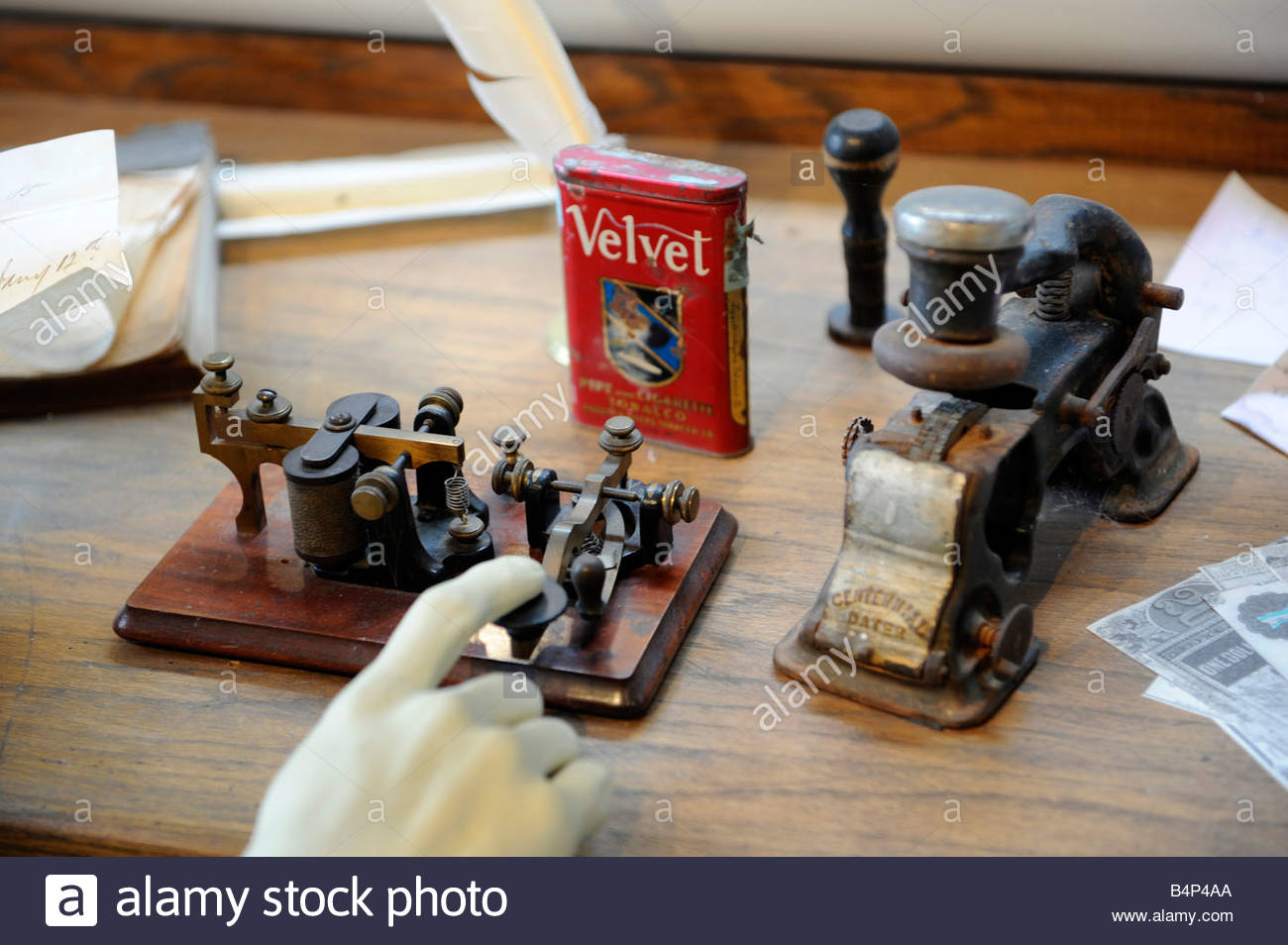
Memory of Telegraphs

I am reproducing write up I posted in the blog three years back when Telegraphs were being closed forever.

“I express my strong protest against the decision of BSNL to close the telegram services. BSNL has issued orders stating that the telegram services will be closed with effect from 15th July 2013.

This decision has been taken by the management without discussing with the recognised unions. Telegraph Services were started in India by the British in 1850. On 5th November, the first message went between Diamond harbour and Calcutta.First it was only for use of the government and later extended to the people. Telegraph was the fastest mode of communications till the telephones services started in the 1930s. Still telegraphs continued as a major method of communication.

The Central Telegraph Offices in Calcutta, Bombay, Delhi, Madras etc. employed hundreds of Telegraphists, Telegraph Clerks and Telgraphmen on duty round the clock. It was not much different in other cities. The cut-cut-cud-cut of the telegraph machines filled the Instrument Rooms. The traffic was so busy that sometimes the staff have to forego even tea-break.

Of course, everything has changed. The Telegraph Services have been stopped from 15th July 2013, despiote the strong protest of the unions.”

Later on our demand, a Museum of Telegraphs has been opened for the future generations to see.

NITI Ayog denies having recommended strategic sale of BSNL and MTNL

Tags

,

The strong protest from the unions/associations of employees, Pensioners and contract workers in BSNL/MTNL have compelled the NITI Ayog to take a U turn in the matter of strategic sale of these two telecom PSUs.

It has issued a statement stating that it has not taken any such decisions. The extract of the statement as reported in the press is given below:

“Denying media reports of strategic disinvestment in Bharat Sanchar Nigam Ltd (BSNL) and Mahanagar Telephone Nigam Ltd (MTNL), Niti Aayog on Wednesday said that the reports are incorrect.

“A section of the press has carried a news report that Niti Aayog may consider strategic sale in BSNL and MTNL,” Niti Aayog stated in a release.

“There is no such proposal with Niti Aayog and the report is factually incorrect,” it added.

According to media reports, the government was considering strategic sale in the telecom majors to revive its growth.” (Courtesy:The Statesman)

This is a big success of the unity of the BSNL and MTNL workers! But workers have to be alert to any further move from the government in this matter.