• ‘My Story’ by Com. Jyoti Basu
  • About
  • Settlement of Medical Bills of Pensioners
  • Historic Victory!
  • Disclosure Policy

VAN Namboodiri's Blog

~ Welcome to V.A.N. Namboodiri's blog…

VAN Namboodiri's Blog

Monthly Archives: July 2020

REMEMBERING COM. M.S.RAJA by K.K.N.Kutty

25 Saturday Jul 2020

Posted by VAN NAMBOODIRI in Obituary, Tributes

≈ Leave a comment

On 14th July, evening at about 7.00 PM my telephone rang. The voice on the other side was of Com. Pijush Roy from Kolkata. He phoned to know whether what has been conveyed to him about Raja was fact or not. It was totally unbelievable and terribly sorrowful when Raja’s death was confirmed by Com. Sreekumar, President of the All India Audit and Accounts Association. Only a few days back I had a telephonic talk with him.. He appeared to be keeping fine. On 14th he had to go to the hospital for he was having some discomfiture. He suffered a massive heart attack and collapsed at the hospital itself. He could not be saved despite the best efforts of the Doctor.

During his long stay at Delhi, he had not suffered any ailments warranting hospitalization. He was however in constant difficulties of back-pain and got some relief from the massaging treatment he took from the Ayurvedic hospital at Trissur. He had no known cardiac problem so long as he was at Delhi. His untimely death was very sorrowful to his friends and his family members. It was really sad that neither his wife nor his son could be near him when he met the death on 14th July, evening..

Com.M.S.Raja took voluntary retirement in November, 2019, a few months before the end of his service career on superannuation. From 2004 to 2019, he was on foreign service on deputation to work as the Secretary General of the All India Audit and Accounts Association, New Delhi, to which position he had been elected continuously in all the triennial conferences held since 2004. He had been staying alone at the Audit Association’s Head quarters at Ghaziabad. Only when his son, on completion of his education and having received employment at Gurgaon, Com. Raja had some solace and company.

Com.Raja came forward to take over the post of Secretary General of AIAAA in 2004 pretty well knowing that he will have to leave his family, (his wife and son )at Mumbai. Ms.Nandini was employed at the Custom Department, Mumbai and she was not able to go over to Delhi, having the responsibility of looking after her aged father. Com.Raja was the natural choice of all the delegates of the all India Conference of the Association.

Com. Raja was fully aware that the position of the Secretary General of AIAAA was a seat of thorns. By 2004, the AIAAA which had been one of the mighty, militant and united organization of the CGEs had begun to slide down . It was a herculean task even for a leader like Com.Raja who had the highest level of conviction, courage, dedication, mass appeal, sense of sacrifice and the capacity to work hard to bring it back to its past glory.

I came in intimate contact with comrade Raja only after his election to the position of the Secretary General of AIAAA, though on many occasions earlier, I had the opportunity to meet and interact with him at Mumbai . He was an extremely straight forward person, a quality perhaps not in demand in the present day world. He never minced words. He had the capacity to tell what he felt without any sophistication, rather bluntly. The very fact that such admirable character will fetch few friends and more foes did not daunt him at all. Nor did he make any attempt to change it. There were many factors that led to the organizational weakness of AIAAA. Some of them were consequences of earlier decisions. But the most important was that the Government and the C & AG administration played an extremely pro-active role to ensure its units are either made defunct or weakened. Its chequered history was full of the life and struggle of quite a number of eminent persons, to be emulated by all those who are connected with the trade union movement.

Maharashtra unit of AIAAA was at Mumbai. It had played a sterling role in the building up of the organization. It is from this unit the leaders like com. E.X. Joseph rose to the eminence. He was one of the founding members of the all India Association. When Com.Raja took over the leadership of the Mumbai Unit, it was a pale shadow of its glorious past. It was the sagacity, courage and leadership qualities of Com.Raja that changed the scenario.. He could bring the movement of the Audit and Accounts employees of Mumbai to its premier position. It emerged under his leadership as one of the best performing units of AIAAA. His sterling personality and unique position made him the natural choice for the post of the General Secretary of the Co-ordination Committee of CGEs, the state unit of the Confederation of CGE & W. Perhaps next to Delhi and Kolkata, Mumbai had the largest number of Central Government employees as most of the GOI departments had their offices at Mumbai. This apart, the biggest unit of Atomic Energy Commission, BARC was located in Mumbai. Being the biggest urban agglomeration in the country, Mumbai had its peculiar problems. In the united struggle of the working class, initially against the LPG and later against the neo-liberal economic policies, the Audit Employees movement under the leadership of Com. Raja had played a vital role. He was closely associated with all the Central Trade Union Centres at Mumbai and had a warm relationship with the movement of State Government employees and Railway workers. He was a well known figure amongst the leaders of all organizations of Mumbai.

It was with that rich experience he landed at Delhi. Within no time, however, he could realize that working from the CHQ , divourced from the exhilarating crowd support, that are ever present at the work spots in the field formations, was a different cup of tea. The demonstration of the sheer strength of the movement often opens the doors of even unwilling authorities at the field formations for a meaningful negotiation. The discussions with an adamant bureaucracy at the apex level were mostly procrastinating and fruitless. As an astute person, he realized that unless the units which are varied both in size and attitude are brought into a minimum level of functioning, insurmountable though, it was difficult to bring the organization to its past glory. It was to accomplish this daunting task he spent most of his time as the Secretary General of the All India Association. He undertook extensive tours to know the reality of the situation obtaining in various Units and mobilize them to ensure that the collective decisions are uniformly carried out. He succeeded to a great extent is borne out of the extensive participation of the employees and officers in the mass casual leave programme organized in 2010.

His tenure as the Secretary General of the Association had been turbulent. The C&AG administration unleashed the worst form of victimization. It appeared that the Govt. and the C& AG Administration had jointly decided to wipe out the organization. Even peaceful demonstration to express resentment of the employees was met with stern, strong and unheard of reprisals. The extensive victimization giving charge sheet to about 12,000 employees must have been an unprecedented action. The utter un-tenabilty of many of the vindictive actions could be seen from the way these cases were got quashed by the courts in the country. But the purpose ostensibly was to create a fear psychosis and terror in the minds of the ordinary employees and thereby weaken the organized functioning of the Association. It must be said to his credit that he could and did withstand the onslaught with conviction, courage and determination. Pretty well knowing that the response from the members and units in the given situation might not be good, he thought it right and need of the hour to commit the organization to the path of struggles while endorsing the call of the Central Trade Unions for strike action against the neo- liberal economic policies of the Government. On a quite number of occasions I was witness to the sheer lack of appreciation for his efforts both from his colleagues and undoubtedly from his permanent critics. That however, did not dither him nor did he waver from the chosen path. The organizational weakness which surfaced especially after the heavy doze of victimization unleashed by the authorities had its adverse impact on the financial stability too. His stay at Delhi leaving his family behind was also beset with financial difficulties and he had not been able to draw his salary every month. That had been the nagging problem till his retirement.

He had been a tower of strength for all of us, especially for me, in the day to day functioning of the confederation. Beset with innumerable problems and financial difficulties, he found time to work for the confederation. The place Com.Vyas was living, some time at Mandir Marg, then at North Avenue and lastly at Feroze Shah Road, was the centre for all of us to meet and discuss the issues concerning the CGE movement. Com.Raja unlike others had to travel quite a distance to reach the city as he was living in Ghaziabad. It used to take not less than 2 hours to traverse the distance. It was only when the Metro was extended to Vaishali, his travel problems eased to some extent. Despite all these problems he used to attend the meetings and contribute immensely to the decision making process.

At the time of preparation of the memorandum to the 7th CPC, the centre of activities was shifted to Manishinath Bhawan, Rajouri Garden, where the ITEF CHQ had been located . Com.Raja stayed there on a number of days as most of the discussions had to be conducted during night sessions. After the death of Com . Vyas, Com.Raja succeeded him to the Standing committee of the Staff Side in the JCM., National Council. His contribution during the preparation and formulation of issues, while tendering evidence before the Commission and later at the negotiation with the Government had all been praiseworthy.

One of the special and sterling qualities, I could notice in him and wanted to imbibe but failed miserably, was his ability to tell what he felt without any sophistication and follow it up with a wonderful laugh to make the ambience normal and jovial. Like his mentor Com.Vyas, Com.Raja was also fond of preparing good food. I do not know whether it was by compulsion of circumstances or really he enjoyed it. I had on innumerable occasions stayed with him at his residence in Ghaziabad. In fact I had found solace in his company and those were really unforgettable days. It is during those days, I could get a fair picture of his life, his family and the ambience in which he spent his childhood. Having born in a feudal landlord family of Kerala, he was supposed to have a wonderful and joyful childhood. That was not the case was the truth. He was a very active participant in student movement of Kerala. From St. Thomas College, Trissur, he was elected as a councillor to the Calicut University. He was also a member of the District Committee of SFI during his college days. His commitment to the ideology, which he realized to be the best for the humanity, had been his forte. He never dithered at any point of time, and also had no hesitation to express his differing opinions and views on contemporary issues quite bluntly.

He had often expressed his wish to settle down at his native village, construct a house on the plot which he had inherited, to be in the midst of his old friends and spend the evening of his life away from the maddening crowd of cities and towns. He was to begin the construction of that dream house. He went over to Trissur with that in mind but got bogged down due to corona Virus . Those remained as mere wishes.

His death has saddened all those with whom he had come in contact and established friendship. It is quite impossible for them to obliterate his image from their minds as he had such a strong and pleasing personality. His immortal and inimitable style of loud laughter to dispel the smog of despair in the ambiance shall linger on as an indelible impression of his personality, perhaps without death. It is only with sorrowful tears I can bid adieu to you, comrade.

-K.K.N.Kutty

Share this:

  • Share on Facebook (Opens in new window) Facebook
  • Share on X (Opens in new window) X
  • Print (Opens in new window) Print
  • Email a link to a friend (Opens in new window) Email
Like Loading...

Train Journeys 18 – Journey to Mansa, Bhatinda

25 Saturday Jul 2020

Posted by VAN NAMBOODIRI in Uncategorized

≈ Leave a comment

1992 April 17.
A few months only have passed after Bhopal AIC of E.III Union and Com.Moni Bose and myself elected as General Secretary and President of the Union, defeating the four decades’ GS Com.O.P.Gupta and his team. Workers all over the country were enthused that a new progressive leadership has come. Every circle wanted the new leadership to attend their conferences. Bhatinda District Union leaders invited me to attend their Conference to be held on 18th and 19th April 1992 at Mansa. I agreed.

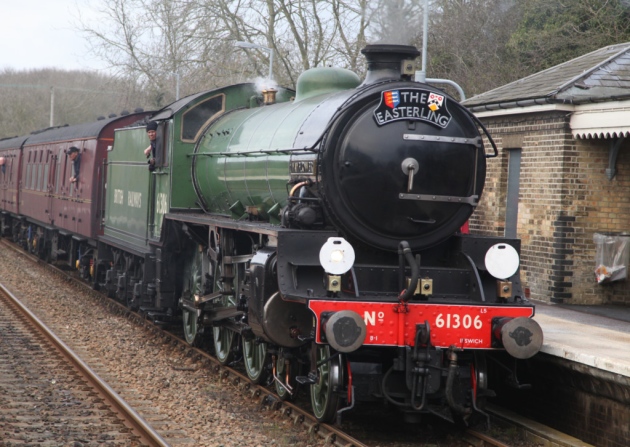
Started for Mansa in the morning train by ordinary compartment. The train was going very slowly, stopping in almost all stations. After some time the train stopped and even after much time did not start. Engine break down. Another engine was connected much later and train started. It was an old type of engine, steam engine running on coal. I had thought that such old engines were gone. But no. Slowly, slowly it reached Mansa at about 20.00 hours. The station was only dimly lit. Real cold though winter season was almost over. Everybody in woolen dresses, but I did not bring. I got down waiting for our comrades. Five – six persons, their faces covered, with long country made guns approached me. I was terrified. It was the time when there were continued confrontations between police and terrorists. It turned out that they were our comrades welcoming me. We got introduced. They told that it was not safe to go out in night without guns. I was thinking that they will arrange stay in some hotel, telephone exchange or Gurudwara. They said it is not safe and took me to the residence of Com. Prathap Singh. The houses were built in such a way that the partition walls seemed to be same. It was spacious inside and after food, I slept heavily. I was very tired.
By about 06.00 hours, the host came to the room with a cup of hot tea telling that his wife told him that Kerala people will take tea very early morning. Women always are aware of such small and intricate matters. It was very good tea.
The Divisional Conference went on for two days. Com. N.K.Jeet was the District Secretary, who always stood with our progressive group. (Now he is Advocate in Punjab High Court, I am told).Returned next day to New Delhi.

Share this:

  • Share on Facebook (Opens in new window) Facebook
  • Share on X (Opens in new window) X
  • Print (Opens in new window) Print
  • Email a link to a friend (Opens in new window) Email
Like Loading...

Date for submission of Life Certificate of SAMPANN Pensioners extended up to 30-11-2020 as requested by AIBDPA

24 Friday Jul 2020

Posted by VAN NAMBOODIRI in AIBDPA - BSNL DOT Pensioners

≈ Leave a comment

AIBDPA HAD DEMANDED EXTENSION FOR SUBMISSION OF LIFE CERTIFICATE OF SAMPANN PENSIONERS UPTO 30-11-2020.
NOW DOT HAS ISSUED CLARIFICATION EXTENDING THE DATE FROM 30-06-2020 UPTO 30-09-2020 .

Share this:

  • Share on Facebook (Opens in new window) Facebook
  • Share on X (Opens in new window) X
  • Print (Opens in new window) Print
  • Email a link to a friend (Opens in new window) Email
Like Loading...

Train Journeys 17 – Journey in RMS compartment to Amritsar

23 Thursday Jul 2020

Posted by VAN NAMBOODIRI in Train Journeys

≈ Leave a comment

During 1990s a good number of struggles were organised by the Confederation of CG Employees as also NFPE and NFTE. It was a practice to send leaders from Central Head Quarters, Delhi to the states to organise the struggle. Com. Des Raj Sharma, then Dy. General secretary P.IV union and I were allotted to tour Punjab Circle. I was happy that there was company in the journey.

The plan was to go directly to Amritsar, the last point, and then return to cities Jalandhar, Ludhiana and Chandigarh one after another. Com.Desh Raj Sharma was a sincere and dedicated leader who was also very hard-working. He gave excellent assistance to Com. K.Adinarayana, then General Secretary, P.IV. Com. Deshraj told me not to worry about arrangements, he will do whatever needed. ‘You be at the railway station in time’, he said. I was in the station with bag etc.sufficiently early, as is my usual habit. Deshraj reached in time and the train has arrived. He took me to the RMS compartment. There used to be RMS compartment in all important trains to carry the postal articles and also to sort them from the train itself and deliver at the concerned stations. It was very heavy and hard work. Some times there will be sleeping berths for the off duty officials to rest. It was early morning and we sat discussing union matters, also with the RMS staff. They also liked the presence of two general secretaries and discussion of union matters.I asked Deshraj why travel in RMS compartment? He told me that ‘you do not know the rush in the train going to Amritsar, the city of Golden Temple to which many passengers will be there.’
In whichever station the train was stopping, postal luggage and articles were being put in. After some time, the space was full and we had to sit on the articles. At Ludhiana, which is a big manufacturing city of woolen clothes, sports articles, cycles etc. luggage after luggage was being put in. We had no place to sit except on the bags almost touching our heads to the roof of the compartment. The RMS staff were also in difficulty, but that is their duty and they are adjusted to it. I was worried, but Desh Raj was smiling.You have to learn to travel during rush hours, he said.

Somehow we reached Amritsar and got down. There was a good meeting. The same in all the cities one after another. But I insisted that henceforth we will travel only in the regular compartments. He agreed. Thus the journey in RMS compartments was over.

Share this:

  • Share on Facebook (Opens in new window) Facebook
  • Share on X (Opens in new window) X
  • Print (Opens in new window) Print
  • Email a link to a friend (Opens in new window) Email
Like Loading...

P and T TU Movement in India during II World War and thereafter (1939 – 1954) ( by B.N.Ghosh ) CHAPTER : XVIII REALIGNMENT TALKS

23 Thursday Jul 2020

Posted by VAN NAMBOODIRI in B.N.Ghosh Book, Uncategorized

≈ Leave a comment

CHAPTER – 19
REALIGNMENT TALKS
The Union of Posts and Telegraph Workers which came in to existence on the 13th August, 1947, during two and a half years of its functioning, was able to build itself up as a powerful fighting organization and did not remain as merely a petitioning body. The members of the U.P.T.W got a new way of thinking. The very functioning of Postal, R.M.S Telegraph and Telephone together as a compact body had created a force which was considered by the Government as a permanent menace to it. It must be admitted that even other P&T Unions which were functioning independently outside the U.P.T.W could not escape from its influence. Removal of Com.Gupta gave relief to those who had tabled the no-confidence motion against him but the action of the Supreme Council was deplored by many who were imbibed with real trade union spirit and did not like to confine the activities of the Union to petitioning only. Removal of Com.Gupta no doubt gave a temporary satisfaction to the P&T authorities, but this organization which sustained a set-back for the time being due to internal disunity and repression could shortly overcome it. The progressive elements once again with slow but steady pace began to be on the march. The U.P.T.W again as it seems found a place in the bad books of the Government.
While the U.P.T.W was passing through a crisis, the other P&T Unions such as the All India Postal & R.M.S Union, the PMG’s Office Staff Union, the All India Telegraph Workmen’s Union, the All India Telegraph Revenue Offices Staff Union, the All India Telegraph Line staff Union, the All India Telegraph and Telephone Engineering Union gradually got themselves affiliated to the Posts and Telegraph Federation of which Dewan Chaman Lal was the President. The All India Telegraph Union which was keeping away from the Federation also got itself affiliated to the Federation in 1952. As this Federation was a loose one the federating Unions were functioning not only independently but also were often putting contradictory demands, which gave the authorities an opportunity to reject them.
Com.K.Ramamurthi who succeeded Com.Om Prakash Gupta, on assuming charge of the Union of P&T Workers, found himself confronted with three problems. Firstly the situation created by introduction of two labour bills in the Parliament, viz, Labour Relations Bill 1950 and the Trade Unions Bill 1950. Secondly reinstatement of those who were still in custody. And thirdly, realignment proposal of the Government which was still before the Unions. All the Central Trade Unions and other Unions in private and public sectors rose as one body in their protest against these black bills. All the labour leaders and section of the members of Parliament belonging to opposition raised a country wide agitation against the bills. The P&T Unions which were then functioning in four groups, viz., the P&T Federation, the All India Postmen and Lower Grade Staff Union, the U.P.T.W and the All India Telegraph Union played their part well and raised their voice of protest against the Bills which were aimed at isolating the civil servants from the field of labour and denying them the right of organizing as trade unions and the power of collective bargaining. The P&T Employees, the Railway Servants and a few other categories of staff of the Government services enjoyed certain concessions and privileges even under the alien administration. These rights were sought to be withdrawn. Had the Bills been passed, the civil servants and their organizations would have been reduced to the status of mere supplicants, functioning as petitioning bodies.
While the fundamental rights of organization were intended to be withdrawn, the Government did not think it prudent to formulate any measure to regulate labour relations with millions of their servants.
The Work Committees of the staff Councils as provided in the Bill were the most detestable instruments for breaking the solidarity of Unions. They could not solve the problem.
Sri.Guruswamy, the General Secretary of the Railwaymen’s Federation in one of his speeches said: “The more the shocks, the greater would be the resistance. And this would grow to formidable proportions, if not today, tomorrow and force the civil servants to seek political amelioration of service conditions.”
Shri.Ashok Mehta, who was then connected with the Hindu Mazdoor Sabha, issued a special call to the P&T workers and stressed the need to co-ordinate and centralize all their efforts to get the two black Labour Bills scrapped. The Union of Post and Telegraph Workers in fact observed an anti-black-bills day on the 29th January, 1951. All the P&T Trade Unions were more or less critical about the Bills. Everybody thought that unionism specially in the public sector was imperilled. The Railwaymen’s Federation under the leadership of Shri.Guruswamy was up and doing to counteract the Government’s attempt for the very passing of the Bills.
The agitation took such a turn that the Government had no other way but to withdraw the Bills. The P&T Unions in this respect played their part well.
The Negotiating Committee which was appointed by the Supreme Council meeting of the U.P.T.W held on the 24th February, 1949 met the Honb’le Minister, Shri. Rafi Ahmed Kidwai on the 7th February, 1950. This deputation amongst other items discussed the question relating to release and reinstatement of the P&T worker who were arrested in connection with the strike notice of the U.P.T.W.
The deputation consisted of
Offical side
The Honob’le Shri. Rafi Ahammed Kidwai
The Honble Shri. Kurshidlal
Mr.V.K.R.Mnon, Secretary to the Communications Ministry
Mr.H.L.Jerath, Sr.DDG
Mr. R.C.Vaish, D.D.G (SE)
Mr.S.R.Sud, Director (SE)
Union side
Mr.S.Guruswamy, leader
Mr. Thulasiram, President
Mr.K.S.Pitker
Mr.K.Ramamurti
Mr. V.P.Menon
Mr.Hemchandra
Mr. K.V Rao
Mr. N.P.Subramaniam
Mr. M.Bhattacharjee
Mr. J.K.Maitra
The Hon’ble Minister said the P&T administration had nothing to do with the detention of the workers but however so far as reinstatement in service of those under suspension was concerned, expeditious action would be taken. Shortly after this on the 7th March, 1950 Coms. Tapan Mustafi, Rai Krishna Banerjee and Abhoy Mukherjee who were under suspension after release, were called to duty. Coms.Provat Ghosh , Gouri Datta and myself were reinstated on the 2nd June 1950. Reinstatement of Com . R.N.Saha took place in November 1950 while Com. R.P.Chatterjee was not reinstated before the 31st December, 1950. In fact, during 1950 most of the permanent workers in custody were released and reinstated. Com.V.S.Menon was not however released before 4-1-1950 and was later on reinstated on 25-5-1951. Com.K.G.Bose after his release on 31-5-49 was proceeded against under Conduct Rules and dismissed from service on 05-10-53. Com. Saroj Mohan Chatterjee who was released from jail on 31-5-49 was dismissed from service on 11-4-51. Com. Durgesh Banerjee who was reinstated was subsequently removed from service under S.N.S Rules. Misses Asim Banaerjee, Susil Chakravarthy, Sachin Banerjee of Telephones were reinstated during this period. The year 1950 was a very odd year for Bengal Circle and it was a tremendous burden on the U.P.T.W leadership to tackle the situation. It is not worthy that the P&T workers of Bengal in spite of harassment and continued oppression stood the test and maintained the dignity and tradition of the P&T trade union movement.
The U.P.T.W during 1951 once again took the initiative to give the realignment scheme a practical shape. An agreement was once again signed by the General Secretaries of U.P.T.W, All India Postmen and Lower Grade Staff Union, All India Telegraph Workmen’s Union, All India Postal & R.M.S Union in regard to the revised scheme for bringing about realignment of Unions which would ensure a rational and scientific growth of the trade union movement in the P&T services.
The agreement provided for dissolution of all existing unions and establishment of sectional unions as well as the central Federation. The agreement was signed on the 15th March, 1951. The representatives had further agreed to confer again on the 30th March, 1951 to draft the constitution of the realigned unions and the central Federation. But it is a fact nothing happened on the 30th March. Shri. R.S.Srivastava , General Secretary of the All India Postal and R.M.S Union did not arrive. Com.Gianchand Khanna of the Telegraph Workmen’s Union was unwell and Com. P.C.Chatterjee of the All India Telegraph Union flatly refused to attend the meeting. He rather preferred to give a trial to the Government ‘s latest scheme which was to the effect that the Union of Post &Telegraph Workers should surrender the R.M.S membership to the All India Postal and R.M.S Union, its Telegraph membership to the All India Telegraph Union, its Engineering membership to the All India Telephone and Telegraph Engineering Union, its Line staff membership to the same engineering Union, its Class IV membership to the All India Telegraph Workmen’s Union and its Circle Office membership to the ALL India Administrative Offices Association and its Postmen and other Class IV membership to the All India Postmen and Lower Grade Staff Union, retaining its structure the Postal (Class III) section only. The U.P.T.W did not agree to this. It is difficult to say as to whether the Government or the different unions were responsible for burying alive the realignment proposal for the time being.
Had the proposal for realignment of P&T Unions on trade basis with a strong central Federation which came from the Government side as early as in 1948 been accepted, the entire P&T trade union movement would have advanced on a different line. The leadership of various unions preferred to remain disunited and divided. The P&T workers took initiative in 1946 and through their struggle there came the Good Conduct Pay and the Pay Commission. The 1949 struggle of the P&T(U.P.T.W) brought about increase in dearness allowance but in 1951 the leadership of the trade union movement in the public sector passed into the hands of the Railwaymen’s Federation which served the Government with strike notice and as a result the Government came down and increased Rs.10/- as dearness allowance. The P&T Organisations which were then functioning under four groups viz. P&T Federation, U.P.T.W, Postmen and Lower Grade Staff Union, A.I.T.U could not make a joint effort and take the lead. A section of the leadership of the P&T trade union movement keenly felt this and in right earnest began working out the scheme for bringing in to being one organization. The days were rapidly changing. During foreign rule the Government believed in ‘divide and rule’ policy. But in independent India, the position was not so. The Government had been trying to bring about one organization of the entire P&T workers through process of realignment. The workers were trying for it. A section of the reactionary leadership here and there had been putting all obstructions to it. The sincere element in the organization did not however stop. The Government poking was also there.
The alignment Conference which was to meet on the 30th March actually met on the 15th May, 1951, under the Chairmanship of the Hon’ble Minister for Communications. The Hon’ble Minister took great interest in bringing about unity in the P&T organizations. Almost all the unions took part in the conference and an Implementation Committee with the following persons was formed.
1. Shri. K.Ramamurthy(U.P.T.W)
2. Shri. P.S.Sreenivastava (A.I.P.R.M.S.U)
3. Shri. P.C.Chatterjee(A.I.T.U)
4. Shri.V.G. Dalvi (A.I.Postmen & Lower Grade Staff Union)
5. Shri. G.C.Khanna (A.I.T.W.U)
The display made by the leaders of some of the unions in the Minister’s meeting was not at all commendable but I refrain from giving the name of those reactionary leaders.
It was agreed that there will be 8 unions, one for Class III and one for Class IV for each of the four arms of the department, viz., Postal ,R.M.S, Telegraph Traffic and Telegraph Engineering. It was further agreed that it will be open to the Postal and R.M.S. wings to function as a joint union for Class III employees of the Postal and R.M.S . branches and that similar option would be provided on the Telegraph Traffic and Telegraph Engineering side as well. Since the All India Telephone Revenue Accounts Union and the All India Administrative Offices Association do not come within the purview of the workers’ unions, they will not be considered for the scheme of realignment. The question of reorganizing them into one union or association will be taken up separately.
The P&T Industrial Workers will continue to be represented by a separate union and will not be within the scheme of realignment.
The All India Postal Accountants Association, the All India R.M.S Inspectors’ Association and All India Postmasters’ Association would cease to exist as separate entities.
It was further agreed that the realignment of unions would be completed by the 31st October, 1951. The Committee as per decision was to meet again in the Minister’s room on 31st May, 1951.
The Implementation Committee which met on the 16th May, 1951 with Shri. H.L.Jerath in the Chair agreed to disagree on all points from one another. The Committee again met on the 17th in Shri.Jerath’s room. After some discussion, Messrs. Chatterjee, G.C.Khanna and R.S.Srivastava abruptly left the meeting. Com. Dalvi and K.Ramamurti remained inside. The withdrawal of three members of the Implementation Committee from the meeting created such an atmosphere that the proposed meeting with the Ho’ble Minister on the 31st May, 1951 also did not take place. Thus the curtain rung down on the second phase of realignment talks.
The P&T workers wanted unity. Therefore this walking out of a section of leadership was not enough to kill the unity move which was coming from the rank and file of the common workers of this great P&T department having a glorious past.
Consequent on the serving of strike notice by the All India Railwaymen’s Federation, the Government no doubt increased dearness allowance by Rs. 10/- but simultaneously the President promulgated on July 12,1951 an ordinance empowering the Government to prohibit strikes in essential services, which runs as follows:
“The ordinance, which is called Ordinance No.1 of 1951 gives power to the Government to issue notifications prohibiting strikes in any of the specified essential services for such areas and for such periods as may be deemed necessary.
“This notification will, in the first instance remain in force for six months but are renewable for a similar period. Penalties have been provided for persons who go or continue on strike in the notified services and also for the persons who instigate strikes in the notified services or render financial aid for these illegal strikes. The penalties includes imprisonment.”
A Press Note issued by Government stated:
“It has come to the notice of the Government that persons employed in various other essential services which are also connected with the movement of food, or other activities essential for the maintenance of the life of the
community are likely to go on strike either in sympathy with the Railwaymen or for other reasons.
“The Government have come to the conclusion that all measures should be taken to safeguard the welfare and the interests of the people at large against the consequences that may follow from sections of essential workers going on strike. They have, therefore, decided to take powers to prohibit strikes in certain essential services.”
It is noteworthy that while the strike movement launched by the Union of Post and Telegraph Workers was suppressed by the Government by applying the Preventive Detention Act, the strike movement launched by the Railwaymen’s Federation in 1951 was combated by the Government by promulgating an ordinance empowered to Government to prohibit strikes in essential services. On both the occasions, although the Government stopped the strike by using different methods, under the Trade Disputes Act, both the Railwaymen’s Federation and the P&T workers Union were entitled to go on strike after serving 14 days’ notice. The Government therefore went against their own act and suppressed the movement. It was therefore evident that in spite of provision in the Act entitling the Government servants in essential service to go on strike, the Government did not allow them to adopt the course. Even the Postal Strike in 1946 was declared by the Government to be illegal although the strikers were legitimately within their rights to go on such strike under the Defence of India Rules. And it took the workers six years to get the half of strike period pay.
With the abandonment of realignment proposals, the leadership of many of the two dozen unions heaved a sigh of relief and continued to function merrily throwing mud on each other. It is not that all the unions played the same game. There were exceptions to this. It is not my intention to name them but I may mention here that some of the big unions at least had most undemocratic constitutions which helped their leaders to function in a despotic manner. Suspension of branches and branch office-bearers was a daily occurrence. Evidently, such process was hindrance to the growth and expansion of the unions. The All India Postal & R.M.S Union, the Indian Posts and Telegraphs Union and the All India Postmen and Lower Grade Staff Union had more or less constitutions on the same lines and democratic in nature. The constitution of the Indian Telegraph Association and the All India Telegraph Union were almost alike, undemocratic in nature. The Central Working Committee functioning at the headquarters could bring the entire organization into non existence with out consulting the membership and even the General Committee. After the merger had taken place the membership of the I.P.T.U and I.T.A joined the U.P.T.W. The A.I.T.U kept out of the merger with the belief that being the only union of the Telegraphists, all would gradually join it, but in fact such a calculation did not materialize. Although the telegraphists in general were favour by inclined to have a pure union of theirs, still the A.I.T.U did not flourish. Many remained with the U.P.T.W and many more preferred to remain non-members because of the undemocratic constitution of the A.I.T.U. The progressive section of telegraph members of the U.P.T.W left it and joined the A.I.T.U with a view to work within that Union, to democratize it and also to put pressure on the centre to join one organization through process of realignment.
Attempts were made at the Agra conference of the All India Telegraph Union in 1951 to change the constitution and to run the union on a more democratic basis. But this could not be achieved because the President of the Union gave a ruling that the Conference of delegates elected by the branch was merely an advisory body. According to him the All India Committee was the only competent and supreme body to do all such things. He held out that the earlier Conference was held in 1935 and during sixteen years from 1935 to 1951 the All India Committee was dealing with all constitutional questions and that system should continue even now. A large number of delegates disagreed and staged a walk-out and the Conference transacted its business as usual on the strength of the ruling by the Chair. But this Conference paved the way for better functioning of the union later on. The All India Committee once more met at Delhi from the 12th to 15th May, 1953 under the chairmanship of Dewan Chamenlal and changed the constitution to a certain extent keeping in view the pressure and the views expressed by the delegates at Agra Conference. At this meeting of the All India Committee, it has decided to setup the headquarters of the A.I.T.U at New Delhi and Shri. P.S.R. Anjeneyalu was elected as General Secretary. The Calcutta Central Headquarters also went on functioning with Shri.B.C.De as General Secretary for a few months. However there was a settlement. A joint All India Committee meeting of the Delhi group and also of Calcutta group was held in November, 1953. Shri.P.S.R Anjaneyalu was unanimously re-elected General Secretary of the All India Telegraph Union to function from New Delhi. From this time onwards, the A.I.T.U began to work with a changed outlook and began to support the realignment scheme.
The All India Postal & R.M.S Union after its revival at Allahabad in 1947 – 48 was functioning from there with Shri.Raghubhans Sahai Srivastava as its General Secretary. This Union had its branches in U.P., Bihar, Calcutta and later on branches were started at Bombay and Madras and the General Secretary-ship passed into the hands of Shri.Birendra Nath Ghosh, M.A.B.L, and began functioning from Calcutta. The R.M.S. Branch of the U.P.T.W consisting of members from “C”,”N”,”H” Divisions dissolved the branch and rejoined the All India Postal & R.M.S Union. The members of the All India Postal and R.M.S Union specially of Calcutta Postal Branch were deadly opposed to any realignment scheme which would not allow functioning of All India Postal and R.M.S Union, on sentimental grounds. They had a special fascination for the very name. The groups of R.M.S members who left the U.P.T.W and joined the R.M.S Union which was a branch of the All India Postal and R.M.S. Union in Calcutta had no such feelings. The group began working within the Union to bring about some sort of realignment through agreement. (To be continued)

Share this:

  • Share on Facebook (Opens in new window) Facebook
  • Share on X (Opens in new window) X
  • Print (Opens in new window) Print
  • Email a link to a friend (Opens in new window) Email
Like Loading...

Red Salute to Captain Lakshmi on her 8th death anniversary

22 Wednesday Jul 2020

Posted by VAN NAMBOODIRI in Obituary, Tributes

≈ Leave a comment

23rd July 2020 is the 8th death anniversary of Captain Lakshmi, the legendary head of the women’s regiment of Indian National Army, headed by Subhas Chandra Bose.

Born in Anakkara, Kerala on 24th October 1914 to the well known couple Shri Swaminathan and Smt. Ammukkutty Swaminathan, both activists in the freedom movement, she was well educated, passed MBBS and practiced medicine for some time. Later, joined the Indian National Army (Azad Hind Fauj) led by Subhas Chandra Bose and became the Captain of the Rani Jhansi Regiment marching to Delhi from Burma as part of the struggle to free India. But after the British victory in the II World war, she was arrested along with many of the INA leaders and sent to India for trial.

Lakshmi married Captain Saghal of the INA later. Lakshmi Saghal started practicing medicine in Kanpur, where she was settled. Two daughters, Com.Subhashini Ali and Smt. Anisa Puri. Dr. Lakshmi was a solace to the poor patients, whom she treated free. She Joined CPM(I) and contested for the post of President of India as a candidate of the left parties, but lost. She was a Member of the Rajya Sabha as a candidate of CPI(M).

Captain Lakshmi passed away at the age of 97 on 23-07-2012. Daughter Com. Subhashini Ali is PB Member of the CPI(M) and leader of AIDWA. Captain Lakshmi will always be an inspiration for the people of this country and especially women.

I had the opportunity to meet her at Delhi as also at Kanpur and visit her home. Later also I could go there and meet Com. Subhashini Ali in connection with our activities in U.P. She was very helpful.

Red salute to Com. Lakshmi Saghal on her 8th death anniversary!

Share this:

  • Share on Facebook (Opens in new window) Facebook
  • Share on X (Opens in new window) X
  • Print (Opens in new window) Print
  • Email a link to a friend (Opens in new window) Email
Like Loading...

AIBDPA writes to CMD BSNL on provision of FTTH at the residences of retired BSNL employees with concession.

22 Wednesday Jul 2020

Posted by VAN NAMBOODIRI in AIBDPA - BSNL DOT Pensioners

≈ Leave a comment

AIBDPA/ BSNL-FTTH/2020 22nd July, 2020

To

Shri P.K. Purwar,

CMD, BSNL,

Bharat Sanchar Bhawan,

Janpath,

New Delhi -110 001

Sir,

Sub: – Provision of FTTH at the residences of retired BSNL employees with concession – reg.

Ref: (1) BSNL CO No.2-7/2007-PHA dated 20-07-2007.

(2) BSNL CO No.2-6/2005 dated 03-06-2011.

We wish to bring to your kind notice the following issue for favourable consideration.

BSNL Retirees have been provided with rent free residential land line connection and granted broadband with concession vide orders referred to above.

You may be aware of the fact that in many places landline phones are not being maintained due to shortage of staff and lack of accessories. As such the services are virtually denied to the retirees. In the case of broadband, the assured speed of a particular plan opted is not at all available in the sub premises.

Now, BSNL is concentrating on FTTH and many broadband subscribers, including pensioners are switching over to FTTH. So, we request you to kindly grant concession to Retirees in FTTH, as in the case of broadband.

It is regretted to point out that our repeated requests to grant concession in broadband to DOT Retirees are yet to be considered. We would request you once again to extend the same concession being given to BSNL retirees to the DoT Retirees also.

Awaiting early positive action and

Thanking you,

Yours sincerely

K.G. Jayaraj

General Secretary

CC: (1) Shri Arvind Vadnerkar, Director (HR), BSNL, Bharat Sanchar Bhawan, Janpath, New Delhi-110 001

(2) Shri S.K. Gupta, Director (Finance), BSNL, Bharat Sanchar Bhawan, New Delhi – 110001

(3) Shri Vivek Banzal, Director (CFA), BSNL, Bharat Sanchar Bhawan, Janpath, New Delhi – 110 001

(4) Shri Ashutosh Gupta, GM (Admn.), BSNL CO., Bharat Sanchar Bhawan, Janpath, New Delhi – 110 001

(from AIBDPA Website aibdpa.com)

Share this:

  • Share on Facebook (Opens in new window) Facebook
  • Share on X (Opens in new window) X
  • Print (Opens in new window) Print
  • Email a link to a friend (Opens in new window) Email
Like Loading...

Train Journeys 16 – To Calcutta AIC

22 Wednesday Jul 2020

Posted by VAN NAMBOODIRI in Train Journeys

≈ Leave a comment

1981 December. All India Conference of All India Telecom Employees Union Class III is to be held at Calcutta from 29th December 1981 to 2nd January 1982. Starting the conferences in the last week of the year and ending in the first week seems to be tradition with NFPTE and affiliated unions. The second Federal Council at Calcutta ( 28.12.1955 – 02-01-56), third Federal Council at Hyderabad ( 26.12.1956 – 01.01-57), Fifth Federal Council at Jaipur ( 26.12.1958 – 31.12.58), eighth Federal Council at Madras ( 27.12.1963 – 01.01.64) and so on.  It will be very cold in the northern India, but it is the time for marriages, festivals, conferences. It is the time of holidays also. With layers of warm clothes and good food, time for enjoyment.

Myself Circle Secretary of the major Telephone District, Calicut. ( For a few years major districts were  treated as circles). This AIC going to be very important since decision to be taken for  Strike called by the Central Trade Unions. It was well known that OPG, GS, E.III was not in favour of  strike. Hence we had to put maximum pressure. More number of delegates required. We in Kerala decided to attend in large numbers. Calicut District alone 38 delegates.100 delegates from Kerala. E.III AIC was not much strict about number of delegates. Delegates from Calicut started on different dates according to availability train reservation. Myself, wife Pankajam, P.A.Velayudhan, Janaky Kutty and M.Kalliani started by the Howrah compartment in West Coast Express leaving for Madras at 00.15 on 25th December. Reached at 14.30 hours at Madras. Howrah Coach in the shunting yards till 20.00 hours. Lady comrades went to a relative’s house, took bath, food and returned. Myself and PAV in the train. We were afraid whether the snakes moving uninterrupted in the thick grass near the shunting yards will get in the compartment. Exactly at 20.00 hours train started for Calcutta. Took bath from train itself. Ate sweets and snacks brought from homes. A lot of other delegates also in this Coromandal Express. Reached Howrah in the early morning of 27th. Coms. Balu, Punnassery Balan and other delegates who reached earlier were waiting in station. By bus went to AIC Reception Committee office, took meals from exchange canteen and met senior leaders of Calcutta including Com. Ananata Bhattacharjee, General Secretary, Reception Committee. We went for a tour of the city in a bus. Visited many places including Botanical gardens. Com. Kalliani lost her bag in the bus, but somehow we managed to get it after going to the bus head office.

AIC addressed by Coms. Jyoti Basu (CITU) and Indrajit Gupta (AITUC). Mammoth procession in town in afternoon. Heated discussion about participation in the national strike. Coms.Moni Bose, PVC, myself and many comrades strongly demanded participation in strike, while OPG and followers tactically opposed. At last it was decided to strike ‘wherever possible’. I was elected Federal Councillor. New year day was celebrated in a big way by the delegates. On 3rd some of us went to the residence of Com. Moni Bose and had tea. All of us had a detailed tour of the historic city and visited many heritage sites. Fortunately we could hear Com.EMS addressing the rally in Parade Grounds in connection with the W.Bengal state Conference of CPI(M). Hearing three stalwarts in a few days.

Return journey became a big problem. Although we had booked the return tickets from Calicut itself, some tickets were in waiting list. Immediately on reaching Calcutta we had checked in the station, but they were still in W/L. Every day some of the delegates went to  railway station to find out whether  tickets  are confirmed. Negative. But at the same time, those who booked return tickets after reaching Calcutta had got reservation. There was something very very wrong going on. Even on 3rd January when enquired, no confirmation. We had to start by 17.00 hours on 4th.

Without confirmation, it will be almost impossible to travel. Tickets had to be  confirmed. I went to Railway Station in the morning and enquired. Tickets still not confirmed. Waited to meet  Chief Superintendent of the R/Station. Went to his office. He has not reached. It was on the 5th or 6th floor. The peon there started going down the lift with a wheel chair stating that the officer is arriving. I went along with him in the lift. The officer was sitting in the car. He was helped to sit in wheel chair, for which I also helped. Came up in the lift and to his room, myself also also helping. On reaching his office room, he told us to leave the room. I understood that he has to arrange himself seated in his chair, which he wanted to do without help.

After few minutes I was called to the room. I told him that even after one month of booking, our tickets are not confirmed, while even those booked by delegates after reaching Calcutta have been confirmed. First he said nothing could be done as it will be according to rules. Then I had to tell him that we are from telephones and will complain to higher authorities. Then he asked me to wait outside. In the meantime I went to the Union Secretary and told him about the difficult situation. After some time, I was called by the Superintendent. He got all the tickets confirmed, but in different different compartments. OK, at least all tickets confirmed.

We waited in the platform for the Coramandal train to arrive. Platforms congested due to heavy rush of passengers. Train arrived, not much time to start. We rushed to each compartment, got the concerned comrades to their respective berths. Somehow managed to put every body in the train.

By evening next day reached Madras. Got down. Visited some places in the city. Stayed in a hotel. By 11.30 on 5th started for Calicut by West Coast Express. Heavily slept in the night. Reached Calicut next day. Everybody tired, but happy and satisfied.

Share this:

  • Share on Facebook (Opens in new window) Facebook
  • Share on X (Opens in new window) X
  • Print (Opens in new window) Print
  • Email a link to a friend (Opens in new window) Email
Like Loading...

P and T TU Movement in India during II World War and thereafter (1939 – 1954) ( by B.N.Ghosh ) CHAPTER : XVII AGAIN IN BATTLE DRESS

21 Tuesday Jul 2020

Posted by VAN NAMBOODIRI in B.N.Ghosh Book

≈ Leave a comment

CHAPTER- 17
AGAIN IN BATTLE DRESS
The Department did not relish the merger of the unions and from the very beginning began to look upon the U.P.T.W with suspicion. The Department in fact became afraid of the strength of the U.P.T.W. That is why in spite of best efforts made by the Negotiating Committee, the Government did not accept the merger. As late as on the 16thof January, 1948, they accorded recognition to the U.P.T.W as a new Union. The bureaucracy wanted division in the camp and by using underhand methods could influence a small section of the members of the All India Postal and R.M.S Union to hold a conference, revived the All India Postal and R.M.S Union which got the recognition of the Government and began functioning in limited areas.
Amongst those who took leading part in reviving the All India Postal & R.M.S Union prominent were Shri. Raj Bahaur, Shri. Raghubans Sahai Srivastava and Shri Jathindra Nath Banerjee. In spite of all these facts, the Union of Posts and Telegraph Workers, which functioned for a period of 7 years was able to keep on records an account of its valuable services to the cause of the P&T workers. It was able to advance the movement and create enough potentiality amongst the members of the Union. The Indian Telegraph association and the Indian Posts and Telegraphs Union which were the only paying members of the Federation could foresee the danger of the Federation, which had not joined the merger, functioning as a rival to the U.P.T.W. It is therefore most wisely that Dr. G.Noronha and Com.M.A .Jabbar, two veteran trade unionist of India called a meeting of the Federation and dissolved it and informed the Government accordingly.
The Union of Post and Telegraph Workers began functioning with confidence. It attached a large number of non-members. It cannot be gainsaid that the great awakening that took place amongst the P&T workers in general as a result of July, 1946 strike helped a great deal in bringing the U.P.T.W into existence.
In-spite of the fact that the Postmen Union did not join the merger, the Union under the able leadership of Shri.V.G.Dalvi began to work in close co-operation with the U.P.T.W, both the Unions being affiliated during this period to the ALL India Trade Union Congress.
On the 14th November,1947, the Negotiating Committee appointed by the Merger Conference, under the leadership of Dr. G.Noronha, met Shri. Krishna Prasada, the Director General Posts and Telegraphs. The negotiating Committee made unsuccessful attempts to secure recognition of the U.P.T.W and get favourable reply on all the points embodied in the short-Term Demands including acceptance of Joshi- Sardar Mangal Singh recommendations on revision of scales of pay. 1947 ended in this way.
The Writers of the history of P&T trade union movement will however have to acknowledge that 1946 and 1947 were not only eventful years but also a turning period in the history of the P&T trade union movement.
1. The formation of the P&T Federation in January, 1946.
2. Serving of Strike Notice by the Federation in February, 1946;
3. Appointment of an Adjudicator;
4. An announcement by the Government in the Assembly on the 7-2-46 of appointment of a Pay Commission;
5. Hungry-Badge Campaign by the Postal and R.M.S workers on the 16th February,1946;
6. The historic July P&T strike (1946);
7. Evidence before the Pay Commission by different Unions and the Federation;
8. Independence of India (15th August, 1947);
9. Affiliation of All India Postal and R.M.S Union and Postmen & Lower Grade Staff Union with the All India Trade Union Congress(February 1947)
10. Merger of three P&T Unions resulting in formation of the Union of Posts and Telegraph Workers (13th August 1947)
are some of the very significant landmarks.
Let me put on record here that earlier on the 20th July, 1947, three weeks before partition of Bengal and Assam Provincial Branch at Dacca. In this meeting, we discussed all the problems which would arise as a result of partition of Bengal on the 15th August. In this meeting also I tendered my resignation from the post of General Secretary of the union which I was holding for full 15 years. In my resignation letter I made it clear that I was elected by the entire Bengal and Assam, so after partition and constitution of Assam as a separate Circle, I might not hold the confidence of truncated West Bengal. I however made it very clear that if the Unions in West Bengal would re-elect me, I would be glad to serve the Union. The Council accepted my resignation. Later on the Working Committee of the West Bengal Union unanimously re-elected me as General Secretary.
After the Merger conference was over, as per directive of the Co-ordinating Committee, Assam was separated from the rest of Bengal. Mr. Shamsul Hussain was appointed to organize a Provincial Union of the U.P.T.W. Mr. Hussain instead of forming a branch of the U.P.T.W organized a branch of the All India Postal and R.M.S Union. So in the November meeting of the Co-ordinating Committee held at Delhi, Shri. N.N.Bhattarcharjee of Gauhati was appointed with full power to hold a conference of the P&T workers of Assam with a view to forming a Provincial Branch of the U.P.T.W. In the first week of December, a conference was held and U.P.T.W came into being in Assam. The R.M.S. workers of Assam however preferred to remain aloof and later on joined the revived All India Postal & R.M.S Union.
Most of my energy during this period had to be spent in securing early posting of hundreds of P&T employees from East Bengal who had opted for India and were coming to West Bengal, Bihar, Uttar Pradesh and other places. It was a puzzle for me as to how to look to their interests, as I found that every one of them was wanting to be posted in Calcutta only.
The Postmen and Packer optees from North Bengal such as Rangpur and Dinajpur etc., were posted in Tanjore and Madurai whereas a large section of Postmen and Packers of Narayangaunja and Barisal were ordered to proceed to Kathiawar and so on. It was with great difficulties that those men could be accommodated in West Bengal.
My personal difficulties at that time were also enough. My own hearth and home which was in Barisal fell in East Pakistan. The motherless children of mine were there. I was in a fix as to how to bring them to Calcutta and under whose care they were to be kept.
In-spite of all these troubles, I could manage to have all the Branch Unions in West Bengal excepting the R.M.S ‘C’, ‘N’ , and ‘H’ Divisions changed over to U.P.T.W by April, 1948.
Since the day of merger till the first U.P.T.W. Conference which was held from the 23rd to 27th May, 1948 in Madras, I had to function as General secretary of both the All India Postal and R.M.S Union, and the U.P.T.W of Bengal. All India Postal and R.M.S Union, Calcutta Branch of which I was the primary member, changed over to U.P.T.W on the 18th of March 1948. As the R.M.S Union took decision not to change over to U.P.T.W., a large section of its’ members belonging to all the three divisions seceded from the parent Union and formed a branch of the U.P.T.W. But the things did not rest here. The All India Postal and R.M.S Union was already revived by the first week of January, 1948 at Allahabad. Therefore Shri. Jatindra Nath Banarjee, in May, 1948 started a new Branch of the All India Postal & R.M.S Union in Calcutta with a very few members within its fold.
The All India Postal and R.M.S Union which was merged with the U.P.T.W in a duly convened All India Conference, before the eyes of law ceased to exist. The Union of Post and Telegraph Workers raised objection to the revived Union being given recognition. On the 20th January, 1948, the Negotiating Committee of the U.P.T.W which waited in a deputation on the Hon’ble Minister, Shri.Rafi Ahamed Kidwai , pressed that recognition should not be granted to the revived union. Shri.Kidwai agreed to refer the matter to the Chief Labour Commissioner. Shri. H.L.Jerath, Sr. Dy.Director General , Posts and Telegraphs, was found from the very beginning to be sympathetic to this revived union and helped it in securing recognition. It is still a puzzle to many as to why Shri.Raj Bahadur and Shri.Raghuban Sahai Srivastava who were practically the sponsors of the unity move and took active part in bringing the U.P.T.W in to existence, backed out later on and revived the All India Postal and R.M.S.Union. This disruption from within perplexed many. In short, the revived All India Postal and R.M.S Union became, though not a menace, yet a head-ache to all of us.
The deputation with the Hon’ble Minister on the 29th January did not bear any fruit. Most of the demands embodied in the Short-Term Demands were not accepted. The Government was also found not to be in a mood to revise the dearness allowance according to the recommendation of the Pay Commission. Shri.Kidwai had already expressed inability to revise the dearness allowance to the representatives of the Federation and the All India Postmen and Lower Grade Staff Union.
The then Hon’ble Finance Minister, Shri.Shanmukham Chetty, rejected the demand for revision of dearness allowance in view of the fact that according to him there has not been enough of agitation to justify a change.
The P&T workers in general and the four major P&T Unions (including the Federation) once more felt the necessity of having joint front to have the dearness allowance increased and began thinking of organizing joint mass rallies at every station.
It is worth recording here that although the Federation of Posts and Telegraphs Unions was constitutionally dissolved, the Government pleaded ignorance of receipt of any intimation to that effect. The Federation continued to function, enjoying Government’s recognition. The unity which the Merger Conference planned to bring about in fact did not come to reality. It began functioning as one of the four major P&T trade unions. The main obstruction for achieving complete unity did not come from the workers but from a section of leaders. The National Government took advantage of our disunity and began to reject most of our demands like in the by-gone days.
By the end of March 1948 the Central Government employees in Calcutta took a decision to go on strike with effect from the 3rd April, 1948, the main demand being absorption of the temporary staff. At that time in the P&T Department in Calcutta there were nearly 7,000 temporary officials. Nobody knew when they would be absorbed. The entire temporary staff became restive at the news that all the Central Government employees in Calcutta were preparing for strike on the demand of their permanent absorption in the Department and utmost pressure was put on me to secure Government orders for absorption of all the temporary P&T employees of Calcutta as well as of the rest of West Bengal.
On the 27th of March, along with Shri.Rai Krishna Banerjee, I met Mr. Sherard Smith, the Post Master General W.Bengal Circle and told him:
“The Central Government employees would go on strike with effect from the 3rd April unless they were permanently absorbed in the service on or before that date. The P&T workers who are temporary have become restless; they are also likely to leave their desks on and from the 3rd April and if they would adopt such a course, the others with a view to show sympathy to them all also follow suit. I would request you to bring a favourable reply within three days from Delhi if you want that there should be no dislocation in the P&T service in Calcutta and Bengal.”
Mr.Smith who was to start for Darjeeling on the very date, cancelled his tour. He called a camera meeting with some of the P&T Union leaders on the 1st of April and sought their help. It is needless to say that none from the U.P.T.W was called in this meeting. On the 1st April, a veteran leader of the All India Telegraph Union issued a press statement describing my threats held out to be a mischievous one and appealed to all P&T workers of Calcutta not to be misguided by the threats held out by the U.P.T.W leaders and in the same breath assured all help to the Government. Dewan Chaman Lal and Shri. H.L.Jerath, Dy.D.G.P&T came down to Calcutta on the 3rd of April. Two big meeting were arranged, one in the Indian Association Hall and the other in the St.Pauls School where all Officers and Union Leaders and members were present and played the part of mutual admiration society. None belonging to the U.P.T.W was invited in these meetings. There was a rumour afoot on the 3rd April that I would be arrested. Nothing like that happened. We organized a mass meeting on the 2nd April under the president-ship of Shri. Mrinal Kanti Bose demanding absorption of all temporaries. Shri.Jarath invited me on the 4th April and assured me that all the temporaries of Bengal would be absorbed. As they were in the Defence of India Corps, they would get the benefit of war service. There the matter ended.
As the Government in spite of the best efforts made by the U.P.T.W. and the other P&T Unions could not be forced either to increase the dearness allowance or to concede the Short-Term Demands, the first All India Conference of the U.P.T.W which was held in Madras from the 24th to 27th May, 1948, adopted the following resolution:
“ If in spite of the incalculable self sacrifice that the P&T staff have voluntarily taken upon themselves as per above, the Govt. fail to accede to the Short-Term Demands within three months, this conference directs the Supreme Council of the Union to initiate all possible measures for realizing these demands by obtaining the view of the mass of members through a referendum or through the issue of a strike-ballot.
“The Conference request all other Unions in the P&T Department to pass similar resolutions on the Short-Term Demands to put pressure upon the Government and directs the General Secretary of the U.P.T.W to negotiate immediately with them for the formation of a Joint Council of Action and call upon all Provincial and District Branches and the General membership to fully prepare themselves for all eventualities to achieve cent per cent membership of the Union and raise necessary funds for a life and death struggle.”
The All India Postal & R.M.S Union was affiliated to the All India Trade Union Congress. So I was continuing to serve as a member of the Central Council of the T.U.C and also a member of the B.P.T.U.C Working Committee as well as Council.
The first session of the U.P.T.W. took a decision not to affiliate itself to any of the trade union centres but to function independently. The Indian National Trade Union Congress and the All India Trade Union Congress were the two trade union centres in the country at that time. Thus my connection with the A.I.T.U.C and B.P.T.U.C come to an end.
The Madras session of the Conference of the U.P.T.W adopted a comprehensive programme for
1. Raising membership to 50,000;
2. Collection of Emergency Fund of Rs. 25000/-;
3. Formation of Joint council of Action at all levels with the sister unions.
All present in the Conference took a pledge to fulfil the above task by the 13th of August which was the anniversary date of the U.P.T.W. It was also accepted by all that the coming struggle would be one for achieving acceptance of the Short-Term Demands and revision of rates of dearness allowance in accordance with the Central Pay Commission’s recommendations. The resolution adopted by the Madras Conference was practically an ultimatum to the Government to the effect that in case the demands were not fulfilled within three months, strike ballot would be taken.
The Government’s reply on the Short-Term Demands was considered by all to be most unsatisfactory. Therefore the Working Committee and the Supreme Council of the Union of Posts and Telegraphs Workers met at Delhi from the 5th to 8th September to decide further programme of action. The Supreme Council after full four days deliberations took a decision for taking strike ballot to be completed by the 25th of December, 1948. On the question of taking ballot, the House was found to equally divided. The decision for ballot was taken by a majority of one vote. I had recorded my vote against ballot. If I remember a right, I had expressed a definite opinion to take every possible step to prepare a common Charter of Demands by all the Unions together and to form joint council of action before the Council could think of any direct action.
This important session of the Supreme Council which concluded with the decision for taking strike ballot was attended by all the Councillors. Prominent among those who took part in the deliberations were Coms. K .Ramamurthy, K.S.Pitkar, M.A.Jabbar, A.P.Thulasiram, G.P.Gopal, Om Prakash Gupta, B.S.Kamble, Rai Krishna Banarjee and A.S.Rajan. The most important part of the session was that after the ballot was accepted by a majority of vote, the entire house accepted it and all without exception gave a pledge to work sincerely for making the strike ballot a success and to implement the entire programme chalked out by the Madras Conference.
After the Supreme Council of the U.P.T.W. took the decision for strike ballot, the pressure from the rank and file of the P&T workers who were members of different P&T unions became all the more greater for joint action as a result of which the leaders of the Federation, the Postmen and Lower Grade Staff Union and the U.P.T.W. after a heart to heart discussion, came to the following agreement for such an action:-
1. The Federation and the Postmen Union agree that a Joint Council should be formed with representatives of all three organizations namely, the Federation, The Postmen Union and the U.P.T.W. for the purpose of joint action. Formation of such a joint council assumes that the demands on the basis of which action is contemplated will be common and previously agreed upon.
2. The U.P.T.W. agrees that its representatives will join the other two organizations in a deputation to the Prime Minister sometime early in the second week of December, 1948. It is agreed that if the interview proves to be unsatisfactory, all the three organizations will proceed to take strike ballot to be completed by the 15th January, 1949. It is further agreed that the ballot should be taken by all the organizations at the same time.
3. The actual composition of the Joint Council will be decided later.
The agreement was signed by Messrs. V.G.Dalvi, J.N.Banerjee, J.C.Shyam, S.S.Kavalekar, Om Praksh Gupta, M.A.Jabbar and R.S.Sreevastava.
It was further decided that a joint deputation of those three organizations will wait on the Prime Minister on the following demands:
1. Revision of rates of dearness Allowance
2. Confirmation of temporaries;
3. Appointment of Anomalies Committee;
4. Publication of Expert Committee report;
5. Sanction of strike period pay;
And the deputation be led by Shri. Jayaprakash Narayan.
Shortly after the agreement was signed, most encouraging was the fact that the All India Council of Postmen & Lower Grade Staff Union which also met during the first week of October at Delhi under the able leadership of shri.V.G.Dalvi, the General Secretary and Shri.Jayaprakash Narayan, The President of the Union, took a decision for taking strike ballot side by side and along with the U.P.T.W., and also gave full authority to the Provincial Unions to form joint councils of action with the U.P.T.W. and ratified the agreement. It is a historic fact that the Postmen had never hesitated to come forward to join the struggle.
The Joint deputation under the leadership of Shri. Jaya Prakash Narayan met the Prime Minister on the 10th December 1948. A joint meeting of representatives of all the Unions and the Federation was held at the Y.M.C.A hall on the very date. Shri.Narayan made a report on the result of the deputation. The result was considered by all to be unsatisfactory.
While in every corner of the country the workers had been advancing the cause by collecting funds, enrolling members and forming joint Councils of Action, just to divert the attention there came a proposal from Shri. Rafi Ahammed Kidwai, the Minister for Communications, for realignment of unions. He invited all the unions at Delhi on the 22nd October, 1948. A section of the representatives of the U.P.T.W was found in favour of realignment scheme while the others were opposed to it. The Government move for realignment was only to divert the attention of the P&T workers from strike ballot to realignment.
All the representatives of 14 All India Unions after full two days discussion agreed to the following scheme for realignment of unions and put their signatures on the draft scheme and also agreed to surrender voluntarily their recognition. It was also decided on the spot that the representatives of all unions will communicate their ratification by the 31st April 1949. The meeting also formed a Realignment Committee with Shri.V.G.Dalvi as convener. According to this scheme, there should be only nine unions on the following basis:
1. All India Post Office Union of Class III Employees;
2. All India Post Office Union of Class IV Employees;
3. All India R.M.S Union of Class III Employees;
4. All India R.M.S. Union of Class IV Employees;
5. All India Telegraph Traffic Union of Class III Employees;
6. All India Telegraph Traffic Union of Class IV Employees;
7. All India Telegraph Engineering Union of Class III employees;
8. All India Telegraph Engineering Union of Class IV Employees;
9. All India Administrative Offices Association.
The scheme provided that the nine unions shall form themselves into a Federation both at the Central and Provincial levels.
Most of the unions however on going back to their respective headquarters backed out of the agreement which they had signed before the Hon’ble Minister. Some of the unions submitted to the Government revised schemes and some rejected the scheme for realignment altogether.
How the scheme was received by the U.P.T.W leadership can be well imagined from some of the statements quoted below:
Com. A.P.Thulasiram; “We should work out the scheme.”
Com.B.S.Kamble; “It will create perpetual scheme.”
Com. A.S.Rajan, Asst.General Secretary, U.P.T.W Postal Wing: “ You have not explained fully, as I presume, the problem of realignment vis-à-vis the strike ballot resolution. Does it go by default? Or put in cold storage for the time being with provision to revoke the same at a future date? Or will this problem be another wild goose chase? Why the Government have taken this question at this juncture specially when the U.P.T.W and the Postmen Union have passed a resolution for a strike ballot?”
Shri.R.E.Dunsten , Asst.General Secretary, U.P.T.W, R.M.S. Wing: “ Scheme can be worked out”
The statement which issued as published in THE TELEPOST, was with the following headline; IT WILL BRING STAGNANCY TO ALL OUR MOVEMENTS and the statement runs as follows:
“If the proposed scheme takes a definite shape and comes into a reality, it will separate a porter from a sorter, a postmen from a post office clerk… and ultimately all Post and Telegraph employees from one another …..P & T staff ….should rise to the occasion and counteract the move and the scheme which if given effect to, would instead of bringing solidarity amongst the employees, create dissension and disruption amongst the rank and file of the employees.
THE ONE UNION move of ours through U.P.T.W. in spite of sharp opposition from all quarters has gained much in strength during one year of its existence and we expect to do much more in the coming year. It would be suicidal to accept realignment by the U.P.T.W.
“It will bring stagnancy to our movement concerning staff welfare. I, therefore, appeal to all, be the a members of the U.P.T.W or any other Union to reject this scheme for realignment and accept the principle of One Union for one Service or else our future is doomed.”
It is not yet all clear to me if Com. Om Prakash Gupta, The General Secretary of the U.P.T.W was in favour of realignment scheme or against it. It is amazing that Com. M.A.Jabbar and Com. K.S Pitkar attended the realignment meeting called by the Hon,ble Minister as representatives of the Indian Posts and Telegraphs Union and the All India Postal and R.M.S Union which was revived and was being run by a different set of leadership.
The Supreme Council of the U.P.T.W. was to take a definite decision to go either with the Government scheme of realignment or the strike Ballot in a meeting to be held in Calcutta from the 7th to 9th November, 1948. The venue was however changed to Delhi. The Council met from the 9th to 12th December 1948.
The realignment conference which met on the 22nd October, 1948 at the instance of Shri. Rafi Ahmed Kidwai, had elected Shri. V.G.Dalvi as convener of the Realignment Committee. The Committee met at Bombay on the 22nd November, 1948. As they could not come to any unanimous understanding about realignment, the question was practically thrown to the cold storage. Some had suggested that there should be 5 Central Unions while others suggested 9 unions under the scheme. The representatives of the Union of P&T Workers, the Federation and the Postmen Union had however, utilized this occasion for discussing the question relating to formation of Joint Council and for signing the agreement which has already been mentioned previously.
The very news of the signing of the agreement by the leaders of the Union of P&T Workers, the Federation and the Postmen Union jointly fighting for the realization of the demands created a sensation amongst the P&T workers throughout India.
The Supreme Council of the Union of P&T Workers which met at Delhi from the 9th to 12th December, 1948, unanimously passed the following two resolutions, one on strike Ballot and the other on the Realignment Scheme.
“This meeting of the Supreme Council of the Union of P&T Workers regrets that as a consequence of the failure on the part of the Postmen and Lower Grade staff Union to ratify the decision for the formation of the Joint Council of Action, a situation has arisen which compels the UPTW, to implement the Strike Ballot resolution adopted at the September session of the supreme Council and therefore resolves that the said resolution be implemented with the proviso that the strike ballot be completed by the 15th January, 1949. “This Supreme council further desires to convey to Sister Unions the readiness of the Union of P&T Workers to form Joint Council of Action.
“This meeting of the Supreme Council directs the Working Committee to chalk out a programme and issue suitable instructions immediately”.
The second resolution reads as follows:
“In view of the Strike Ballot decision adopted by the Supreme Council of the Union of P&T Workers and in view of the fact that the unsatisfactory procedure adopted and the manner in which the whole of the realignment scheme is being worked out, this meeting of the Supreme Council of the U.P.T.W opines that the consideration of the realignment scheme be postponed till the next Annual General Conference of the U.P.T.W, and directs that the representatives of this Union, Comrades Om Prakash Gupta and M.A.Jabbar, on the constitution Committee be withdrawn from the said committee immediately”
Com. A.P.Thulasiram who was presiding over the Session closed the meeting with the following concluding remarks:
“I really feel proud for having presided over this session where the honour and prestige of the Union has been maintained. I have always been a worker and never called myself a leader. I am prepared even to lay my life at the altar of the Union. My only appeal is organize, close up the ranks and stand as one. Workers of the world unite.”
With great jubilation, the Strike Ballot was conducted by the Union of P&T Workers and the Postmen Union separately and it was completed by the 15th January, 1949. 90% of the members had voted in favour of strike.
In spite of the fact that the Prime Minister had said a definite ‘No’ to the joint deputation with regard to increase in dearness allowance, the result of the strike ballot frightened the Government. On the 18th of January the Government of India declared for increase of Rs.10/- in dearness allowance for all the employees.
The Working Committee of the Union of P&T Workers met at New Delhi from the 22nd to 28th January,1949. This continuous session of the Working Committee from every point of view was a fateful one. It had been convened to consider the result of the strike ballot and to chalk out further programme. The following members of the Working Committee were present:
1. Com. Janak
2. “ Sham Niwas
3. “ V.S.Menon
4. “ Soman Varma
5. “ Om Prakash Kapur
6. “ D.K.Guha
7. “ A.P.Singh
8. “ V.P.Menon
9. “ S.L.Tiwari
10. “ R.E.Dunstan
11. “ K.Ramamurthy
12. “ A.S.Rajan
13. “ Guranditta Mal
14. “ C.D.Mahadevan
15. “ Hem Chandra
16. “ K.M.Pol
17. “ K.S.Pitkar
18. “ G.P.Gopal
19. “ Om P.Gupta
Besides these members, the following were also present:
-94-
1. Com. A.P.Thulasiram
2. “ C.M.Paripurnam
3. “ M.A.Jabbar
4. “ Kailash Nath Sharma
5. “ P.K.Bhujanga Rao
6. “ B.S.Kamble
7. “ Vaidya
8. “ G.K.Joshi
The Working Committee after obtaining reports of the representatives of the different Circles took a decision for serving the Government with a strike notice. The members of the Working Committee were sharply divided on this issue. The Committee by a casting vote of the Chairman of the meeting, G.P.Gopal, adopted the following resolution on the 26th January 1949;
“Whereas the Government of India have callously turned down even the minimum short term demands of the Union of Posts and Telegraph Workers, arising mainly out of the implementation of the pay commissions recommendations e.g, modification of the unjust and irrational method of re-fixation of pay in the prescribed scales, removal of all anomalies arising as a consequence of re-fixation of pay, restoration of special, local and compensatory allowances, adequate compensation for performance of duties involving technical skill , arduousness etc. grant of house rent and compensatory allowance according to the present population levels, payment of tuition fees, establishment of service tribunals etc., and such other legitimate demands like revision of unsatisfactory scales of pay confirmation of all temporary employees, immediate publication of the Expert Committee’s report, acceptance of the Unions’ recommendation in regard to duty hours, weekly offs, overtime outstation and extra duty allowances etc., removal of anomalies arising out of departmentalization of Telephone Districts, revision of allowances of Extra Departmental Agents, departmentalization of casual and daily rated labour etc.
“Whereas the Government ‘s measures to combat inflation have helped only the vested interest and have inflicted untold hardships on the employees,
“Where as the Government have failed to honour even their own commitments to revise the dearness allowance according to the recommendation of the Central pay Commission in spite of the abnormal increase in the cost of living and have only aggravated the situation by denying full relief in the name of disinflation;
“Whereas the Government instead of affording the much needed relief to the Employees have indulged in un-remunerative scheme and needless creation of many highly paid posts and upgrading of posts resulting in a top-heavy administration;
“Whereas the P&T Administration represented by the officers have at every stage tried to retard the development of the trade union movement in the P&T Department, interfered with and denied the fundamental right of the association and meetings, and embarked upon a policy of victimization of active union workers by such indirect methods as transfers, punishments etc.
“Whereas the P&T Administration have remained indifferent even in the redressal of minor grievances of the employees and provision of such essential amenities as ventilated sanitary and adequate accommodation for P&T Offices including mail vans, dormitory and rest houses, tiffin rooms, heating arrangements in cold weather, supply of drinking water, uniforms etc.,
“Whereas the Government have failed to solve the problems of providing residential accommodation for the employees;
“Whereas the Government have not adopted expeditious measures for the rehabilitation of refugee staff;
“Whereas the P&T Administration have spurned the offer of co-operation of the Union in regard to improvement of efficiency of the service and removal of the root causes for inefficiency wherever it may exist, and have refused to democratize the service and protect the employees from ill-treatment and harassment;
“Whereas repeated negotiations with the Government culminating in the interview with the Prime Minister have utterly failed and have not in the least bettered the lot of the employees;
And, in as much as, through the result of the strike ballot held by the Union during the period 9th to 15th January, 1949 in pursuance of the resolution adopted at the All India Conference, 1948 sessions of the Supreme Council, an overwhelming majority of the members of the Union have given a verdict in favour of strike action as the only means to secure fulfillment of the Union’s demands,
“This meeting of the Working Committee, after a mature consideration of all the issues involved, resolves that the General Secretary be directed to serve a notice of strike on the Director General, Posts and Telegraphs on the 1st February 1949 in accordance with the provisions of the law of the land, intimating the Director General, that in the event of the failure of the Government to fulfil the Union’s demands, the strike shall commence on the 9th March, 1949.”
The Executive Council of the All India Postmen and Lower Grade Staff Union which met in Delhi on the 26th and 27th January, 1949, however adopted the following resolution:
“While giving its careful consideration to the declaration of the Government of India, for an increase of Rs.10/- in the Dearness Allowance to all its employees, this session of the Executive Council of the All India Postmen and Lower Grade(including R.M.S) Staff Union, regrets that the announcement of Rs.10/- fails short of the demands of the Postmen and Lower Grade staff to implement the recommendations of the Central Pay Commission Report by linking up dearness allowance with the existing price level.
“This session reiterating Bombay Conference decision and more so taking into stock volume of opinion of provincial Unions in favor of a strike, having not arrived at an amicable settlement with the Government of India, resolves to hold another sitting of the Council on February 13 at New Delhi to hold a scrutiny of the strike ballot.
“This session further resolves that if the results of the strike ballot go in favour of a strike, the Council would accordingly fix up the date for giving the strike notice enabling the members to launch a country-wide strike in the 3rd week of March, 1949.
“Resolved that the 34 demands charter passed at the last Bombay Conference of the Union form the basis of the notice of strike to be served on Government of India.”
The Federation of P&T Unions headed by Shri. Raghubans Sahai Srivastava , Shri.P.C.Chatterjee and Shri. J.N.Banerjee could not give any definite opinion whether their respective Unions would fall in link with the Union of P&T Workers. Shri.J.C.Shyam one of the signatories to the agreement, was absent from the scene. Therefore the Federation backed out of the agreement.
As per decision of the Working Committee of the Union of P&T Workers, Com.Om Prakash Gupta, the General Secretary of the Union served the Director General, Posts and Telegraphs with the following strike notice:
UNION OF THE POSTS AND TELEGRAPH WORKERS.
NO.AIG/ST New Delhi
1st February 1949
To
Mr.KrishnaPrasada,C.I.E,I.C.S,J.P., DirectorGeneral,Posts and Telegraphs New Delhi.
Sir,
In pursuance of the resolution adopted by the Working Committee of the Union of P&T Workers, a copy of which is enclosed, I hereby give you notice on behalf of the UNION OF P&T WORKERS that my Union proposes to call a strike of the P&T Department employees from the 9th March, 1949 for the satisfaction of the demands enumerated in annexure ‘A’ to this notice. My Union regrets that the Department and the Government have failed to do anything to satisfy the pressing demands of the workers in spite of repeated requests. The patience of the employees has been put to a severe test, but they have done everything for an amicable settlement. The Government having thwarted all the attempts for a settlement the Union was compelled to organize a strike ballot in which workers gave their verdict in favour of a strike.
My Union deems it necessary to state that it is the inaction, indifference and obduracy of the Government which are forcing the strike on the workers and no threats can deflect the strike unless their demands set forth in the accompanying annexure are met before the date fixed for the strike.
Yours faithfully,
Sd/Om.P.Gupta
General Secretary
Copy forwarded to;
1. The Chief Labour Commissioner, Government of India, New Delhi.
2. The Chief Conciliation officer, Government of India, New Delhi.
The following demands were embodied in the annexure to the strike notice:
1. A suitable machinery to formulate a wage structure based on the principle of social security;
2. Acceptance of Expert Committee’s recommendations;
3. Immediate issue of orders on Part II of the Pay Commission’s Report;
4. Establishment of Service Tribunals;
5. Efficiency board should be set up;
6. Acceptance of Joshi Mangal Singh scales of pay
7. Higher scales of pay to skilled artisans;
8. Wireless staff be paid on par with those in the C.A.D;
9. Industrial workers be paid same scales as their counter –parts in the Railways;
10. Pay Commission’s recommendations in regard to grant of remuneration to E.D. staff should be implemented. E.D.S.P.Ms and E.D.B.P.Ms be granted a house rent allowance and contingent allowance;
11. Good Conduct Pay;
12. Fixation formula whichever is beneficial to the pre-31 officials to be evolved; the pay of the post- 31 officials should be re-fixed on a point to point basis;
13. Setting up of an Anomalies Committee;
14. Revision of Dearness Allowance;
15. House Rent Allowance should be based on present population basis;
16. Special Allowance at certain stations for special reasons;
17. T.A and D.A to Linemen;
18. Suitable measures for rehabilitation of refugee staff;
19. Confirmation of all temporaries etc.;
20. Abolition of the system of casual labour;
21. Ban on marriage imposed on women workers be removed;
22. Period of training be treated as duty;
23. Unification of Telegraph Services;
24. Status quo ante to be restored in the matter of promotion to L.S.G;
25. Upgrading of posts of T.S Supervisors etc.
26. Reduction in jurisdiction of the Sub-Division of I.P.Os and I.R.M.S;
27. Revision of Time Test;
28. Appointment of a committee to resolve anomalies arising from the departmentalization of Telephone District. (to be continued)

s

Share this:

  • Share on Facebook (Opens in new window) Facebook
  • Share on X (Opens in new window) X
  • Print (Opens in new window) Print
  • Email a link to a friend (Opens in new window) Email
Like Loading...

MINUTES OF NCCPA NATIONAL EXECUTIVE HELD ONLINE ON 16-07-2020.

20 Monday Jul 2020

Posted by VAN NAMBOODIRI in Uncategorized

≈ Leave a comment

NATIONAL CO-ORDINATION COMMITTEE

OF PENSIONERS ASSOCIATIONS.

13-C Feroze Shah Road, New Delhi. 110 001.

Website: nccpahq.blogspot.in.

E mail: nccpahq@gmail.com.

PRESIDENT: COM.SHIV GOPAL MISHRA.(97176 47594)

SECY. GENERAL: COM.K.K.N.KUTTY. (98110 483030)

Minutes of NCCPA National Executive meeting held on 16.7.2020

The meeting was attended by 23 comrades of the 35 invited. Due to some technical problem, the meeting could not commence at the appointed time. It was delayed by half an hour. There had been some problem in the conduct of the meeting. This is mentioned in order to avoid the repetition thereof in the subsequent meetings The participating members hereafter will have to learn to switch off the mike and switch on when they are asked to speak. This apart they must also ensure that no person is allowed to be with them when they are on video conferencing and no disturbance is created even inadvertently. This apart it was noticed that the participants were attending phone calls without switching off the mike. Either avoid taking a phone call during the meeting or go out to talk or switch off the mike.

The meeting was presided over by Com. Shiv Gopal Mishra. All the agenda items were taken together for discussion due to the time constraints. Almost all the participants spoke at the meeting. The meeting discussed the following agenda items:

Review of the programme chalked out against the DR freeze and DR denial.
CGHS – covid related matters.
Publication of the journal through electronic medium.
Subscription for 2019-20.
Sanction for the purchase of printer cum scanner.
Any other matter with the permission of the chair.

The meeting came to the conclusion that:

(i) The affiliates and State Units will send in report to the Secretary General of the number of persons who had sent the e mail to the PM by the end of July, 2020 The information will be compiled and will be placed for evaluation in the next meeting of the NE (Video Conference) which will be held by end of August, 2020. In that meeting further course of action will be chalked out. The question of filing case against the decision of the Government on DA/DP will be decided in consultation with other organizations.

(ii) The affiliates and State units will write to the Secretary General of the issues which are still to be taken up with the Government on CGHS related apart from what has already been discussed in respect of covid 19 pandemic.

(iii) The Secretary Generals of affiliates especially BSNL and PNB will personally take up the issues with the Secretary General of the issues they feel that should be raised from the platform of NCCPA.

(iv) The journal will be published through electronic medium. Steps will be taken by the Secretary General in this regard.

(v) All affiliates will be making payment of subscription due for the FY 2019-20 and 2020-21. The amount paid to litigation fund being adjusted to the subscription would be considered when final decision is taken to drop the idea of filing petition before the courts over option No. 1.

(vi) The question raised by Com. S.K. Sharma r in respect of registration under T.U. Act, i.e. amendments to constitution, other documents etc. was addressed . The Secretary General said that he would send back by speed post any requisite documents received by him immediately on receipt. The earlier meeting of the NE had already decided to make requisite changes n the constitution and therefore, Com. M.L. Gupta can make those changes.

(vii) The suggestion that NCCPA should take up all issues concerning the affiliates with the Government was raised by Com. S.K. Sharma. It was agreed that in cases where such intervention is required the Secretary General of NCCPA would do the needful.

(viii) Sanction would be accorded to the purchase of printer cum scanner. The Secretary General will circulate the details thereof.

(ix) The organizational issue concerning membership discussed at the Pre-conference NE meeting was again raised by Com. S.K.Sharma. The Secretary General, said that it could not be discussed through video conferencing. As and when the situation eases in respect of the pandemic, the same will be slated for discussion at a formal meeting of the National Executive.

The meeting was concluded at 5.30 PM.

Earlier post by AIBDPA.
NATIONAL EXECUTIVE MEETING OF NCCPA HELD ONLINE ON 16-07-2020.
The National Executive of NCCPA has been held through video conferencing on 16-07-2020. Com.Shiv Gopal Mishra, President presided over the meeting. Com.K K N Kutty, Secretary General briefed on the agenda items. Out of 32 invitees, 23 comrades participated. Coms.V A N Namboodiri (Patron), K G Jayaraj (Deputy Secretary General) and H S Thakur (Organising Secretary) participated from AIBDPA.

Com.K G Jayaraj raised the issues of pension revision of BSNL pensioners and denial of Medical facilities to BSNL retirees for the last two years and wanted to be taken up by NCCPA.

The email to Prime Minister demanding the order on freezing the DA/DR has to be sent by all units without further delay.

The detailed minutes/ circular of NCCPA wil be published.

Share this:

  • Share on Facebook (Opens in new window) Facebook
  • Share on X (Opens in new window) X
  • Print (Opens in new window) Print
  • Email a link to a friend (Opens in new window) Email
Like Loading...
← Older posts
Newer posts →

Welcome to my blog…

Unknown's avatarWelcome to my personal blog. Kindly let me know your comments and suggestions...

Blog Stats

  • 1,638,450 hits till today

Enter your email address to subscribe to this blog and receive notifications of new posts by email.

Join 3,102 other subscribers

Facebook link

Facebook link

Flag Counter (Latest)

free counters

Tag Cloud

78.2% 78.2% IDA AIBDPA Air india black money Bonus BSNL BSNLCCWF BSNLEU BSNL for Better Service BSNL strike Casual labour CEC CG employees CITU closure CMD CMD BSNL Contract workers corruption CPI(M) Cuba death anniversary Defence Delhi Dharna Disinvestment DOT EPF EPFO FDI Forum Gratuity Greece India India corruption Kerala Left Parties Merger Minimum Wage MTNL National convention NCCPA NPA opposition Palestine Parliament. Parliament March penalty pension Pensioners privatisation Protest PSU PSU Banks PSUs Railways Revival of BSNL Save BSNL SBI SC Spectrum Spectrum Auction strike Telecom Telecom TU Movement Tower company TRAI US VII CPC Vodafone W.Bengal Wage revision wages WFTU

Categories

  • 2G Scam Corruption
  • AIBDPA – BSNL DOT Pensioners
  • AUAB
  • B.N.Ghosh Book
  • BSNL
  • BSNL – Better Service to the Nation
  • BSNL News
  • BSNLCCWF – Casual and Contract workers
  • BSNLEU
  • CG Employees
  • CITU
  • coal gate scam
  • Corruption
  • CTU
  • Disinvestment
  • Forum
  • General
  • General Elections 2014
  • History
  • IDA
  • Independence Struggle
  • India Left
  • Kerala
  • Kerala floods
  • Kerala LDF Government
  • Left News
  • Membership Verification
  • NCCPA
  • Neo-liberal policy
  • News
  • Obituary, Tributes
  • P&T TU History
  • P&T TU Movement
  • Parliament
  • Pension
  • Politics India
  • Post
  • Postal Service
  • Price Rise
  • privatisation
  • PSU
  • Railway
  • Railway
  • SAVE BSNL CAMPAIGN
  • SCFWA
  • Spectrum
  • Sustained struggles
  • Telecom
  • Telecom TU Movement 1991-2015
  • Train Journeys
  • TU News
  • TU News – India
  • TU News – International
  • TU News – Telecom specific
  • TUI of P&R
  • TUI of Pensioners and Retirees
  • Uncategorized
  • VII CPC
  • VII Membership Verification
  • VISIT THE PAST
  • Wage Revision BSNL – 2017
  • WFTU
  • Women
  • WORLD NEWS

Archives

  • January 2026
  • September 2025
  • August 2025
  • July 2025
  • May 2025
  • April 2025
  • March 2025
  • February 2025
  • November 2024
  • October 2024
  • September 2024
  • August 2024
  • July 2024
  • May 2024
  • April 2024
  • March 2024
  • January 2024
  • December 2023
  • November 2023
  • October 2023
  • September 2023
  • August 2023
  • July 2023
  • May 2023
  • March 2023
  • February 2023
  • January 2023
  • December 2022
  • November 2022
  • October 2022
  • September 2022
  • August 2022
  • July 2022
  • June 2022
  • May 2022
  • April 2022
  • March 2022
  • February 2022
  • January 2022
  • December 2021
  • November 2021
  • October 2021
  • September 2021
  • August 2021
  • July 2021
  • June 2021
  • May 2021
  • April 2021
  • March 2021
  • February 2021
  • January 2021
  • December 2020
  • November 2020
  • October 2020
  • September 2020
  • August 2020
  • July 2020
  • June 2020
  • May 2020
  • April 2020
  • March 2020
  • February 2020
  • January 2020
  • December 2019
  • November 2019
  • October 2019
  • September 2019
  • August 2019
  • July 2019
  • June 2019
  • May 2019
  • April 2019
  • March 2019
  • February 2019
  • January 2019
  • December 2018
  • November 2018
  • October 2018
  • September 2018
  • August 2018
  • July 2018
  • June 2018
  • May 2018
  • April 2018
  • March 2018
  • February 2018
  • January 2018
  • December 2017
  • November 2017
  • October 2017
  • September 2017
  • August 2017
  • July 2017
  • June 2017
  • May 2017
  • April 2017
  • March 2017
  • February 2017
  • January 2017
  • December 2016
  • November 2016
  • October 2016
  • September 2016
  • August 2016
  • July 2016
  • June 2016
  • May 2016
  • April 2016
  • March 2016
  • February 2016
  • January 2016
  • December 2015
  • November 2015
  • October 2015
  • September 2015
  • August 2015
  • July 2015
  • June 2015
  • May 2015
  • April 2015
  • March 2015
  • February 2015
  • January 2015
  • December 2014
  • November 2014
  • October 2014
  • September 2014
  • August 2014
  • July 2014
  • June 2014
  • May 2014
  • April 2014
  • March 2014
  • February 2014
  • January 2014
  • December 2013
  • November 2013
  • October 2013
  • September 2013
  • August 2013
  • July 2013
  • June 2013
  • May 2013
  • April 2013
  • March 2013
  • February 2013
  • January 2013
  • December 2012
  • November 2012
  • October 2012
  • September 2012
  • August 2012
  • July 2012
  • June 2012
  • May 2012
  • April 2012
  • March 2012
  • February 2012
  • January 2012
  • December 2011
  • November 2011
  • October 2011
  • September 2011
  • August 2011
  • July 2011
  • June 2011
  • May 2011
  • April 2011
  • March 2011
  • February 2011
  • January 2011
  • December 2010
  • November 2010
  • July 2010

Meta

  • Create account
  • Log in
  • Entries feed
  • Comments feed
  • WordPress.com

Meta

  • Create account
  • Log in
  • Entries feed
  • Comments feed
  • WordPress.com

Pages

  • ‘My Story’ by Com. Jyoti Basu
  • About
  • Disclosure Policy
  • Historic Victory!
  • Settlement of Medical Bills of Pensioners
  • RSS - Posts
  • RSS - Comments

Create a free website or blog at WordPress.com.

  • Subscribe Subscribed
    • VAN Namboodiri's Blog
    • Join 471 other subscribers
    • Already have a WordPress.com account? Log in now.
    • VAN Namboodiri's Blog
    • Subscribe Subscribed
    • Sign up
    • Log in
    • Report this content
    • View site in Reader
    • Manage subscriptions
    • Collapse this bar
 

Loading Comments...
 

    %d