Postal Service during Corona period
12 Tuesday May 2020
Posted in General

12 Tuesday May 2020
Posted in General
12 Tuesday May 2020
Posted in General, Uncategorized
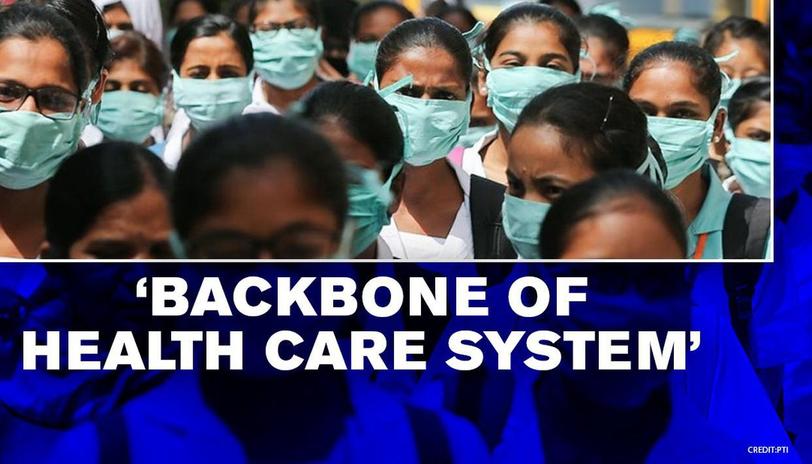
 Today International Nurses Day. Thanks to the millions of Nurses who give solace and life to the humanity in its most difficult times! It is specially significant that this day is observed on the birthday of Florence Nightingale, who was role model of modern nursing and that today it is her 200th birth anniversary.
But did fair play and justice ensured to these dedicated angels of the earth in their wages, working conditions and of course their respect in the society?
At times of natural calamity, epidemics & pandemics, accidents etc. they are glorified, but quickly forgotten. We experience their total dedication, assistance and sympathy while lying helpless in hospital, but forget them altogether afterwards.
They serve delicately in all parts of the world whether in time of peace or war. They are also victims of war and epidemics. They do not have any boundary. They were with you at the time of your birth and most probably will be at the time of your last days.
They are not limited to their own family. The entire humanity is their family. But do not forget that they are also human beings and have an existence of their own – with difficulties, pain, joy and ambitions for a happy life.
While celebrating International Nurses Day today let us wholeheartedly thank them and also make all out efforts to ensure justice and a happy life to these angels of the earth!
11 Monday May 2020
Posted in General
Tags
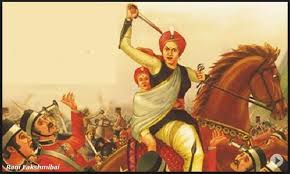



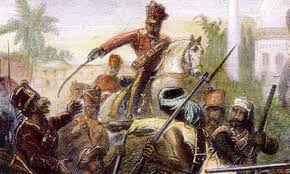
It is 163 years back, on 10th May 1857, that the Sepoy Mutiny started at Meerut, which transformed in to the First War of Indian Independence.
The war continued for more than one year. The entire North Indian belt was captured or rather liberated by the sepoys and their leaders including many common people who took to arms. But it was difficult to hold the position before the mighty striking force of the British and their tactics of dividing the Indian rulers.
The valour of the leaders of the War of Independence like Rani Lakshmi Bai of Jhansi, Tantia Topi, Kunwar Singh and others are even now sung in ballads in the north.
The end of the war saw the end of the rule of the East India Company and the direct rule of the British colonialists. The Mughal and Maratha empires were liquidated.
The Indians were defeated. But it was the start of a bigger war. Within 100 years, in 1947, British were compelled to leave India resulting in the Independence of the Country.
There are a large number of books written on the Sepoy Mutiny or the First War of Independence analysing the background, the actual war and the after-effects. That was the biggest military attack on the British colonialism by one of their colonies. While the Indians treated the war prisoners including women honourably to an extent, the British after their victory brutally shot and hanged thousands of the sepoys and the commoners who supported them. Even in the British Parliament, it had its ramifications.
On this day we remember those heroes and martyrs who sacrificed their lives for the freedom of the country.
11 Monday May 2020
Posted in AIBDPA - BSNL DOT Pensioners, BSNL, BSNLEU
Despite the assurance of the DOT and BSNL Management that the payment of salary etc. will be normalised once VRS is implemented, the payment of salary to employees is still a question mark. The April salary has not been paid, though it is 11th May today. The society dues deducted from the ex-gratia and leave encashment from the VRS pensioners are yet to be paid to the co-operative societies causing much financial difficulties to the societies as well as the pensioners.
BSNL should take immediate action to settle the above issues.
11 Monday May 2020
Posted in B.N.Ghosh Book
CHAPTER – 2
STATE OF P AND T UNIONS
As the P and T Unions were then functioning in large numbers, each having its own way of putting things and all of them believed in paper warfare – and that too not in collaboration with each other, – they could not consolidate and even there was wheels working within wheels – every union has its internal quarrels and difference not being based on policy, programme and ideology – but in most cases due to personal rivalry there was no end of it. In such environments, the All India Postal and RMS Union, which was one of the biggest organisations in India, met at its annual session of Conference during X-mas of 1939 at Lahore on an invitation from Rai Sahib Jayanti Prasad, the retired Manager, Dead Letter Office, Lahore, due to various reasons; this session had its special significance.
The Government of India had introduced the new scales of pay with effect from 18th July, 1931, totally disregarding the universally accepted principle of equal work. The All India Postal and RMS Union had at its annual session held at Delhi on the 30th and 31st October, 1931, singly made a bold attempt to counter-act the Government’s move for imposition of salary cut and introduction of new scales of pay but could not withstand long Government’s oppression and surrendered. Since then it had been passing resolutions in successive conferences urging grant of old scales of pay to the new entrants. Amongst the other recognized P and T Unions, the Indian Telegraph Association, the All India Telegraph Union and the All India Postmen and Lower Grade Staff Union were the main functioning Unions and all these Unions had also been as usual, in their annual gatherings passing resolutions urging sanction of old scale of pay for the new entrants but the weak and quarrelling leadership failed to make plans and programmes for joint action in the matter. The Lahore session of the Conference had met just after the death of Sri N.C.Sen Gupta who had succeeded Sri Tarapada Mukherjee as General Secretary of the All India Postal and RMS Union at its session at Peshawar held in November, 1929. Mr. M.G.Swaberry who was one of the founders of the All India Postal and RMS Union and had started the Indian Post and Telegraph Union after severing connection with the mother Union, attended this session of the Conference, along with a large contingent of members of his own Union. I remember on my way to Lahore from Calcutta, I had halted at Delhi only to persuade him to attend the session and make a joint attempt to re-amalgamate the Unions. The All India Conference no doubt elected Sri Monmohal Lal Topa as General Secretary of All India Postal and RMS Union but took a bold step and elected Mr. Swaberry as Honorary Secretary of the All India Union in the hope that this will pave the path for unity.
The social, political and economic condition of the country during the period, reflected to a greater extent on the trade union movement, especially of the middle class employees. The rivalry between the Congress and the Muslim League, though in a milder form, reacted upon the activities of the Unions and Associations of the educated middle class employees specially those in Government service and influenced their decisions. The Unions which used to draw inspiration or were under the influence of sectional or of communal organisations, mostly devoted their energy to the cause of the employees belonging to the community or communities in relation to posting, transfer, promotion and recruitment etc. , and how to take the grater share in the cake, though the cake itself was too inadequate to serve all. To these institutions greater causes such as improvement of service conditions, better pay and prospects, etc. became secondary object. The foreign rulers having imperialistic and capitalist outlook with a view to perpetuate their exploitation of the country’s wealth had to depend much upon the divide and rule policy, through secret agencies, were favouring the growth of service associations on the communal and sectional lines. The progressive service Unions and Associations which were struggling hard for developing real trade union sense amongst their members and were fighting out for greater causes had to face insurmountable difficulties in making their way through.
The leftist political organisations which had just begun dealing with general labour welfare and were busy in organizing the ordinary labours and the working class could arrest the growth of communal feelings amongst them, but as they were quite unmindful of the middle class employees’ Unions, they continued to function under the care of the non-trade unionistic political leaders. It is significant that the Telegraph Workmen’s Union and the All India Postmen and Lower Grade Staff Union, were not so much affected by the communal and sectional trend of feelings prevailing in the country, as was the case with the other Unions dominated by the Class III employees. The leadership of the All India Telegraph Union and the Indian Telegraph Association, All India Postal and RMS Union and the Indian Post and Telegraph Union though felt the necessity for greater unity amongst the P and T employees’ movement and although they were getting push from the youngsters, who were post 1931 employees, could not advance the cause. The internecine quarrel and rivalry amongst the leaders, not due to any ideological differences, but mostly on personal grounds and want of proper trade union consciousness amongst the mold of the employees, stood as barricades against united action being taken by the P and T Unions conjointly even on vital issues concerning the workers. The attempts for unity by the employees here and there on each occasion to their ill-luck, proved abortive. The undemocratic constitution of some of the unions also played no less important a part in delaying the growth and expansion of those organisations and their activities in right directions. As to how those undemocratic constitutions stood as a stony rock for years together to foil all attempts for unity move will be discussed later on. Some of the unions, no doubt, had democratic constitutions but due to circumstances already hinted above, could not do much headway towards bringing much needed unity. The gesture shown by the All India Postal and RMS Union conference at Lahore, with very good intention, was therefore, of no avail. Mr. M.G. Swaberry, in spite of his personal inclination as I could study him at the time, could not come forward to accept the offer so generously made to him.
Those who were ardent believers in unity however did not rest here. The war-time unrest which was already visible due to political and bad economic conditions brought about by steady increase in cost of living index, and the wide spread discontentment amongst the post – 1931 young P and T workers are the main factors which continued to strengthen the hands of those who were moving for unity. The records of the different unions will show that within a couple of months, all the unions had to think in terms of organizing joint deputation with the DG P and T, which move in actual sense could be called of laying of foundation stone for building greater unity at a later stage. (To be continued)
10 Sunday May 2020
Posted in B.N.Ghosh Book

P and T Trade Union Movement in India during II World War and thereafter (1939 – 1954)
(B.N.Ghosh)
(This is the book written by Com. Bhupendra Nath Ghosh (Dada Ghosh), the first Secretary General of National Federation of P and T Employees (NFPTE) and one of the leaders of the historic 1946 P and T Strike. Com.N.J.Iyer, former General Secretary, R.III Union, entrusted me to type some copies from the original document during 1990s. I typed two copies and handed over the original and one copy to him, keeping one copy with me. While I was arranging my book shelf, this typed copy came to my notice. I think the book will be interesting and beneficial to the new generation. The book will be serially published by chapter in my blog vannamoodiri.com daily, if possible, since it has to be retyped. )
CHAPTER – 1
SECOND WORLD WAR
It was at 3 O’ clock on the first of September 1939, while I was passing under exuberance of sunshine being profusely in sweat, through the Dalhousie Square, Calcutta, I found men in their hundreds running towards the South West corner of the Square, each procuring a copy of the special issue Amrita Bazar Patrika with bold headlines, “Germany declares war on Poland”. This happened within a couple of days of signing the Russo-German non-aggression pact. In fact, the air was so much charged during those days with war possibilities, that every man in the street was awaiting receipt of such horrible tidings from the West. The Great Britain and France who were pledge bound to Poland to give her protection against all aggression on her, declared war on Germany and the Second World War began. India which was under the control and suzerainty of Great Britain became, as a matter of course, a party to this war. It is not my intention to discuss the political aspects of this war and I, therefore, cautiously refrain from discussing as to whether or not the war was a people’s war or as to whether the war ultimately did deliver the goods to India. As one connected to the Posts and Telegraphs trade union movement having in mind the well-being of the P & T workers and at the same time in employment of Government, my entire study and reading of this eventful period will be in that context only. As to how the average Indian with anti-British feelings received the news of the war between Germany and Great Britain in which Soviet Russia remaining neutral can be well imagined than described. I reached the office of the Provincial Union of the All India Postal and R.M.S.Union, Bengal and Assam Circle at the day’s end and as its General Secretary took it to be my bounden duty to send the following telegram to the Director General of Posts and Telegraphs: “On behalf of entire Postal and RMS employees Bengal and Assam Circle assure full co-operation and loyal service to the Government at the critical juncture and place my own services unreservedly at the disposal of the Govt”.
It can well be imagined than described as to with what feelings the news of a war between Germany and the British people who have been exploiting and ruling over India for nearly 200 years – Russia remaining silent – could be received by a Bengali born in pre-Bengal partition days of 1905 and had seen anti-partition movement, the intensive struggle of the Congress for independence, boycott of British goods and the Bengal youths going to gallows in large numbers for the sake of the country’s cause, could receive. Despite, as one belonging to the most essential service of P and T Department and being at the helm of the Postal and RMS organization of Bengal and Assam, I preferred to send the above telegram, copy of thereof being sent to the 40 branch unions, who in return endorsed my views. This is unique indeed! In sending the telegram my heart and brain refused to work together, but I must candidly confess that there was not an atom of insincerity in me while sending the telegram. Later on it came to light that I was not the singular person to send such assurance of co-operation and loyalty to the Government but the P and T Unions throughout the country had followed suit and within a couple of days of the beginning of the war, the P and T staff throughout the length and breadth of the country had showed their inclination to volunteer for field service. A full scale analysis of the back-ground of the stand we have taken is not possible due to various reasons. In short, we were loyal Government servants and as in duty bound preferred to remain loyal.
Three days after the declaration of war, by Great Britain on Germany, the Governments of Bombay and Bengal issued ordinance permitting 20% and 10% rise in prices of all commodities in their respective provinces so as to make it easy for the Government to make heavy purchases of food stuff and other raw materials necessary in war connection in Calcutta and Bombay markets. The Government of India had in circulation on the day of declaration of war 228 crores of currency notes against which there was a gold reserve of equivalent amount but it will be seen in September, 1945 on the day of closing of war, it had in circulation 1500 crores worth of currency notes against which there was no gold reserve in India but entire reserve had been transferred to British Treasury in London, what was later on known to be India’s Sterling Balance. This measure began to fluctuate the market and therefore the attention of the entire P and T workers specially those in the lower rank and in low pay were diverted from the theatre of war to the stomach problem. The situation, however, did not aggravate so much during the first two years of war but even then the cost of living index had gone up to the extent that the lower middle class workers within the P and T Department or anywhere else found it difficult to meet both ends. The Government of India finished its business by sanctioning dearness allowance at the rate of Rs.1/- for the Postman and Class IV employees only. An important Member of the Parliament connected with the Postal and RMS Union had declared the measure adopted to be unworthy on the part of the Government to sanction such meager allowance, viz. Rs.1/- and beneath the dignity on the part of the employees to accept it. (To be continued).
09 Saturday May 2020
Posted in Sustained struggles
Historic Parliament March on 3 August 2006 by BSNL and MTNL Workers
As decided earlier, a Parliament March on 3rd August 2006 was organized at New Delhi. It was, to say the least, historic in all senses. More than 12 thousand workers from BSNL and MTNL participated. The mobilization was mainly from MTNL and nearby circles of BSNL. But workers from all circles were also present. The workers led by the leaders of the Joint Forum of BSNL and MTNL Unions/Associations started the March from the Eastern Court premises where the offices of both MTNL and BSNL are functioning. The March went through the Jantar Mantar place, but was stopped in front of the parliament Police station, where barricades have been erected.
The massive rally was held there itself. The rally was inaugurated by Com. Sitaram Yechury, M.P., who demanded the government to agree to the very reasonable demands of the workers, which were in favour of the Nation itself. Coms. Basudev Acharya, M.P., Tapan Sen M.P, Roop Chand Pal M.P. addressed the rally and extended support. Coms. V.A.N.Namboodiri, Convener JF, V.K.Tomar, O.P.Gupta , G.L.Jogi, Prahlad Rai, K.Vallinayagam, V.Subburaman, Suresh Kumar and other leaders addressed the rally.
This was one of the biggest rallies organized by the MTNL and BSNL workers in Delhi. It had its impact on the DOT and the government.
Pension issue – Meeting with the Secretary DOT on 6 Sept. 2006
The leaders of the joint Forum of BSNL/MTNL Unions/Associations met Shri D.S.Mathur, Secretary DOT on 6th September 2006 and discussed the various issues connected with Pension, CGHS etc.
1. Pension – The unions brought to the notice of the Secretary DOTabout the latest orders of the DOT directing BSNL to pay the pension of the BSNL employees, if it exceeds more than 60% of the payments by BSNL to the government, including dividend, licence fee, corporate tax etc. which is in utter violation of Rule 37-A and earlier orders of DOT that pension will be paid by the government. DOT Secretary assured that the matter will be re-examined.
2. CGEGIS Refund – Secretary DOT stated that the files are already with the Finance Ministry and he will speak to Secretary Finance for speeding up the payment.
3. DOT Secretary also assured that the meeting of BSNL and DOT Officers will be held shortly to discuss about the issues referred to by BSNL to DOT which were raised by the unions in the earlier meeting on 7th August 2006.
After the meeting with the DOT, the JF met CMD BSNL Shri A.K.Sinha on the same day and strongly opposed the proposal for sharing of infrastructure with the private companies. He assured to reexamine the issue. (to be continued)
09 Saturday May 2020
Posted in General
Through out the world the attack of Coronavirus has taken away more than 2,70,000 lives and many more people are tested positive and under treatment. In India also, it is spreading.
Lock Down is declared and people are at home. Strict instructions are there that aged and children should strictly follow health instructions, since they are more prune to the coronavirus.
But Lock Down does not mean that you should be inactive or lazy. This is the time for reading, writing, contacting your friends and relatives, using the social media, making the lost time with your family etc etc. There are so many things you wanted to do, but could not do due to lack of time. Now this is the time for that pending matters.
Take exercise, walk inside your home, take your medicines and food in time and ensure required sleep and rest.
By the time the Lock Down is over, you will more fresh and energetic.
Aged had faced many challenges before. Now also let us face the challenge.
09 Saturday May 2020
Posted in AIBDPA - BSNL DOT Pensioners, AUAB, BSNL, BSNLEU

Despite many assurance about the Revival of BSNL, the government is trying to scuttle the efforts of BSNL to purchase 4 G equipment and start services. Objections raised by the private companies are being considered and tender being frozen. AUAB has strongly opposed and wide publicity is given in the press also.
If the government is sincere about the Revival of BSNL, then immediate action is to be taken to purchase equipment on the basis of the tenders floated and start 4 G services.
The Prime minister should intervene and set right the matter.
09 Saturday May 2020
Posted in WFTU

ANTIFASCIST VICTORY
On May 9, 1945, the monster of Nazism was annihilated in Berlin by the peoples and the working class of the world that had in its vanguard the heroic Red Army.
The World Federation of Trade Unions, which today has more than 100 million workers in its ranks from 130 countries across the world, honors this historically important anniversary and pays tribute to the millions of martyrs of our class who crushed the Nazi-fascist threat. We do not forget the victims of Nazi atrocities anywhere in the world, nor the 4 Heroic Cities, proclaimed as such on May 1, 1945 in the Red Square: Leningrad, Stalingrad, Odessa and Sevastopol.
The WFTU is the child of this effort, the culmination of this Victory, since it was founded in Paris, in the same year as the Antifascist Victory. In fact, the leading role of the working class, of the thousands of trade unionists who gave their lives, constitutes proof of the vanguard role of the working class in the fight against fascism and in the honor of humanity itself.
Today, the importance of this Victory is more topical than ever. In a period when the capitalists and their governments, the USA and the EU are trying to falsify history and erase the colossal contribution of the peoples, of the Soviet Union, of the partisan movements in the victory over fascism, our task is even more urgent. Peoples’ enemies did not even hesitate to characterize May 9 as “Europe Day” in order to change the true content of this date.
Today, in a time period in which neo-fascism and the extreme right is on the rise, under the tolerance or even the energetic support of the capitalist states, it is a duty of the class union movement not to let memory be erased, not to let historical truth be forgotten. The class unions must inform, spread the truth to the new generation of trade unionists.
May 9 continues to inspire the workers of the world, it gives them strength and teaches them faith in their strength; it will continue to show them the way against exploitation, no matter how much ink is spilled by the enemies of the working class. It will be an example to follow in the struggles of the future and in the complex tasks that will come for class unions around the world.
The WFTU is committed to keeping alive the spark of historical memory for workers around the world.
Long live May 9 !
Long live the Great Antifascist Victory of the Peoples!
The Secretariat WFTU
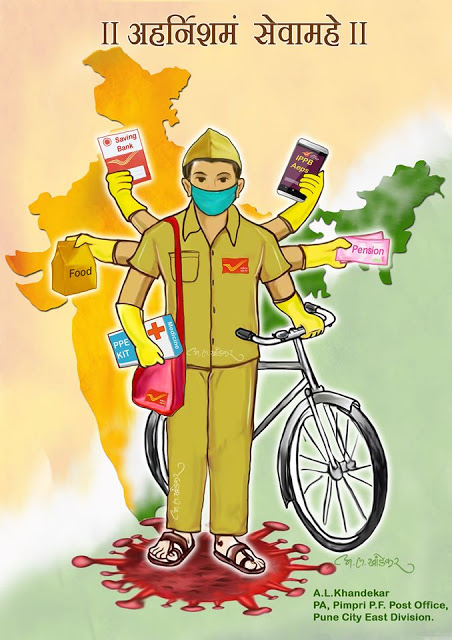 Excellent yeomen service by Postman even during Covid 19 period. Food, Saving Bank, Medicine, IFPB apps, Pension, Letters and what not!( Courtesy : NFPE website)
 VAN Namboodiri's Blog