• ‘My Story’ by Com. Jyoti Basu
  • About
  • Settlement of Medical Bills of Pensioners
  • Historic Victory!
  • Disclosure Policy

VAN Namboodiri's Blog

~ Welcome to V.A.N. Namboodiri's blog…

VAN Namboodiri's Blog

Monthly Archives: August 2018

ദുരിതാശ്വാസനിധിയിലേക്ക് സംഭാവന ചെയ്യുക – DONATE TO KERALA CHIEF MINISTER’S DISASTER FUND

16 Thursday Aug 2018

Posted by VAN NAMBOODIRI in Uncategorized

≈ Leave a comment

കാലവര്‍ഷക്കെടുതി – ദുരിതാശ്വാസനിധിയിലേക്ക് സംഭാവന ചെയ്യുക
സംസ്ഥാനം അഭൂതപൂര്‍വ്വമായ കാലവര്‍ഷക്കെടുതി നേരിടുന്ന സാഹചര്യത്തില്‍ മുഖ്യമന്ത്രിയുടെ ദുരിതാശ്വാസനിധിയിലേക്ക് (സി.എം.ഡി.ആര്‍.എഫ്) ഉദാരമായി സംഭാവന നല്‍കാന്‍ വ്യക്തികളോടും സംഘടനകളോടും സ്ഥാപനങ്ങളോടും മുഖ്യമന്ത്രി പിണറായി വിജയന്‍ അഭ്യര്‍ത്ഥിച്ചു. മനുഷ്യജീവനും വീടുകള്‍ക്കും മറ്റു വസ്തുവകകള്‍ക്കും റോഡുകള്‍ക്കും ഭീമമായ നഷ്ടമാണ് കുറച്ചുദിവസങ്ങള്‍ക്കകമുണ്ടായത്. ദുരന്തം നേരിടാന്‍ എല്ലാവരും കൈകോര്‍ത്തു നില്‍ക്കണം. മുഖ്യമന്ത്രിയുടെ ദുരിതാശ്വാസ നിധിയിലേക്ക് ഒരു അഭ്യര്‍ത്ഥനയുമില്ലാതെ ധാരാളം വ്യക്തികളും സ്ഥാപനങ്ങളും സംഘടനകളും സംഭാവന നല്‍കുന്നുണ്ട്. അവരോടെല്ലാം മുഖ്യമന്ത്രി നന്ദി പ്രകടിപ്പിച്ചു. ദുരിതാശ്വാസത്തിന് കര്‍ണാടക സര്‍ക്കാര്‍ 10 കോടി രൂപയും തമിഴ്നാട് 5 കോടി രൂപയും അനുവദിച്ചിട്ടുണ്ട്. ഇരു സര്‍ക്കാരുകളെയും മുഖ്യമന്ത്രി നന്ദി അറിയിച്ചു.

ജൂലൈ 26 മുതല്‍ ആഗസ്റ്റ് 9 വരെയുളള ദിവസങ്ങളില്‍ മുഖ്യമന്ത്രിയുടെ ദുരിതാശ്വാസനിധിയിലേക്ക് 1.75 കോടി രൂപ സംഭാവനയായി ലഭിച്ചിട്ടുണ്ട്.

സംഭാവനകള്‍ താഴെ ചേര്‍ത്ത അക്കൗണ്ടിലേക്കാണ് അയക്കേണ്ടത്.

DONATE TO THE KERALA CHIEF MINISTER’S DISASTER RELIEF FUND. THE AMOUNT MAY BE REMITTED TO THE FOLLOWING ACCOUNT.

A/c No : 67319948232
Bank : SBI City Branch, TVM
IFSC : SBIN0070028

Share this:

  • Share on Facebook (Opens in new window) Facebook
  • Share on X (Opens in new window) X
  • Print (Opens in new window) Print
  • Email a link to a friend (Opens in new window) Email
Like Loading...

Donate to the Kerala Chief Minister’s Disaster Fund to help the People of Kerala

16 Thursday Aug 2018

Posted by VAN NAMBOODIRI in Kerala, Kerala floods, Uncategorized

≈ Leave a comment

Tags

Kerala floods

The death toll in Kerala has climbed to 72 as the state is reeling under one of the worst floods in history. Chief Minister Pinarayi Vijayan had once again called PM Modi on Thursday to seek more aid considering the situation. He also sought for additional Army personnel and helicopters. For the first time in history, the state has opened 35 of its 39 dams. Meanwhile, operations at the Cochin International Airport have been suspended till 2 pm on Saturday due to flooding in and around the airport. A red alert has been issued in all the 14 districts of the state.

Train services have been disrupted and road transport services are in disarray with stretches of roads coming under water. Officials said a holiday has been declared for educational institutions in all districts barring Kasaragod tomorrow while colleges and universities have postponed exams. As the situation became grave, the state government sought the help of more teams of army personnel, National Disaster Response Force and Army Engineering. (Courtesy: Latest News)

Donate to Kerala Chief Minister’s relief Fund

DONATE TO THE KERALA CHIEF MINISTER’S DISASTER RELIEF FUND. THE AMOUNT MAY BE REMITTED TO THE FOLLOWING ACCOUNT.

A/c No : 67319948232
Bank : SBI City Branch, TVM
IFSC : SBIN0070028

Share this:

  • Share on Facebook (Opens in new window) Facebook
  • Share on X (Opens in new window) X
  • Print (Opens in new window) Print
  • Email a link to a friend (Opens in new window) Email
Like Loading...

Kerala – unprecedented rains, floods and lamdslides

16 Thursday Aug 2018

Posted by VAN NAMBOODIRI in General, Uncategorized

≈ Leave a comment


Kerala is reeling under very heavy rains for the last two weeks or so. In many places landslide has taken place and many have been killed and houses collapsed. All the dams are full to the brink and there is no other way, but to open the shutters and  let out water, which again floods the rivers. about 30 people have died so far. About 12,000 houses have been collapsed. Tens of thousands are in the relief  camps. Water is every where – on the roads, houses and other places. The loss is estimated to more than Rs. 8000 crores.

The government and the people as  a whole have taken the responsibility of saving the people and taking them to the relief camps. Food, medicine, treatment are all made available. The state is in a condition of emergency to save the lives and save the situation.

Relief is coming from individuals, organisations, unions and from all sections. Kerala is bravely facing the situation. But much more funds are required.

Help Kerala in its time of disaster!


Share this:

  • Share on Facebook (Opens in new window) Facebook
  • Share on X (Opens in new window) X
  • Print (Opens in new window) Print
  • Email a link to a friend (Opens in new window) Email
Like Loading...

Independence Day Greetings!

15 Wednesday Aug 2018

Posted by VAN NAMBOODIRI in General

≈ Leave a comment

Tags

Independence Day

72nd Independence day is being celebrated all over the country. India got independence from the British colonialists after sustained struggles for a long period under the leadership of Mahatma Gandhi and other veteran leaders like Pandit Jawahalal Nehru, Jayaprakash Narayan, Maulana Abdul Kalam Azad, Subhas Chandra Bose, A.K.Gopalan and many others. Crores of ordinary people including kisans, workers, employees, women, students and youth participated in this struggle. Bhagat Singh and his comrades were hanged. Chandrasekhar Azad of the Socialist republic Army was shot dead. The Gaddar party comrades who came from Canada to take part in armed struggle were captured and sent to Andaman cellular Jail as also revolutionary comrades from W.Bengal and other states. Many of them were hanged after severe torture. Yes, Gandhiji led a non-violent struggle, but the British Rulers met them with violence and brute force. In the last minute before independence, India was divided in to India and Pakistan due to the machinations of the British. The Indian Independence struggle is a saga of sacrifice, martyrdom and courage.

It is 71 years since India got Independence with the tri-color flag hoisted in the red Fort and Jawaharlal Nehru have his independence speech to the nation. India is one of the biggest democracy in the world. Yes, each of the citizens have one vote each to elect their rulers. They have equal right there. But what about their right to live, earn, maintain family etc? A good percent of the people live in poverty, many are illiterate. Unemployment has not decreased and the wealth of the country goes to the rich. The rich become richer and the poor the poorer. The underprivileged continue as such. The caste system and corruption at all level is the curse of the nation.

Of course, 70 years is not a big span as far as a country is concerned. But it is a long period as far the day to day life is concerned. The struggle for food, education, job, social equality – all has to be strengthened. Then only true democracy will begin.

Independence Greetings to all comrades, friends and well wishers!

Share this:

  • Share on Facebook (Opens in new window) Facebook
  • Share on X (Opens in new window) X
  • Print (Opens in new window) Print
  • Email a link to a friend (Opens in new window) Email
Like Loading...

Telecom Trade Union Movement – A Saga of Struggles, Sacrifices and Achievements (7) – National Strike on 29th November 1991

14 Tuesday Aug 2018

Posted by VAN NAMBOODIRI in Telecom TU Movement 1991-2015

≈ 2 Comments

Tags

Struggles Telecom

The collapse of the Soviet Union (USSR) in the 1980s changed the equation of world economy and also power balance. Capitalist countries, with United States of America (USA) at the head, got the upper hand. Not only the economically developed European states, but many developing countries like India, also changed their policies and turned over to capitalist line more and more. They forgot the help received from the socialist state and started implementing the neo-liberal policy. Though Prime Minister Rajiv Gandhi had started the process in a mild way, it was under the Narasimha Rao Government in 1991 that the full process started. The Finance Minister was Dr. Manmohan Singh, the celebrated capitalist economist who later became Prime Minister. It was the workers and the common people who had to suffer the miseries consequent to the implementation of the neo-liberal policy. Helping the corporates – Indian and foreign, to take over the Public Sector Units, destroy the PSUs as such, privatisation – all these were made important targets of the government.
All India Trade Union Convention
There was strong reaction from the working class against the neo-liberalisation programmes, which attacked their livelihood and trade union rights. They organised struggles and agitations. The All India Trade Union Convention which was held at New Delhi on 17th September 1991, strongly protested against the anti- worker economic policies being adopted by the central government. The convention pointed out that taking loans from International Monetary Fund (IMF) and World Bank has aggravated the situation by putting the country in to heavy debt. More and more taxes are imposed on the people at the dictates of the WB and IMF, tools of world capitalism. Unemployment is increasing day by day. Many companies have been closed down. The convention called upon the working class to prepare for sustained struggle to change the situation. It decided to organise a nation wide Strike on 29th November 1991 against the anti-worker neo-liberal policies.
All India Convention of CG Employees.
The Convention held at Azad Bhawan, New Delhi on 10 November 1991 was presided over by Comrades O.P.Bhasin (Confederation), K.Adinarayana (NFPE), S.Jagannathan (NFTE), Ganguli (AIDEF) etc. Comrade S.K.Vyas (Confederation), O.P.Gupta (NFTE), Moni Bose ( Telecom E.III Union), K.K.N.Kutty (ITEF),K.M.Mathew (AIDEF) and others spoke exposing the anti-worker policy of the government, the decision of the central trade unions to go on strike on 19 November 1991 and the need of the central government employees’ participating in the same. After detailed discussion, it was decided to call for strike with the following demands in addition to those included by the central trade unions:
1. Discuss the economic – commercial policies with central trade unions.
2. Stop privatisation of govt. departments; No computerisation without discussion with the workers.
3. Equality of wages with Public Sector employees; 20% increase immediately.
4. Regularisation of ED, Casual workers.
5. No ban on creation of posts. Fill up the vacancies
6. Bonus for all, whose income is less than Rs. 3,500
7. Income tax exemption for those drawing up to Rs. 3,500.
Even after taking decision in the convention for strike, O.P.Gupta continued his vacillating line. He did not take any significant action for organising the strike. However, Telecom Class III Union, Telegraph Traffic class III Union and similar minded unions continued their preparation and organised the strike effectively.
The 29th November 1991 strike was a great success. More than one crore workers participated. It was the first strike against the anti-people neo-liberalisation policy of the central government and the telecom workers were proud that they have wholeheartedly participated in the same along with the working class.
The telecom workers appreciated the vibrant and militant stand of the new leadership, who were elected at the Bhopal AIC and they also understood the difference between the revisionist and progressive lines. The telecom workers can take pride that in each and every general strike that followed, they wholeheartedly participated in them. (To be continued)

Share this:

  • Share on Facebook (Opens in new window) Facebook
  • Share on X (Opens in new window) X
  • Print (Opens in new window) Print
  • Email a link to a friend (Opens in new window) Email
Like Loading...

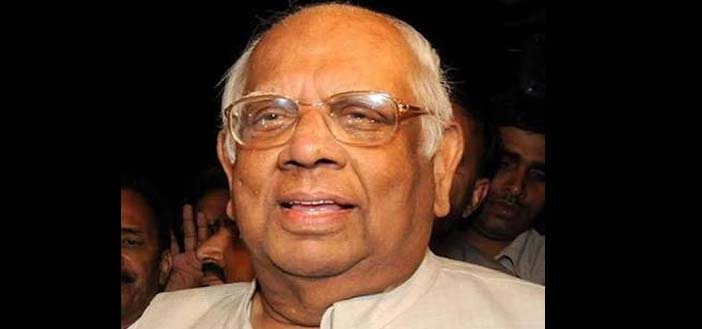
Comrade Somnath Chatterjee passed away

14 Tuesday Aug 2018

Posted by VAN NAMBOODIRI in Obituary, Tributes

≈ Leave a comment

Tags

Somnath Chatterjee

Com. Somnath Chatterjee, former Speaker of Lok Sabha, veteran CPI(M) leader and a renowned senior advocate passed away today, 13th August 2018, at a Kolkata hospital. He was 89. Chatterjee was admitted at a south Kolkata nursing home last Tuesday following a kidney related ailment. On Sunday he suffered a heart attack and was put on ventilator support. He passed away at 8.15 am today due to multi-organ failure. He had been in and out of hospital since June-end after suffering a stroke. Chatterjee had celebrated his 89th birthday on July 29, 2018.
His body was taken out from Hospital to Calcutta High Court and kept there, where large number advocates, legal luminaries and others paid homage. Later the body was taken to the State assembly and then to his house in Basant Roy Road, where body was kept till it was handed over to the Medical College as per his will.
Lok Sabha Speaker from 2004 to 2009, Somnath Chatterjee was Member of Parliament for 10 times and was acknowledged as one of its most brilliant members. He has served as Chairman of Parliamentary Standing Committees. His death is a great loss to the nation.
Many people had told me that he is always serious and is not easy to deal with. But my experience has been completely different. I had met him several times, when he was an M.P. and also when he was the Speaker. He was very friendly and benevolent and spent time to understand our issues and helped. A few instances will help to understand his helping hand.
The first major issue on which I met him was about the report of the V Central Pay Commission (1996) recommending either closure or privatisation of 7 Telecom Factories at Alipur, Gopalpur, and Kharagpur ( W.Bengal), Jabalpur, Richai, Bhilai ( M.P. – now Bhilai is in Chhatisgarh) and Bombay. All the telephone equipment was being manufactured in these telecom factories in addition to the Indian Telephone Industries Ltd (ITI). Due to the introduction of higher technologies, some of these factories were not having sufficient work. There were more than 10,000 workers, both industrial and non-industrial, engaged in these factories. Closure or privatisation of these factories would result in loss of thousands of jobs as also the entire production of equipment will go to corporates. Hence, me, as General Secretary of the All India Telecom Employees Union Class III (N), approached Com. Somanath Chatterjee, M.P., who was the Chairman of the Parliamentary Standing Committee,Telecommunications. Com.S.D.Choudhury from Bombay Telecom Factory, Com. Sujit Chatterjee from Calcutta Telecom Factory along with their senior comrades came and explained the details of the Telecom Factories. He patiently heard us and said to give a detailed letter, which we gave. The issue was taken as an item in the committee and we were also called as also the DOT officers, including Chairman, Telecom Commission. In its sitting on 28th October 1998, we, myself, Coms. Sujit Chatterjee, Circle Secretary Telecom Factory and Pranab Roy, Vice-President, P and T Industrial Workers Union, presented with facts and figures that the telecom factories should not be closed/privatised, but should be modernised and new products should be manufactured. The DOT officers also generally supported our stand. Com.Somnath Chatterjee, as Chairman of the Committee gave a favourable decision on March 31, 1999, recommending the government not to privatise/close and instead modernise of the factories. This saved the factories from closure/ privatisation and new products were taken up in the factories. The role of Com. Somnath Chatterjee in this respect will never be forgotten by the telecom workers and especially the telecom factory workers.
The second incident I want to mention is about the court case filed against the order of the DOT in refusing recognition to the duly elected General Secretary of the All India Telecom Employees union Class III, Com. Moni Bose. On the complaint of Com. O.P.Gupta, who was defeated from the post of General Secretary at the Bhopal All India Conference in 1991, DOT refused recognition to Moni Bose on the plea that he is a terminated employee. Moni Bose filed a case in Calcutta High Court through Com. Somnath Chatterjee. Com. Chatterjee pointed out to the Court that how can the department deny recognition to Moni Bose, who is a terminated employee of P and T Department, while for about three decades O.P.Gupta, a person who never worked in the Department was granted recognition as General Secretary. The High Court gave judgment asking the DOT to grant recognition to Moni Bose as General Secretary. The judgment was a slap on the face of both DOT and O.P.Gupta. The status of Somanth Chatterjee and his highly effective argument helped the union in a big way.
The third incident is about me approaching him, as per advice of Com. E.Balanandan, M.P. for appearing in a case filed in the Delhi High Court against the decision of the DOT denying recognition to the union, after the member ship verification, pointing out the umpteen violation of rules and favouritism of DOT towards O.P.Gupta. Our Advocate Shri Sudhir Makkar was also there. He started laughing and showed his advocate’s coat hanging on the wall stating that the party (CPI(M) has told him to completely concentrate on Parliament etc. and showed the holes in the coat due to non-use. He also told me that it is very difficult to get a favourable judgment as per the verification report. In the last moment, we engaged senior advocate Mukul Rohatagi, who later became Attorney General in 2014. He argued the case. Although we could not get recognition, despite the violations, favouritism etc., OPG also did not get recognition and a fresh verification was ordered. This was partly a success. After the judgment, I again went to Somanth Chatterjee and showed the same. He was extremely happy and told me that it was one of the best judgments we could get in the circumstances.
After his return to Calcutta, I went to his office one day and met him along with Com. A.K.Bhattacharjee, former Circle Secretary, Calcutta and the present All India President of AIBDPA. He was happy in meeting us and asked about the functioning of the union. The office was full of law books as in the case of any advocate. There were many books on politics, culture etc. etc. An impressive library!
Com. A.K.Bhattacharjee told me about how Somnath Chatterjee argued and won an important case in which 13 senior leaders including Com. Anima Banerjee and Goswami were transferred out of the circle alleging political connection at the time when Shri C.M.Stephen was the Communications Minister. All the transfers were cancelled.
I cherish the memory of meeting him on certain other issues also. Always he was helpful. Never had I to return from his office, without meeting him. He will also ask his assistant to bring tea.
Thank you, Com. Somnath Chatterjee! I or my union can never forget you! While expressing my extreme sorrow at the passing away of Com. Somnath Chatterjee, I convey my heartfelt condolence to the bereaved family, friends and comrades!
Red Salute to Com. Somnath Chatterjee!

Share this:

  • Share on Facebook (Opens in new window) Facebook
  • Share on X (Opens in new window) X
  • Print (Opens in new window) Print
  • Email a link to a friend (Opens in new window) Email
Like Loading...

Full judgment of the SC in Casual regularisation case

13 Monday Aug 2018

Posted by VAN NAMBOODIRI in BSNLCCWF - Casual and Contract workers

≈ Leave a comment

Tags

casual labour - regularisation, judgment

We have mentioned about the significant judgment of the Supreme Court in our earlier post. The full judgment is given below:

Narendra Kumar Tiwari vs The State Of Jharkhand on 1 August, 2018
Author: M B Lokur
REPORTABLE IN THE SUPREME COURT OF INDIA

CIVIL APPELLATE JURISDICTION

CIVIL APPEAL NOS.7423-7429 OF 2018
(Arising out of S.L.P. (Civil) Nos. 19832-19838 OF 2017)
Narendra Kumar Tiwari & Ors. Etc. ….Appellants

versus

The State of Jharkhand & Ors. Etc. ….Respondents

JUDGMENT
Madan B. Lokur, J.
1. Leave granted.
2. These appeals arise out of the common judgment and order dated 17th November, 2016 passed by a Division Bench of the High Court of Jharkhand in a batch of writ petitions relating to the regularisation of daily wage or contract workers on different posts. The writ petitioners (now appellants) were denied the benefit of regularisation in view of the provisions of the Jharkhand Sarkar ke Adhinasth Aniyamit Rup se Niyukt Ewam Karyarat Karmiyo ki Sewa Niyamitikaran Niyamawali, 2015 (hereinafter referred to as the Regularisation Rules). Signature Not Verified Digitally signed by SANJAY KUMAR Date: 2018.08.01
3. The admitted position is that the appellants are irregularly 15:47:00 IST Reason:
appointed employees of the State Government. They sought regularisation of their status on the ground that they had put in more than 10 years of service and were therefore entitled to be regularised. The High Court took the view that the decision of the Constitution Bench of this Court in Secretary, State of Karnataka and Ors. v. Umadevi (3) and Ors.1 did not permit their regularisation since they had not worked for 10 years on the cut-off date of 10th April, 2006 when the Constitution Bench rendered its decision. According to the High Court, the Regularisation Rules provided a one-time measure of regularisation of the services of irregularly appointed employees based on the cut-off date of 10 th April, 2006 in terms of the judgment of the Constitution Bench. Therefore, since the appellants had not put in 10 years of service they could not be regularised.
4. The appellants had contended before the High Court that the State of Jharkhand was created only on 15 th November, 2000 and therefore no one could have completed 10 years of service with the State of Jharkhand on the cut-off date of 10th April, 2006. Therefore, no one could get the benefit of the Regularisation Rules which made the entire legislative exercise totally meaningless. The appellants had pointed out in the High Court that the State had issued Resolutions on 18th July, 2009 and 19th July, 2009 permitting the regularisation of some employees of the State, who had obviously not put in 10 years of service with the State. 1(2006) 4 SCC 1 Consequently, it was submitted that the appellants were discriminated against for no fault of theirs and in an irrational manner.
5. Having heard learned counsel for the parties and having considered the decision of the Constitution Bench in Umadevi (3) as well as the subsequent decision of this Court explaining Umadevi (3) in State of Karnataka and Ors. v. M.L. Kesari and Ors.2, we are of the view that the High Court has erred in taking an impractical view of the directions in Umadevi (3) as well as its consideration in Kesari.
6. The decision in Umadevi (3) was intended to put a full stop to the somewhat pernicious practice of irregularly or illegally appointing daily wage workers and continuing with them indefinitely. In fact, in paragraph 49 of the Report, it was pointed out that the rule of law requires appointments to be made in a constitutional manner and the State cannot be permitted to perpetuate an irregularity in the matter of public employment which would adversely affect those who could be employed in terms of the constitutional scheme. It is for this reason that the concept of a one-time measure and a cut-off date was introduced in the hope and expectation that the State would cease and desist from making irregular or illegal appointments and instead make appointments on a regular basis.
7. The concept of a one-time measure was further explained in Kesari in paragraphs 9, 10 and 11 of the Report which read as follows: 2 (2010) 9 SCC 247 “9. The term “one-time measure” has to be understood in its proper perspective. This would normally mean that after the decision in Umadevi (3), each department or each instrumentality should undertake a one-time exercise and prepare a list of all casual, daily-wage or ad hoc employees who have been working for more than ten years without the intervention of courts and tribunals and subject them to a process verification as to whether they are working against vacant posts and possess the requisite qualification for the post and if so, regularise their services.
10. At the end of six months from the date of decision in Umadevi (3), cases of several daily-wage/ad hoc/casual employees were still pending before courts. Consequently, several departments and instrumentalities did not commence the one-time regularisation process. On the other hand, some government departments or instrumentalities undertook the one- time exercise excluding several employees from consideration either on the ground that their cases were pending in courts or due to sheer oversight. In such circumstances, the employees who were entitled to be considered in terms of para 53 of the decision in Umadevi (3), will not lose their right to be considered for regularisation, merely because the one-time exercise was completed without considering their cases, or because the six- month period mentioned in para 53 of Umadevi (3) has expired. The one-time exercise should consider all daily-wage/ad hoc/casual employees who had put in 10 years of continuous service as on 10-4-2006 without availing the protection of any interim orders of courts or tribunals. If any employer had held the one-time exercise in terms of para 53 of Umadevi (3), but did not consider the cases of some employees who were entitled to the benefit of para 53 of Umadevi (3), the employer concerned should consider their cases also, as a continuation of the one-time exercise. The one-time exercise will be concluded only when all the employees who are entitled to be considered in terms of para 53 of Umadevi (3), are so considered.
11. The object behind the said direction in para 53 of Umadevi (3) is twofold. First is to ensure that those who have put in more than ten years of continuous service without the protection of any interim orders of courts or tribunals, before the date of decision in Umadevi (3) was rendered, are considered for regularisation in view of their long service. Second is to ensure that the departments/instrumentalities do not perpetuate the practice of employing persons on daily-wage/ad hoc/casual basis for long periods and then periodically regularise them on the ground that they have served for more than ten years, thereby defeating the constitutional or statutory provisions relating to recruitment and appointment. The true effect of the direction is that all persons who have worked for more than ten years as on 10-4-2006 [the date of decision in Umadevi (3)] without the protection of any interim order of any court or tribunal, in vacant posts, possessing the requisite qualification, are entitled to be considered for regularisation. The fact that the employer has not undertaken such exercise of regularisation within six months of the decision in Umadevi (3) or that such exercise was undertaken only in regard to a limited few, will not disentitle such employees, the right to be considered for regularisation in terms of the above directions in Umadevi (3) as a one-time measure.”
8. The purpose and intent of the decision in Umadevi (3) was therefore two-fold, namely, to prevent irregular or illegal appointments in the future and secondly, to confer a benefit on those who had been irregularly appointed in the past. The fact that the State of Jharkhand continued with the irregular appointments for almost a decade after the decision in Umadevi (3) is a clear indication that it believes that it was all right to continue with irregular appointments, and whenever required, terminate the services of the irregularly appointed employees on the ground that they were irregularly appointed. This is nothing but a form of exploitation of the employees by not giving them the benefits of regularisation and by placing the sword of Damocles over their head. This is precisely what Umadevi (3) and Kesari sought to avoid.
9. If a strict and literal interpretation, forgetting the spirit of the decision of the Constitution Bench in Umadevi (3), is to be taken into consideration then no irregularly appointed employee of the State ofJharkhand could ever be regularised since that State came into existence only on 15th November, 2000 and the cut-off date was fixed as 10 th April, 2006. In other words, in this manner the pernicious practice of indefinitely continuing irregularly appointed employees would be perpetuated contrary to the intent of the Constitution Bench.
10. The High Court as well as the State of Jharkhand ought to have considered the entire issue in a contextual perspective and not only from the point of view of the interest of the State, financial or otherwise – the interest of the employees is also required to be kept in mind. What has eventually been achieved by the State of Jharkhand is to short circuit the process of regular appointments and instead make appointments on an irregular basis. This is hardly good governance.
11. Under the circumstances, we are of the view that the Regularisation Rules must be given a pragmatic interpretation and the appellants, if they have completed 10 years of service on the date of promulgation of the Regularisation Rules, ought to be given the benefit of the service rendered by them. If they have completed 10 years of service they should be regularised unless there is some valid objection to their regularisation like misconduct etc.
12. The impugned judgment and order passed by the High Court is set aside in view of our conclusions. The State should take a decision within four months from today on regularisation of the status of the appellants.
13. The appeals are accordingly disposed of.
14. We may add that that it would be worthwhile for the State of Jharkhand to henceforth consider making regular appointments only and dropping the idea of making irregular appointments so as to short circuit the process of regular appointments.
………………………J. (Madan B. Lokur)

New Delhi; .……………………..J.
August 01, 2018 (Deepak Gupta)

Share this:

  • Share on Facebook (Opens in new window) Facebook
  • Share on X (Opens in new window) X
  • Print (Opens in new window) Print
  • Email a link to a friend (Opens in new window) Email
Like Loading...

Significance of Supreme Court judgement on Casual Labour Regularisation

12 Sunday Aug 2018

Posted by VAN NAMBOODIRI in Uncategorized

≈ 4 Comments

Whenever any case is filed by Casual labourers engaged after 2006 in CAT, the Govt is giving counter by quoting the 2006 judgment of Supreme Court in Umadevi’s case. CAT or High Court also reject their claim stating that after 2006 no regularization can be considered as per 2006 Supreme Court judgement in Umadevi’s case. Even in JCM (NC) Standing Committee Govt has repeated this stand. Now Supreme Court has clearly stated that 2006 judgement doesn’t mean that Govt is bound to regularise ONLY those irregularly appointed casual labourers up to 2006 only provided they complete 10 years service up to 2006 and can go on engaging casual labourers after 2006 as the question of regularization is not applicable to them and thus continue exploitation of them without regularization.

Court ruled that those appointed after 2006 should also be considered for regularization. Even if the appointment is made after 2006, those casual labourers can now approach the CAT for regularization quoting this judgement. This is the importance of this judgement.

Of course, this particular judgement will be implemented for Jhakhand State Govt casual laboureres only. But the above mentioned important observations and ruling of Supreme Court clarifying the 2006 Constitution Bench judgement of the same Court are beneficial to all casual labourers.

Similarly, the stand taken by the Govt that all appointments (engagements) of casual labourers made after 01-09-1993 are irregular and hence not eligible for regularization, will not also stand in the Court of Law after this judgement. In Umadevi’s case also Supreme Court has clearly ruled that those irregularly appointed casual labourers (even if appointed after 01-09-1993)are eligible for regularization, if they have completed 10 years of service. (Courtesy: Confederation website)

Share this:

  • Share on Facebook (Opens in new window) Facebook
  • Share on X (Opens in new window) X
  • Print (Opens in new window) Print
  • Email a link to a friend (Opens in new window) Email
Like Loading...

V.S.Naipaul passed away.

12 Sunday Aug 2018

Posted by VAN NAMBOODIRI in Obituary, Tributes

≈ Leave a comment

Tags

V.S.Naipaul

London, Aug 12 : Trinidad-born Indian-origin author V S Naipaul, known for his critical commentary on colonialism, religion and politics, has died at the age of 85, his family said early today.
“He was a giant in all that he achieved and he died surrounded by those he loved having lived a life which was full of wonderful creativity and endeavour,” his wife Lady Nadira Naipaul said in a statement.
Naipaul, who lived most of his life in England, died in his London home yesterday.
Vidiadhar Surajprasad Naipaul was born on August 17, 1932 in Trinidad into an Indian Hindu family.
He grew up in relative poverty before moving to England aged 18 after receiving a scholarship to University College, Oxford. He wrote his first novel while at Oxford University but it was not published and he battled with depression, even attempting suicide, during his struggling student days.
He left university in 1954 and found a job as a cataloguer in London’s National Portrait Gallery. He subsequently settled in England, although he travelled extensively thereafter.
Naipaul wrote more than 30 books of fiction and nonfiction during his career with a sharp critique of established religion and politicians characterising much of his work. (PTI Report)

Respectful Homage!

Share this:

  • Share on Facebook (Opens in new window) Facebook
  • Share on X (Opens in new window) X
  • Print (Opens in new window) Print
  • Email a link to a friend (Opens in new window) Email
Like Loading...

Reintroduction of Old Pension Scheme – Minister answers Lok Sabha Question

11 Saturday Aug 2018

Posted by VAN NAMBOODIRI in General, Pension

≈ Leave a comment

Tags

NPS, pension

The Central as well as state government employees’ organisations are demanding that the PFRDA should be annulled, NPS (New Pension Scheme) dropped and that the old defined benefit pension should be restored. They have called for a strike on 15th November, on demands including the above. The pension through NPS will be far less than the defined benefit pension and even is not fully assured. But the government is sticking for NPS. The reply in the Parliament shows the government’s defence of the indefensible. We fully support the demand of the central/state government employees for restoration of the old defined benefit pension scheme.

GOVERNMENT OF INDIA
MINISTRY OF FINANCE
DEPARTMENT OF FINANCIAL SERVICES

LOK SABHA
UNSTARRED QUESTION NO. 4075

TO BE ANSWERED ON AUGUST 10, 2018/SHRAVANA 19, 1940 (SAKA)
REINTRODUCTION OF OLD PENSION SCHEME

Shri Rakesh Singh

Will the Minister of FINANCE be pleased to state:

the details of drawbacks of the New Pension Scheme (NPS) introduced for the Government officials; whether the NPS is not as beneficial monetarily as the Old Pension Scheme (OPS) and if so, the details thereof; whether the Government employees are disgruntled with the NPS and if so, the details thereof; and whether the Government proposes to reintroduce the OPS replacing the NPS, if so, the details thereof and the action taken by the Government in this regard?

ANSWER

The Minister of State in the Ministry of Finance
(Shri Shiv Pratap Shulda)

(a) & (b) National Pension System (NPS) has been designed giving utmost importance to the welfare of the subscribers. Government has made a conscious move to shift from the defined benefit pension scheme to defined contribution pension scheme i.e. NPS, due to rising and unsustainable pension bill. There are a number of benefits available to the employees under NPS. Some of the benefits are enlisted below:

§ NPS is a well designed pension system managed through an unbundled architecture involving intermediaries appointed by the Pension Fund Regulatory and Development Authority (PFRDA) viz. pension funds, custodian, central record keeping and accounting agency, National Pension System Trust, trustee bank, points of presence and Annuity service providers. It is prudently regulated by PFRDA which is a statutory regulatory body established to promote old age income security and to protect the interest of subscribers of NPS.

§ The pension wealth which accumulates over a period of time till retirement grows with a compounding effect. The all-in-costs of the institutional architecture of NPS are among the lowest in the world.

§ Contribution made to the NPS Tier-I account is eligible for tax deduction under the Income Tax Act, 1961. An additional tax rebate of Rs.50000 is also allowed for contributions made to NPS Tier-I under Section 80CCD (1B) of the Income Tax Act, 1961.

§ Subscribers can withdraw up to 25% of their own contributions before attaining age of superannuation, subject to certain conditions. Further, PFRDA vide “PFRDA (Exits and Withdrawals under the NPS) (First Amendment) Regulations, 2017” dated 10.08.2017 has liberalized norms for partial withdrawals which also include reduction of requirement of minimum years of being enrolled under NPS from 10 years to 3 years from the date of joining.

§ PFRDA has increased the maximum age limit from 60 years to 65 years for joining NPS-All Citizen Model and Corporate Sector Model, vide “PFRDA (Exits and Withdrawals under the NPS) (Second Amendment) Regulations, 2017” dated 06.10.2017.

§ PFRDA vide “PFRDA (Exits and Withdrawals under the NPS) (Third Amendment) Regulations, 2018” dated 02.2018 has facilitated easy exit & withdrawal in case of disability and incapacitation of the subscriber covered under NPS.

§ Transparency and Portability is ensured through online access of the pension account by the NPS subscribers, across all geographical locations and portability of employments.

(c) & (d) Representations have been received which inter alia also include the demand that the Government may revert to old defined benefit pension system. However, due to rising and unsustainable pension bill and competing claims on the fiscal, there is no proposal to replace the NPS with old pension scheme in respect of Central Government employees recruited on or after 01.01.2004.

Share this:

  • Share on Facebook (Opens in new window) Facebook
  • Share on X (Opens in new window) X
  • Print (Opens in new window) Print
  • Email a link to a friend (Opens in new window) Email
Like Loading...
← Older posts
Newer posts →

Welcome to my blog…

Unknown's avatarWelcome to my personal blog. Kindly let me know your comments and suggestions...

Blog Stats

  • 1,638,450 hits till today

Enter your email address to subscribe to this blog and receive notifications of new posts by email.

Join 3,102 other subscribers

Facebook link

Facebook link

Flag Counter (Latest)

free counters

Tag Cloud

78.2% 78.2% IDA AIBDPA Air india black money Bonus BSNL BSNLCCWF BSNLEU BSNL for Better Service BSNL strike Casual labour CEC CG employees CITU closure CMD CMD BSNL Contract workers corruption CPI(M) Cuba death anniversary Defence Delhi Dharna Disinvestment DOT EPF EPFO FDI Forum Gratuity Greece India India corruption Kerala Left Parties Merger Minimum Wage MTNL National convention NCCPA NPA opposition Palestine Parliament. Parliament March penalty pension Pensioners privatisation Protest PSU PSU Banks PSUs Railways Revival of BSNL Save BSNL SBI SC Spectrum Spectrum Auction strike Telecom Telecom TU Movement Tower company TRAI US VII CPC Vodafone W.Bengal Wage revision wages WFTU

Categories

  • 2G Scam Corruption
  • AIBDPA – BSNL DOT Pensioners
  • AUAB
  • B.N.Ghosh Book
  • BSNL
  • BSNL – Better Service to the Nation
  • BSNL News
  • BSNLCCWF – Casual and Contract workers
  • BSNLEU
  • CG Employees
  • CITU
  • coal gate scam
  • Corruption
  • CTU
  • Disinvestment
  • Forum
  • General
  • General Elections 2014
  • History
  • IDA
  • Independence Struggle
  • India Left
  • Kerala
  • Kerala floods
  • Kerala LDF Government
  • Left News
  • Membership Verification
  • NCCPA
  • Neo-liberal policy
  • News
  • Obituary, Tributes
  • P&T TU History
  • P&T TU Movement
  • Parliament
  • Pension
  • Politics India
  • Post
  • Postal Service
  • Price Rise
  • privatisation
  • PSU
  • Railway
  • Railway
  • SAVE BSNL CAMPAIGN
  • SCFWA
  • Spectrum
  • Sustained struggles
  • Telecom
  • Telecom TU Movement 1991-2015
  • Train Journeys
  • TU News
  • TU News – India
  • TU News – International
  • TU News – Telecom specific
  • TUI of P&R
  • TUI of Pensioners and Retirees
  • Uncategorized
  • VII CPC
  • VII Membership Verification
  • VISIT THE PAST
  • Wage Revision BSNL – 2017
  • WFTU
  • Women
  • WORLD NEWS

Archives

  • January 2026
  • September 2025
  • August 2025
  • July 2025
  • May 2025
  • April 2025
  • March 2025
  • February 2025
  • November 2024
  • October 2024
  • September 2024
  • August 2024
  • July 2024
  • May 2024
  • April 2024
  • March 2024
  • January 2024
  • December 2023
  • November 2023
  • October 2023
  • September 2023
  • August 2023
  • July 2023
  • May 2023
  • March 2023
  • February 2023
  • January 2023
  • December 2022
  • November 2022
  • October 2022
  • September 2022
  • August 2022
  • July 2022
  • June 2022
  • May 2022
  • April 2022
  • March 2022
  • February 2022
  • January 2022
  • December 2021
  • November 2021
  • October 2021
  • September 2021
  • August 2021
  • July 2021
  • June 2021
  • May 2021
  • April 2021
  • March 2021
  • February 2021
  • January 2021
  • December 2020
  • November 2020
  • October 2020
  • September 2020
  • August 2020
  • July 2020
  • June 2020
  • May 2020
  • April 2020
  • March 2020
  • February 2020
  • January 2020
  • December 2019
  • November 2019
  • October 2019
  • September 2019
  • August 2019
  • July 2019
  • June 2019
  • May 2019
  • April 2019
  • March 2019
  • February 2019
  • January 2019
  • December 2018
  • November 2018
  • October 2018
  • September 2018
  • August 2018
  • July 2018
  • June 2018
  • May 2018
  • April 2018
  • March 2018
  • February 2018
  • January 2018
  • December 2017
  • November 2017
  • October 2017
  • September 2017
  • August 2017
  • July 2017
  • June 2017
  • May 2017
  • April 2017
  • March 2017
  • February 2017
  • January 2017
  • December 2016
  • November 2016
  • October 2016
  • September 2016
  • August 2016
  • July 2016
  • June 2016
  • May 2016
  • April 2016
  • March 2016
  • February 2016
  • January 2016
  • December 2015
  • November 2015
  • October 2015
  • September 2015
  • August 2015
  • July 2015
  • June 2015
  • May 2015
  • April 2015
  • March 2015
  • February 2015
  • January 2015
  • December 2014
  • November 2014
  • October 2014
  • September 2014
  • August 2014
  • July 2014
  • June 2014
  • May 2014
  • April 2014
  • March 2014
  • February 2014
  • January 2014
  • December 2013
  • November 2013
  • October 2013
  • September 2013
  • August 2013
  • July 2013
  • June 2013
  • May 2013
  • April 2013
  • March 2013
  • February 2013
  • January 2013
  • December 2012
  • November 2012
  • October 2012
  • September 2012
  • August 2012
  • July 2012
  • June 2012
  • May 2012
  • April 2012
  • March 2012
  • February 2012
  • January 2012
  • December 2011
  • November 2011
  • October 2011
  • September 2011
  • August 2011
  • July 2011
  • June 2011
  • May 2011
  • April 2011
  • March 2011
  • February 2011
  • January 2011
  • December 2010
  • November 2010
  • July 2010

Meta

  • Create account
  • Log in
  • Entries feed
  • Comments feed
  • WordPress.com

Meta

  • Create account
  • Log in
  • Entries feed
  • Comments feed
  • WordPress.com

Pages

  • ‘My Story’ by Com. Jyoti Basu
  • About
  • Disclosure Policy
  • Historic Victory!
  • Settlement of Medical Bills of Pensioners
  • RSS - Posts
  • RSS - Comments

Blog at WordPress.com.

  • Subscribe Subscribed
    • VAN Namboodiri's Blog
    • Join 471 other subscribers
    • Already have a WordPress.com account? Log in now.
    • VAN Namboodiri's Blog
    • Subscribe Subscribed
    • Sign up
    • Log in
    • Report this content
    • View site in Reader
    • Manage subscriptions
    • Collapse this bar
 

Loading Comments...
 

    %d