BSNL Workers to go organise three days strike from 18th February 2019

Tags

, ,

The AUAB meeting held today, the 25th January, 2019 has decided to organise a three day strike from 18.02.2019. The decisions of the AUAB meeting, and also the charter of demands are as below:

Decisions

Considering various ground realities, the meeting decided to call on all the Executives and Non-Executives of BSNL to go on a three day strike from 18.02.2019.
Street corner meetings are to be organised throughout the country for 5 days from 11.02.2019, and mobilise the support of the general public for the strike demands.
Press meetings are to be organised at circle and district levels on 12 or 13 February.
To meet all political parties, for mobilising their support for the demands especially, the revival of BSNL.
Demands

Implementation of 3rd Pay Revision with 15% fitment.
Allotment of 4G spectrum to BSNL, as per the proposals submitted by the BSNL Management.
Revision of pension to BSNL retirees w.e.f. 01.01.2017.
Payment of pension contribution by BSNL as per the government rule.
Settlement of the left out issues of the 2nd Pay Revision Committee.
a) Approval for BSNL’s Land Management Policy without any delay.
b) Expeditiously complete the mutation and the process of transferring of all assets to BSNL, as per the Cabinet decision taken on the eve of the formation of BSNL.

Extend financial support to BSNL, to ensure financial viability, as per the decision taken by the Group of Ministers, at the time of formation of BSNL. Issue letter of comfort for BSNL’s proposals for taking bank loans.
Scrap the proposal for outsourcing for the maintenance of BSNL’s mobile towers.
(BSNLEU Website)

AIBDPA FULLY SUPPORTS THE DECISION AND CALLS UPON ALL ITS UNITS PARTICIPATE IN THE CAMPAIGN BY THE AUAB UNITS AND TO ORGANIZE SOLIDARITY DHARNA/ DEMONSTRATION DURING THE STRIKE.

Delay is Denial, also Danger

Tags

Any delay in the wage revision is danger and denial, since there is all chance that the election may be declared at any time. The government or rather Election Commission is only waiting for the correct time. Once election is declared all others go in to frozen state. Immediate steps are required to compel the government and management to implement the assurances given to the AUAB during strike talks. Wage and Pension Revision are most important as also allotment of 4G spectrum..

Wealth of Indian Billionaries increased by Rs. 2,200 crore a day in last year – Oxfam report

Davos, January 21 : The wealth of Indian billionaires rose by Rs 2,200 crore a day last year, with the top 1% of the country’s richest getting richer by 39% as against a 3% increase in wealth for the bottom-half of the population, according to a study released by Oxfam on Monday.

The document, released before the start of the five-day World Economic Forum in Switzerland’s Davos, said 13.6 crore Indians, who make up the poorest 10% of the country, have remained in debt since 2004.

Oxfam International Executive Director Winnie Byanyima said it is “morally outrageous” that a few wealthy individuals are collecting a growing share of India’s wealth, while the poor are struggling to find their next meal or pay for medicines, PTI reported.

“If this obscene inequality between the top 1% and the rest of India continues, it will lead to a complete collapse of the social and democratic structure of this country,” said Byanyima.

The study showed that India’s top 10% holds 77.4% of the total national wealth, while the top 1% holds 51.53% of the wealth. A massive chunk of the population – the bottom 60% – holds only 4.8% of the national wealth. “The wealth of the top nine billionaires is equivalent to the wealth of the bottom 50% of the population,” it said.

India now has a total of 119 billionaires, having added 18 new ones last year. Their total wealth crossed the $400 billion, around Rs 28 lakh crore, mark for the first time. The country is also expected to produce 70 new dollar millionaires every day between 2018 and 2022, the study added.

The study said the total revenue and expenditure of the Centre and states for medical, public health, sanitation and water supply is Rs 2,08,166 crore, less than the Rs 2.8 lakh crore wealth of Mukesh Ambani, India’s richest individual.

The global figures

Oxfam said that the world’s 26 richest people own the same wealth as the poorest half of the population, and the combined fortunes of billionaires rose by $2.5 billion, around Rs 1.78 lakh crore, each day in 2018. Meanwhile, the wealth of 3.8 billion people at the bottom of the scale declined by 11% last year.

Amazon Chief Executive Officer Jeff Bezos, the world’s richest man, saw his wealth increase to $112 billion, around Rs 8 lakh crore, last year. According to the study, just 1% of his wealth was the equivalent of Ethiopia’s total health budget.

Oxfam said that governments were only helping increase inequality by underfunding public services like healthcare and education while undertaxing the rich. “The super-rich and corporations are paying lower rates of tax than they have in decades,” it said. “The human costs – children without teachers, clinics without medicines – are huge.”

Red Salute to Lenin on his 95th death anniversary!

Comrade V.I.Lenin who led the socialist revolution in Russia and formed the USSR was a revolutionary all his life. USSR has collapsed by 1980s by inner contradiction, but there are many countries, including China, who have accepted Marxism as the guideline and is making all out efforts for bringing socialism.

Red Salute to Comrade Lenin, who changed history for the better!

Railway Board on privatisation of Railways.

Tags

The government seems to be preparing for the privatisation of railway, part by part. Already many of the freight sector is handled by private parties. The proposal is to hand over more freight and passenger trains also to hand over private, on the plea that there is loss. Go through the report below:

New Delhi: 19-01-2019
The discussions are on with senior officials and experts whether to allow private players run passenger operations and fix fares, a senior Railway Board member said Friday.

At an event organized by Centre for Transportation Research and management, Railway Board Member (Traffic) Girish Pillai said that senior officials are now currently discussing the matter.

There have been many changes in train operations across the world and I think it’s time that India should discuss the options of allowing private operators to operate passenger trains.

“Whether they can be permitted to fix fares, construct terminals, senior officials of railways and experts in the field are discussing this,” said Pillai.

He also said that there was a need to separate the freight sector and passenger services.

The senior official maintained that running train services in the country is loss making endeavour and only a few trains are making any profit, while others are running in losses.

He said that only 15 percent of the non-sub-urban passengers travel in reserved classes among whom around five percent travel in higher classes and 10 to 11 percent travel in sleeper classes.

“Most of them travel in unreserved category. There is a need for changes in freight as well as passenger fares and there needs to be more flexibility in them, he said.

Pillai pointed out that with the nod for private players to enter the freight sector around 50 private freight terminals have come up in the country and railways wants more to come up.

He said that in the USA, the rail operator has only 25 percent of the wagon and container services and the other 75 percent are with private businesses. In Russia, he said, the govt has no stake in these services. (Press Report)

Red Salute to Com. E.Balanandan on his 10th death anniversary!

Tags

Today, 19th January 2019, is the 10th death anniversary of Com. E.Balanandan, the veteran trade union leader, former President of CITU and PB Member of CPI(M).

His life was full of struggles for the working class and he himself had to suffer victimisation and many years in jail. Three times Member of Parliament(both in Lok Sabha and Rajya Sabha), MLA as also the President of the militant trade union, CITU, he was active till his death.

As to other trade unions and their leaders, Com. Sami, as he was affectionately called by comrades and friends, was also the guide and advisor of P and T, and BSNL employees trade union movement. The more than four decades of contact with him has been always been an inspiration to me and many others. During the crises that the telecom trade union movement had to face, he was always there to guide and help. His presence in the formation Conference of BSNLEU inspired all.

On his death anniversary, I pay respectful homage to Com. E.Balanandan!

Red Salute to Com. Balanandan!

BSNL should make payment of wages to contract workers

Almost all the contract workers engaged in BSNL, coming to about one lakh have not been paid wages for the last two months. In some circles like UP (East), wages have not been paid for about one year. Many contract workers are also being retrenched. Contract workers are unable to feed their families. Despite bringing the miserable situation to the notice of the CMD BSNL and other authorities, nothing is being done.The BSNLCCWF has taken up the matter with CLC also. I had written a letter to the Prime Minister requesting urgent action in the matter. Acknowledgement is received, but no other reply.

GOVERNMENT AND BSNL MANAGEMENT SHOULD ENSURE THAT THE PAYMENTS ARE MADE WITH OUT FURTHER DELAY!

AUAB would be compelled to take recourse to strike – The AUAB cautions the Additional Secretary, Telecom.

As per the decision taken in the AUAB meeting held yesterday, representatives of the AUAB, viz., Com. Com.P.Abhimanyu, GS, BSNLEU & Convenor, Com.Chandeshwar Singh, GS, NFTE & Chairman, Com. K. Sebastin, GS, SNEA and Com. Prahlad Rai, GS, AIBSNLEA, met Shri Anshu Prakash, Additional Secretary, Telecom, today. The representatives conveyed him the decision of the AUAB meeting held yesterday. They told the Additional Secretary, Telecom, in no uncertain terms that, the employees are unhappy that not much progress is made in the 3rd Pay Revision issue. They also informed him that the AUAB will be compelled to give call for the strike, since not much time is left for the Parliament elections. The Additional Secretary, Telecom, informed that he would hold a meeting with the AUAB next week in which crucial discussion would be held in respect of the issue of 3rd Pay Revision. (bsnleu.in)

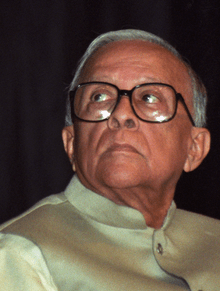
Red Salute to Com. Jyoti Basu on his 9th death anniversary!

CPI(M) Remembers Comrade Jyoti Basu!

Jyoti Basu was born on 8th July, 1914 at Kolkata. His father Nishikanta Basu and mother Hemlata Devi lived in Kolkata though their ancestral home was in village Bardi in Dhaka. Nishikanta Basu was an eminent homeopath doctor. Jyoti Basu spent his childhood in Kolkata, mostly in their house in Hindusthan Park in South Kolkata, where he lived the most part of his life too.

Jyoti Basu passed his Senior Cambridge and Intermediate from St Xaviers’ school and later was admitted in Presidency College with Honours in English. Though not an active political family, Basu’s father was supportive of the national struggle. While in school, Basu was inspired by the Chittagong armed rebellion led by Surya Sen in 1930.

In 1935, Basu went to England to study law. In a volatile international situation, during his university days, his political thoughts were shaped in ideological debates against fascism. Basu became an active member of the India League, a body of Indian students, led by V.K Krishna Menon. Among others, Bhupesh Gupta and Snehangshukanta Acharya were his friends in student days. Jyoti Basu gradually came into contact with leaders of the Communist Party of Great Britain . He began to participate in Marxist Study Circles and joined in the activities of the Communist Groups in London, Oxford, and Cambridge. He came in close contact with Harry Pollit, Rajni Palme Dutt, Ben Bradley and other leaders of CPGB. They had a great influencing role in shaping the ideas and life of young Basu. Jyoti Basu became the first secretary of London Majlis, an association of Indians. They felicitated Jawharlal Nehru in London. Basu decided that he would join the Communist Party after returning to India.

Basu returned to India in 1940 and immediately contacted the Party leaders. Though he enrolled himself as a barrister in Calcutta High Court, he never practiced simply because he was determined to become a wholetimer of the Party.

Basu became the secretary of Friends of Soviet Union and Anti-Fascist Writers’ Association in Kolkata. As member of the Party, the initial task of Basu was to maintain liaison with underground Party leaders. He was entrusted responsibilities in the trade union front from 1944. In that year, Bengal Assam Railroad Workers’ Union was formed and Basu became its first secretary. Basu was elected to Bengal Provincial Assembly in 1946 from the Railway Workers constituency. Ratanlal Bramhan and Rupnarayan Roy were the other two Communists who were elected. From that day on, Basu became one of the most popular and influential legislators for decades to come. He showed how the Communists can use the legislative forums for strengthening struggles.

Basu played a very active role in stormy days of 1946-47 when Bengal witnessed the Tebhaga movement, workers strikes and even communal riots. Everywhere the struggling people got Basu by their side.

Jyoti Basu was the secretary of the West Bengal Provincial Committee of the Party from 1953 to January 1961. He was elected to Central Committee of the Party in 1951. He was a member of the Polit Bureau from 1964 onwards. He was elected as a special invitee to PB in 19th Congress of the Party in 2008.

After the country gained independence, he was elected to the assembly from Baranagar in 1952. He was elected to the West Bengal Legislative Assembly in 1952, 1957, 1962, 1967, 1969, 1971, 1977, 1982, 1987, 1991 and 1996. Though an elected member, Basu was arrested several times during the 1950s and 60s and for certain periods he went underground to evade arrest by the police.

In 1962, Jyoti Basu was one amongst the 32 members of the National Council who walked out of the meeting. When the CPI(M) was formed in 1964 as a result of the ideological struggle within the Communist movement, Basu became a member of the Polit Bureau. He was, in fact, the last surviving member of the “Navaratnas”, the nine members of the first Polit Bureau.

During the days of India-China border conflict, Basu, alongwith other leaders of the Party, were accused of being “agents of China” and faced attacks from the ruling class parties and the anti-Communist media.

1n 1967, Basu became the deputy Chief Minister in the first United Front Ministry and again in 1969. These two governments provided a great stimulus in unleashing mass and class struggle in West Bengal. Jyoti Basu played an important role in intertwining the struggle and running the government. In 1970, he narrowly escaped an assassination attempt at the Patna Railway Station by the Anandmargis. In 1971, Basu’s car and public meeting were attacked by Congress miscreants at least twice. Though CPI(M) became the single largest party in the assembly elections in 1971, the Party was refused the chance to form a ministry and Presidents’ Rule was imposed in West Bengal. The 1972 elections were rigged and Jyoti Basu was forced to boycott the elections. Basu famously declared the new assembly as “assembly of the frauds” and CPI(M) boycotted the assembly for the next five years. West Bengal faced severe repression and terror during the semi-fascist Congress regime in this period. The CPI(M) and the Left forces courageously fought the onslaught and Basu was one of the leading figures of that heroic resistance by the people.

In 1977, the Left Front Government was formed as a product of the democratic and mass struggles and Basu became the Chief Minister. He was 63 then. A new, vigorous era in his life began. The very first announcement by Basu after he was sworn in was that the government would not be run from Writers’ Building alone. The people would be very much part of it. Under Basu’s leadership, the LF government initiated far reaching measures in the interests of toiling people. The land reforms, decentralization through panchayats, guaranteeing trade union rights of the workers, giving widespread relief to different sections of the society, spread of education marked a radical departure in governance in our country. Under LF government, West Bengal witnessed excellent advancement in agriculture and later it was under his leadership that the state government took serious initiative in industrialization of the state. In office continuously for 24 years, Basu was the longest serving chief minister in the country.

One of the major contributions of Basu as Chief Minister was to raise the issue of Centre-State relations at the all India level. On the one hand, Basu led the struggle against discrimination against West Bengal and successfully built the Haldia Petro Chemicals, Bakreswar Thermal Power Station etc. On the other hand, he could mobilize other state governments and various political parties on the issue.

Jyoti Basu played a significant role in national politics and his intervention in important junctures proved to be crucial. Basu played a prominent role in mobilizing anti-Congress secular opposition forces during the regimes of Indira Gandhi ,Rajiv Gandhi and Narasimha Rao. He also played an important role in mobilizing secular forces against the communal BJP. In 1996, his name was proposed by the secular allies for Prime Ministership. But the CPI(M) Central Committee decided to support the government from outside.

Jyoti Basu was one of the main campaigners for the Party at the national level. He visited all the states and areas a number of times to address public meetings and rallies. He was particular about attending the open sessions of the CITU all India conferences.

Basu was all along associated with the trade union movement and was a champion of the cause of working class. He was a Vice President of CITU since its inception in 1970.

In November 2000, Basu voluntarily retired from Chief Ministership but he continued to lead the Party in West Bengal. Despite his ill health, Basu participated in Party meetings and in election campaign in 2006 also.

Basu’s wife Kamal Basu died some years ago. He is survived by his only son Chandan and three grandchildren. (CPI(M) Press Statement)

Observe Co. S.K.Vyas Day on 13th February 2019 – Confederation Circular

Tags

Com. S. K. Vyasji, the legendary leader of the Central Govt. Employees and Pensioners passed away on 13th February, 2015.
Com. Vyasji was the Secretary General and President of the Confederation of Central Govt. Employees & Workers for forty years from 1967 to 2006. He was the President and Secretary General of All India Audit & Accounts Association for a long time. He continued as the Advisor of the Confederation and also as the Secretary General of National Co-ordination Committee of Pensioners Association (NCCPA) and Bharat Central Pensioners Confederation (BCPC) till death.
Com. Vyasji has led various struggles and strike actions of the Central Govt. Employees and was in the forefront of the leadership which organised the first indefinite strike action of the Central Govt. employees after independence, in the year 1960. Com. Vyas was jailed and dismissed from service. He played an important role in rallying the Central Govt. employees along with the striking Railway employees in the year 1974. He was an able and uncompromising negotiator with the Government in the JCM National Council and Standing Committee. He was responsible for many of the benefits and allowances enjoyed by the Central Govt. employees. The cost indexation of wages was earned by the Govt. employees through the sustained struggles and efforts in 1960s under his leadership. Confederation of Central Govt. employees and workers representing about 15 lakhs Central Govt. employees is in the forefront of the incessant struggle and strike actions organised by Indian Working Class against the neo-liberal economic policies of the Government. Com. S. K. Vyasji’s vision and ideological clarity has made the Confederation, part and parcel of the mainstream of the working class movement in India.
Com. Vyasji was a friend, philosopher, guide and everything for the Central Govt. Employees movement. In the more than six decades long trade union life, Com. Vyasji endeared himself to every section of the Central Govt. Employees. His death has caused irreparable and irreplaceable loss to all of us. He was a great leader, symbol of simplicity, a gem of a person and a leader who is down to earth, extremely polite, kind hearted and compassionate; one of the finest human being, tallest leader, a gentle mentor and a legend.
He is in our hearts! His memories will be forever with us! His long saga of struggle and sacrifice for the Central Govt. employees and pensioners will inspire the generations to come.
The National Secretariat of Confederation of Central Govt. Employees & Workers calls upon all affiliated organisations and C-O-Cs to observe the 4th Death anniversary of Com. S. K. Vyas Ji as “S. K. VYAS JI REMEMBRANCE DAY”.

Com. S. K. Vyasji Amar Rahe!
Long live Com. S. K. Vyasji !!
Long live, Long live !!!

M. Krishnan
Secretary General
Confederation
Mob: 09447068125
Email: mkrishnan6854@gmail.com