All India BSNL DoT Pensioners Association (AIBDPA) is organising a March to Sanchar Bhawan on 24.08.2022, demanding settlement of Pension Revision w.e.f. 01.01.2017 and settlement of other important demands of the pensioners. The Co-ordination Committee of BSNLEU, AIBDPA and BSNL CCWF, has decided to participate in this programme and make it a success. Hence, leaders and comrades of BSNLEU, especially circles adjacent to Delhi, are requested to participate in this rally and to make the programme a success. (courtesy: BSNLEU Website)
The Postal Joint Council of Action, consisting of all the unions affiliated to the two major Federations, National Federation of Postal Employees (NFPE) and Federation of National Postal Organisations (FNPO) has given a clarion call for a STRIKE on 10th August, 2022. The demands put forward for the strike are of paramount importance; Stop Privatisation of Postal Services, Protect Post Office Savings Bank and Postal Life Insurance Scheme, Desist from stopping Railway Mail Services, Fill up the vacant posts , Settle the issues of Gramin Dak Sevaks etc. The strike gains significance as it is for the protection of postal services in the country, catering best services to the people at affordable rates. AIBDPA calls upon all its units to extend all the support and cooperation to make the strike complete success throughout the country. It is also requested to organise solidarity action jointly with other affiliates of NCCPA. NCCPA also has extended support and solidarity to the Postal Strike and to send email to Secretary, Posts, Dak Bhawan, New Delhi-110001 (secretary-posts@indiapost.gov.in); Matter- STOP PRIVATISATION OF POSTAL FUNCTIONS.
Red Salute to Comrade Harkishan Singh Surjit on his 14th Death Anniversary, 1st August 2022!
The life of Com. H.K.Surjit was eventful even from his school days. He was part of the Independence struggle, was arrested and jailed several times. He was in underground for many years to avoid arrest during the first decade after independence. He joined the Communist Party of India in 1934 and was one of the first 9 PB members of the CPI(M) from 1964 since its inception. He was General Secretary of the CPI(M) from 1992 – 2005 . His life, activities and contribution to the nation and the working class are well known.
I would like to mention here about an instance when Com. Surjit helped the Union in its most critical situation. It was at the time of the Membership Verification of E.III Union in 1997 to find out which of the Unions was having the maximum membership to be recognised. The membership verification was being organised as per Delhi High Court direction in the case filed by E.III Union with me as GS.
All the unions applied for M/Ship verification. DOT was completely prejudiced and did not accept our application with out any reason, while accepting that of other unions. Our efforts to get our application accepted was ignored by DOT.
I met Com.Surjit and requested his intervention in the matter. Immediately he contacted the Communications Minister Shri Brijlal Verma over phone. The minister called us on the same day and directed the DOT to accept our application.
However, the verification did not take place due to so many court cases filed by FNTO and NFTE afraid of defeat. That is another story.
A beautiful building is constructed in Delhi, ‘ Surjit Bhawan’, by the CPI(M), in his memory.
Red Salute to Com. Harkishan Singh Surjit on his 14th death anniversary!
Due to anti-PSU and anti-worker policy of the central government, PSUs , one after another is being weakened, privatised or closed. BSNL is no exception. A PSU started with about 3.5 lakh workers, the staff strength at present is only 62,208. There has been no recruitment since 2017 , when a meagre 2682 workers were posted. Huge vacancies existed all the time.
Railways have not only withdrawn concession to senior citizens, but also has increased the cancellation charges. Much earlier, if a reserved ticket is cancelled before one full day before the travel, only reservation charges were charged as cancellation fee. Now even if the ticket is cancelled before 48 hours, extreme cancellation charges are levied.
I cancelled two reserved tickets online for Sleeper class for 29th July 2022 from Coimbatore to Kozhikode and the same was cancelled today ie. 6 days earlier. The cost of tickets were Rs. 350. The cancellation charges are Rs. 240/- and refund amount only Rs. 110/-. A Government Department can not fleece the travellers like this.
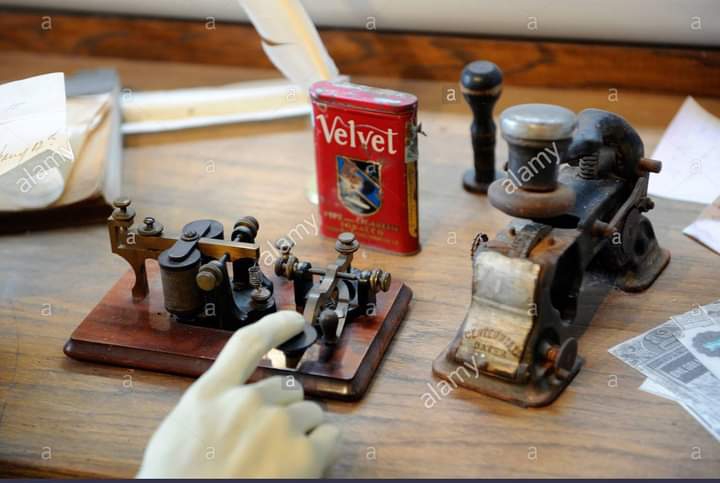
On this 15th July 2022, it will be nine years after the Telegraph Services were discontinued by the Govt of India.
Telegraphs was the fasted mode of communication for more than one century.
The Telegraph services were started in India 170 years back on 24th October 1851 with the first message sent from Calcutta to Diamond Harbour.
The history of telegraphs started long back. The electrical telegraph was invented in 1775. The first commercial telegraphs were introduced by the Western Railways in Britain in the 1830s. It was introduced in India in 1850s along with the Railways. The telephones were not invented and the fastest communication system was the telegraphs. Only the Britishers were employed both in Railways and in Telegraph Offices in the initial stages due to its utmost importance and secrecy. The Britishers used the telegraphs and Railways effectively to crush the First Independence War of 1857, which they called as ‘Sepoy Mutiny’. The Telegraphs grew fantastically during the second part of the 20th century and there were telegraph offices in all important cities and towns. In small places, the services were manned by the Postal officials called ‘Singnallers’, who kept the connection between the cities and the villages through telegraph wires.
Telegrams were sent by government as also by public to inform urgent and important news. The Central Telegraph Offices (CTOs) in the metro cities used to have about 100 or 200 telegraphists at the same time and round the clock. The telegrams were taken as official records in the court etc. It was authentic and clear. Since the charge for sending telegram was on the basis of the number of words, the message was constructed with minimum number of words. The message may be of great happiness or of sorrow like death or disease. The unions used to organise ‘Telegram Campaigns’ as a method of protest sending the same in large numbers to the concerned authorities.
In this connection, i remember that I have got the PMG Madras orders selecting me to the post of Telephone Oprator, order deputing to training class and then posting orders also.
After the growth of telephones and mobile services, the importance of telegraphs started to wane. By the second decade of 21st century it was almost limited to certain official messages. According to the government and the BSNL, there was much loss and it can not be continued as a viable service.
When the government decided to close the telegraph offices and telegraph/telegram services from 15th July, BSNLEU put up strong protest and organised protest meetings. As President of the BSNLEU, I went to Mumbai and Kolkata offices and held press conferences for getting the support of the people at large for continuing the services.
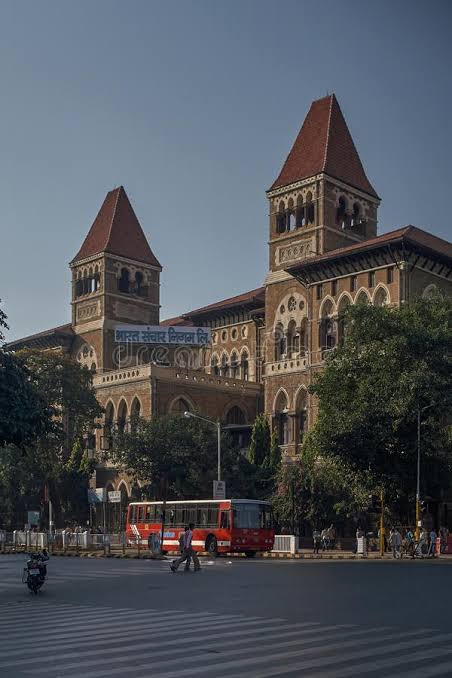
Telegraph is a heritage service and accommodated in heritage buildings in the big cities. CTO buildings in Mumbai, Delhi, Kolkata etc. are heritage buildings, which have to be maintained as such. Lakhs and lakhs of documents connected with the history of the Mughal, British rule etc. are there in the old documents of the telegraph offices. Just like Western Court building in Delhi is occupied by a hotel, there are proposals to turn these heritage buildings also in to such posh hotels. You can see that many of the historic palaces have already been converted in to hotels. Bombay CTO is now accommodating Bombay High Court.
A PLI case was filed in the court, but did not get any relief. It can only be said that the BSNL management had taken an unwise anti-people decision as also without taking in to confidence of the unions, which were trying to improve the services and make the company financially viable.
Despite all efforts to ensure that the telegraph services are kept as a token of the past, as in the case of trams in Kolkata, neither the government nor the B…
Central Telegraph Office Bombay is a beautiful heritage building. First it was the General Post Office and was handed over to CTO later. Now it accommodates the Bombay High Court.
The First Post Office in India was started in 1727 in Calcutta. The first General Post Office was also started in Calcutta in 1774. The photos are given below:
11/12th July 2022, is the Anniversary of two great strikes organised by the P&T and Central Govt employees – 76 th Anniversary of the 1946 P & T Strike and 62nd Anniversary of the 1960 CG Employees Strike.
One was against the inequalities, injustices and slavery imposed by the British imperialism as also on the basic rights of the workers ; the other was against the denial of natural justice, mininum wage and DA in independent India.
Many of the rights enjoyed by workers at present are the out come of those historic strikes. In 1946 Strike which extended for 22+ 3 days, British govt was compelled to agree to all the 12 demands raised in the strike. The strike in 1960 was suppressed with an iron hand by utilising all the brute machineries of the govt due to which the same was called off after 5 days by the leaders from the jail. This resulted in another one day epic struggle on 19th September 1968.
These three great strikes compelled the central govt to start negotiating machinery, recognition of the unions, grant of DA as per cost of living index, equality in leave, holidays, pension between officers and employees, introduction of family pension etc.etc. Even if suppressed and victimised, no struggle has been in vain.
After introduction of the globalisation- liberalisation- privatisation policy since 1991, the Central Govt is taking away one after another the rights achieved after hard struggles. The entrire trade unions led by the Central Trade Unions are on struggle path, the latest strike being on 28-29 March 2022, in which more than 30 crores workers participated.
On this anniversary of the glorious 1946 & 1960 strikes, while paying respectful homage to the martyrs who fought and sacrificed themseves for the future generations, let us pledge ourselves to March Ahead in the path shown by them with courage and determination!




 VAN Namboodiri's Blog