The floods in Mumbai and other cities

For the last few years, floods have become a usual catastrophe in Mumbai at the time of the arrival of monsoon rains. This year is also no exception. The monsoon was late for a few days, but when it started, people are happy that the rains have arrived, but the floods also followed. The floods cause not only traffic jams, but the entire busy life of Mumbai is slowed down and people put to much difficulties. In the floods a few years back, the city was almost under water for more than one day and the people had to walk 20 or more km to reach their homes through the water filled roads.

This is not the case of Mumbai alone. Most of the cities like Delhi, Kolkatta face the same disaster. It is mainly because of water logging since the sewage arrangements are faulty and there is no outlet for the huge rainwater to flow away. Neither the state government nor the Municipality / City corporations take actions to clean the sewage and make ready for the arrival of the monsoon. Heavy taxes are collected towards social amenities, but it is either wasted or whisked away by corrupt officials/contractors.

There should be a strong public movement so that the government and the corporations are compelled to take necessary action so that  avoidable difficulties can be reduced or completely stopped.


Air India Pilots end strike.

It is reported that the Air India Pilots have decided to withdraw their strike with immediate effect and join duty. This is as per the statement given by their advocate in the Supreme Court.  The SC directed the government to look in to the issues of the pilots.

A Conciliation meeting will be held on 5th July by the Chief Labour Commissioner Shri N.K.Prasad with both the Air India Management and the Pilots Guild who called for the strike.

An early settlement will put an end to the travails of the travellers and will benefit the ailing Air India.

BSNL should regularise the Casual Labours without further delay.

There are about 4,000 and odd casual labour working in the BSNL since its formation 12 years back. Most of them are in W.Bengal. They have actually been working since the days of DOT and might have worked 15 years or more by this time. There are some who have been in continuous work for more than 20 years. These labours have contributed their entire efforts for making DOT/BSNL in all its progress and installing and maintaining the services.

They were eligible for absorption as regular employees and thousands of such casual labour have already been regularised till 2005. The left out casual labour are also fully eligible for regularisation. Had their names been forwarded in time to the corporate office, they would have been regularised like others.

The plea of the management that it is not possible to regularise them after the Supreme Court judgement in Umadevi vs. Karnataka State don’t hold any water. Many government departments and PSUs have regularised their casual labour even after the judgement and utilising the way suggested by the judgement.

It is the unsympathetic and inhuman mindset of the BSNL management which is the main reason for the non-regularisation. BSNLEU and BSNLCCWF have suggested many methods by which these workers can be regularised. It is a life and death question of the workers and their families to get a job after toiling for the DOT/BSNL for maximum part of their lives.

The BSNL Management should stop their crocodile tears and come to the rescue of these most exploited workers and regularise them giving them a better future.

All India Conference of BSNLEU at Ludhiana

The  VI  All India Conference of BSNL Employees Union, the recognised and representative union of non-executive employees numbering about 2,28,000 is scheduled to be held at Ludhiana, Punjab from 25th to 28th of September 2012. The Reception Committee has started its preparatory work in right earnest to make all arrangements for holding the same in an effective manner.

The All India Conference is the forum where hundreds of elected delegates from the thousands of branches all over the country meet and discuss the problems of the workers, assess the work done during the last two years after the last AIC, adopt resolutions on policy as well as issues and also elect the office-bearers for the next term. Since the formation of the BSNLEU in 2001, regular AICs had been held within the stipulated time, which many other unions could not do. The decisions were unanimous, including the election of office-bearers. These unanimity is arrived at after discussion of the various point of views and mutual consultations. Democratic values have always been upheld in  the conferences. The present conference will not be different.

The challenges before the trade union movement are many. More and more attacks are coming on the workers and the trade union movement as part of the implementation of the neo-liberal policy by the government. Jobs have been reduced. The hard-won gains of the workers are being curtailed or reduced one after another. Trade union rights are being curbed. This is fully applicable to the telecom/BSNL workers also.

BSNL has its own problems. The pro-MNC and anti-PSU policy of the government has created many problems for the BSNL resulting in its revenue and marketing share. The management has been far below expectations. The government has almost withdrawn from all its commitments to act to improve the financial viability of the company which it assured at the time of formation of BSNL.

BSNL Employees Union has been in the forefront of the struggles for the advancement of the workers and to save the BSNL and strengthen it. Whether it is in the formation of the Joint Forum, Joint Action Committee or Forum of BSNL Unions/Associations, it has taken a pivotal role in uniting the workers and organising struggles. It will continue to do so.

As the recognised and representative union for the last 7 years or more, it worked in unison with the United Forum for improving the condition of the workers and achieving more and more demands. The Wage revision of 2007 and the New Promotion Policy for Non-Executives have been /path-breaking and appreciated by the entire workers, especially in the challenging times when the company is in financial difficulties. Even those few who opposed the above on their own compulsions had to agree the benefits of the above, when they were implemented and the benefits were actually experienced. BSNLEU will continue its efforts to improve the benefits of the workers.

BSNLEU is connected with the main trade union stream of the country. It has been a party to all the struggles organised by the Central Trade Unions, Platform of Mass Organisations etc. in the past. It will continue to do so. BSNLEU is also connected with the Trade Union International and the World federation of Trade Unions (WFTU).  It has to take more and more effective role in the above.

All these and more will be discussed in the next AIC and necessary decisions taken. For that everybody including the CHQ, Circles, SSAs, Branches and all the workers have to prepare and come with their suggestions and opinions for the better.

Let us make the Ludhiana AIC another milestone in the progress of our Forward March!

Cambridge – the centre of learning

Cambridge and Oxford are two universities in UK which are known world over for their excellence as centres of learning. I got the opportunity to visit the former yesterday, 2nd June 2012. Along with my son and wife, I visited the Cambridge city. In fact, the city really means the Cambridge University and the 31 colleges connected with it. After reaching there, my son went to his office and my wife and myself went to see the town.

We boarded a city bus and toured the entire city which is not very big. The town is full of colleges and connected institutions. Some of the colleges are functioning for the last three to four hundred years.   A few of them are from 13th century onwards.  Kings College, Queens College, Trinity etc. are some of the well known ones.  Some of these colleges are named after famous personalities like Charles Darwin, Churchill etc.   Jawaharlal Nehru studied in Trinity College. There are a large number of students from India even now. Many of the top leaders in India have studied in these colleges. The city has got  some very old churches also.

There is a cemetary of thousands of US soldiers who were killed during the Second World War ( 1941-45) defending Britain from the attack of German planes. Just like the cemetery in Kohima, all these tombs are named with the name of the victims, their designation and the unit they worked at the time of the war.  The cemetery is maintained by the US government.

There is a good museum of the university, but we could not visit the same.

Anyway, we got the chance to see the town and get in to the spirit of learning.

Marx Memorial Library in London – 75 years of Enlightenment

Tags

, , , ,

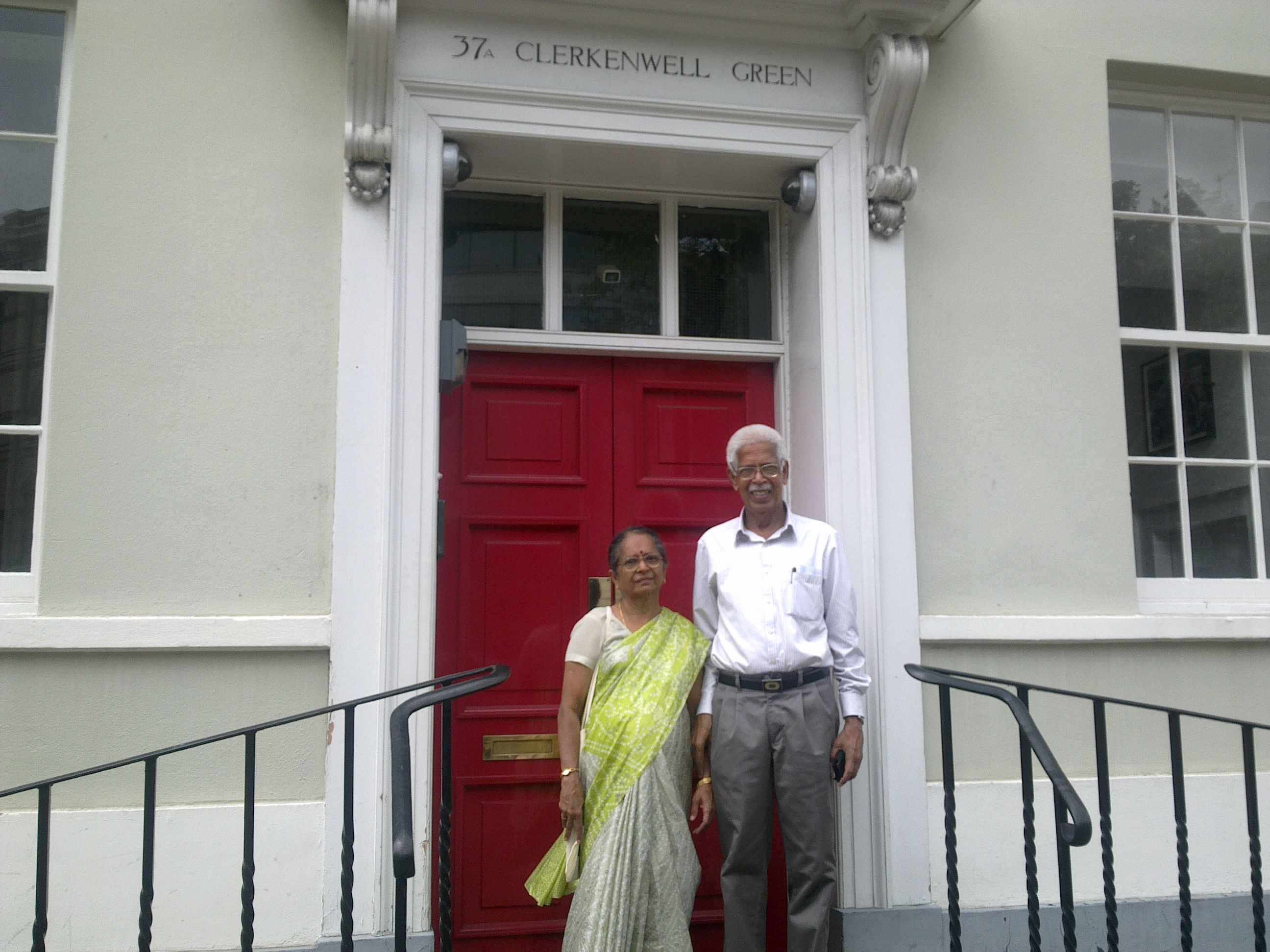
Self and Pankajam at Marx Library, London.


Self and Pankajam at Marx Library, London.

I got the rare opportunity to visit the Marx Memorial Library in London two days back on 28th June. During my last visit to London in 2010, I had gone up to the building, but it was closed. This time we, myself and my wife Pankajam, checked its website (http://www.marx-memorial-library.org) found the visiting hours and accordingly reached there by about 1330 hours. From London you have to go to Farrington Station by tube (metro) and then have about 5 minutes walk. The address is 37A, Clerkenwell Green.

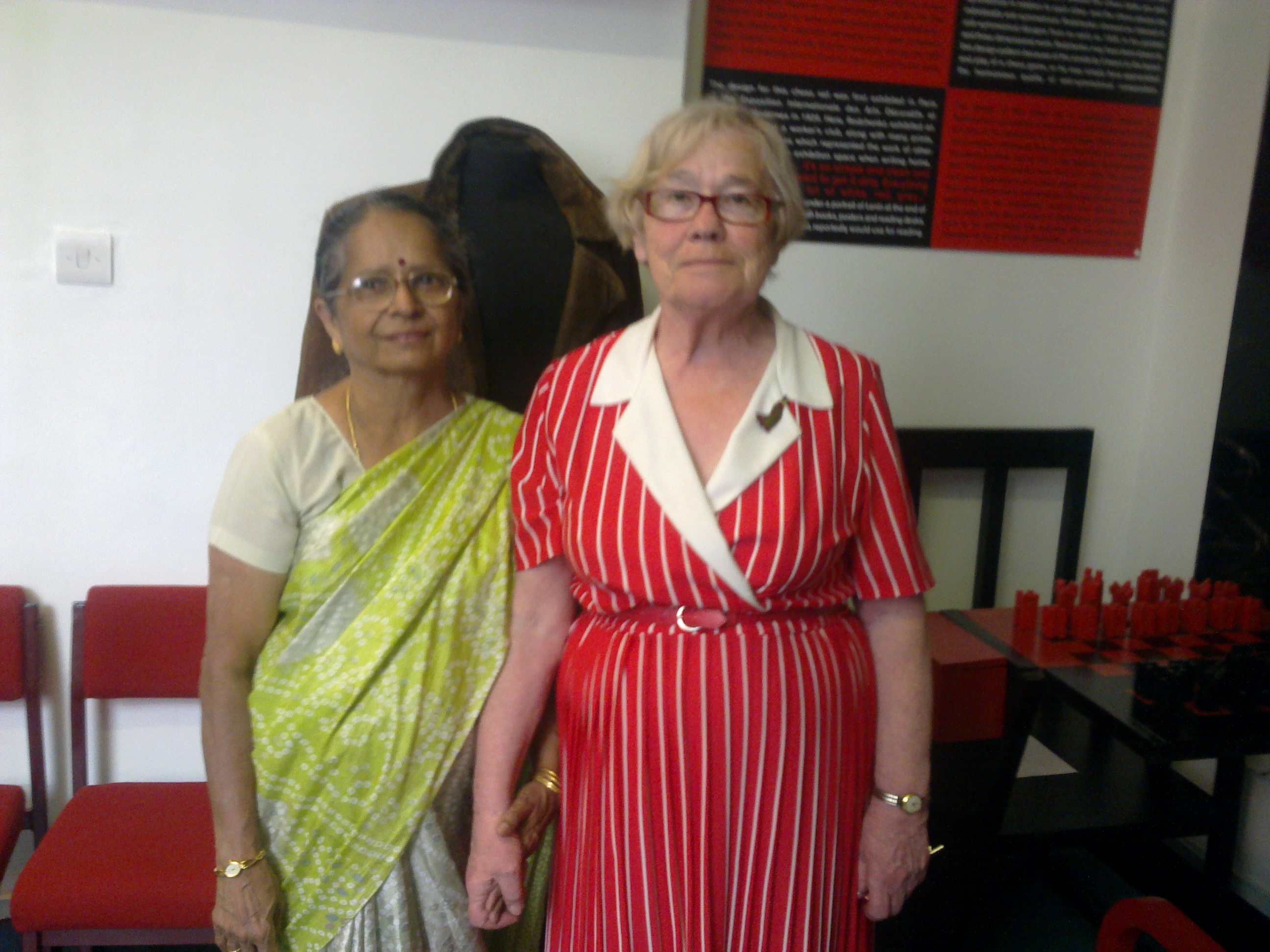
We were warmly received by Comrade Sheelagh Macdonald and another comrade working there at the red door of the building. There is no big name-board on the building, but a small brass plate at the side of the door on the wall with the name  ‘Marx Memorial Library’ and details of the visiting hours, telephone numbers etc.

Pankajam with Sheelagh Macdonald

Pankajam with Sheelagh Macdonald

They showed us rooms, Library and the important documents and explained the history of the library and memorial. The building was constructed in 1738 as the Welsh Charity School. In 1872 The Patriotic Club started functioning in the building. The Marx Memorial Library was started in the building in 1933, in connection with the 50th death anniversary of Marx ( 14th March 1983). At the time a Workers School was also functioning along with the Library. This was started as a ” fitting memorial in the form of a centre of working class education to the greatest thinker and revolutionist of all time, in the city where he lived and worked for the greater part of his adult life.”

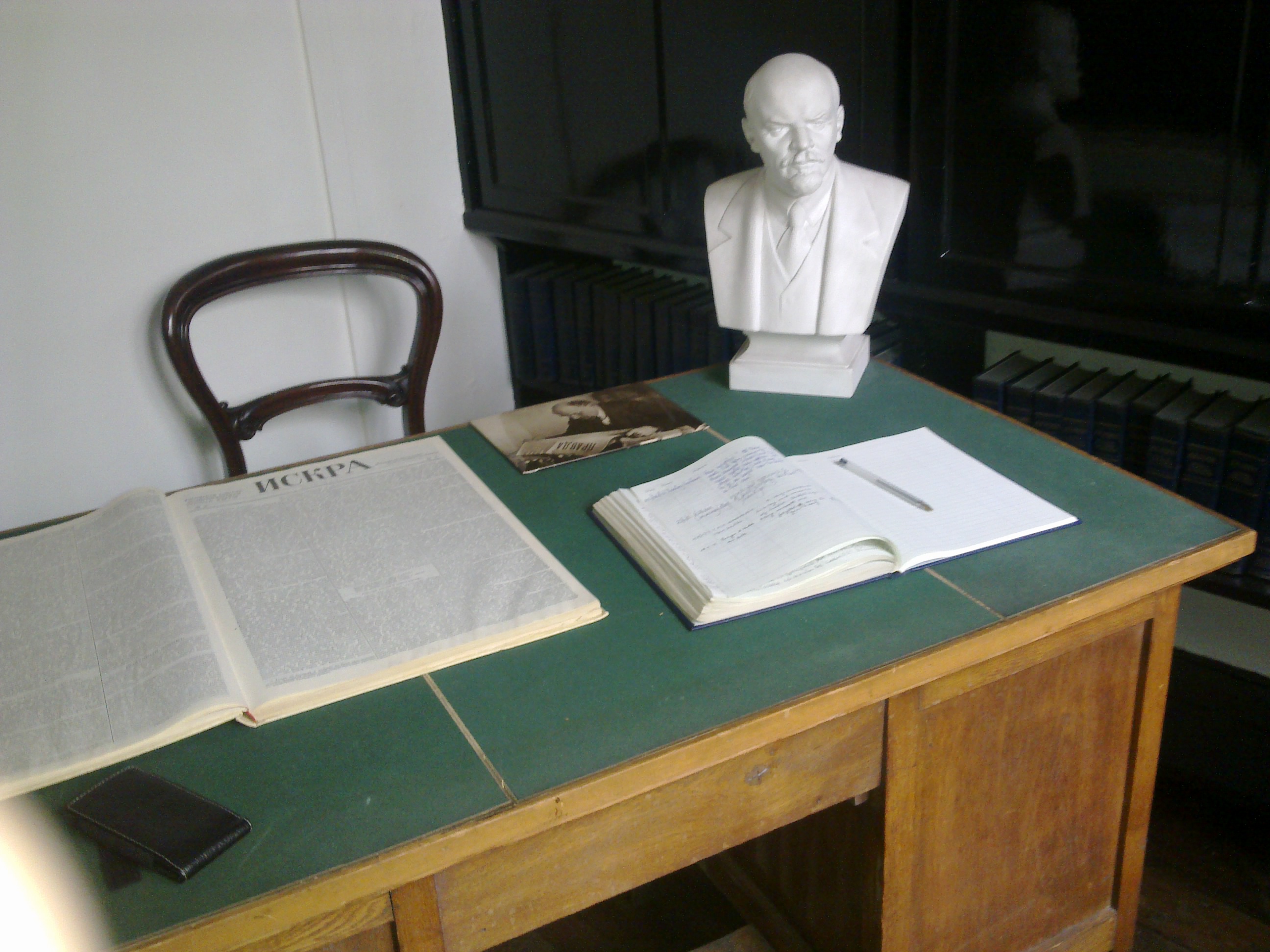
Lenin's Room at Marx Library

Lenin’s Room at Marx Library

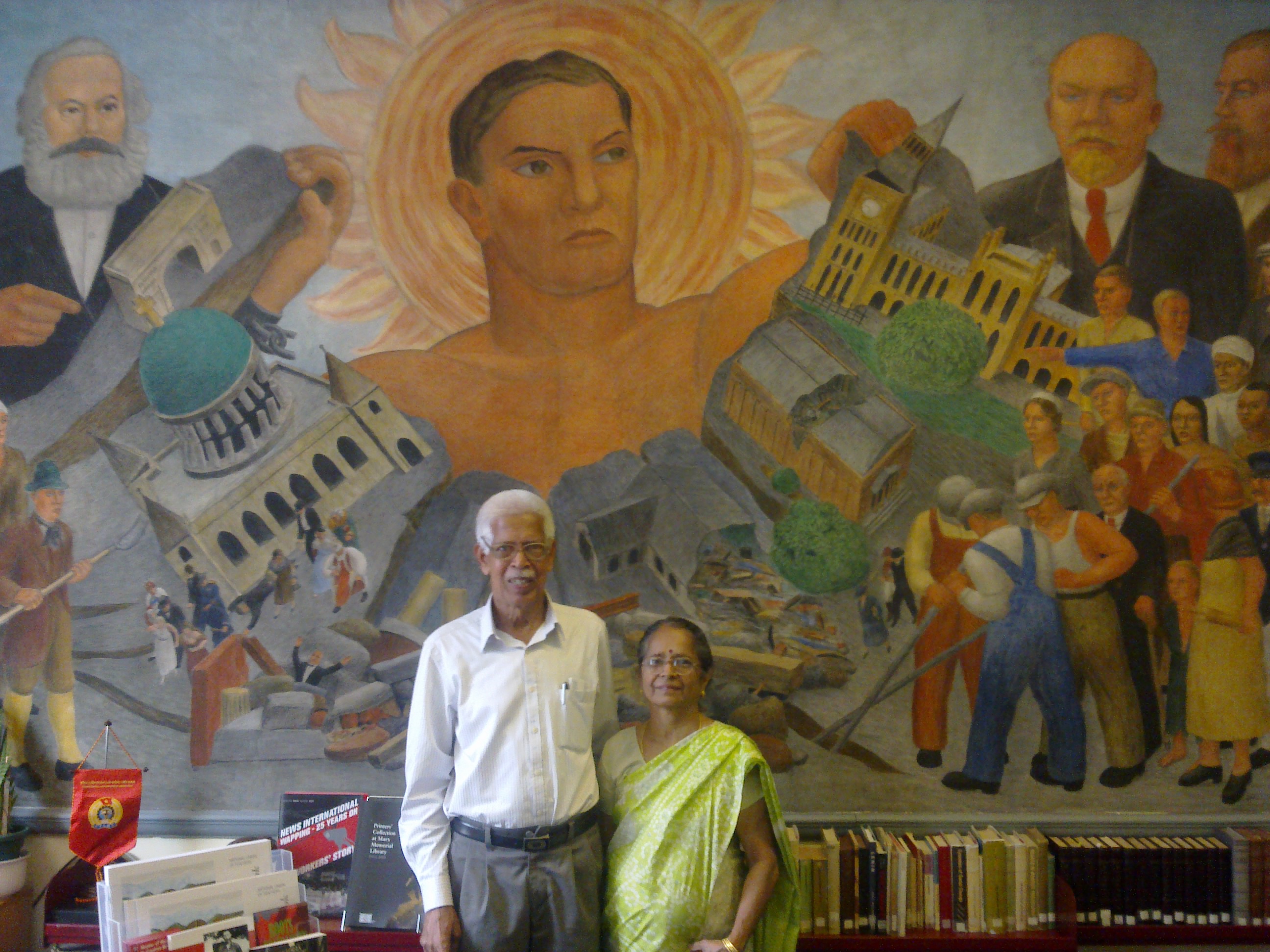
The Marx Memorial Library have thousands of volumes of books on various subjects. An entire section is allotted to the Spanish revolution and connected matters. The original volumes of ‘Das Kapital’ and other books by Karl Marx are kept there. The room where Lenin used to work while in exile and edited the journal ‘IKSRA’ is kept as it is. There are many medals and other artefacts connected with the various conferences and seminar held there. There are many inspiring paintings on the wall by well-known artists. In its entirety, it was educative and inspiring.

wall painting at Marx Library

The Marx Memorial Library organisation is maintaining the  tomb and the statue of Marx in the High Gate cemetary in London. This was damaged by the neo–nazis in the 1970s, but has been repaired and well maintained at present. During my last tour, I have visited the tomb.

Regular Seminars and workshops are organised and discussions take place on the relevance of Marxism and other issues. In 2012, a series of lectures were organised on the subject, “Marxism in the 21st Century’,  in which Com. Prakash Karat, General Secretary, CPI(M) also gave a presentation.

Com. Sheelagh at the time our departure gave us some books, including one which described history of the Library and other details. We signed the visitors’ register and wrote our opinion.

The visit was inspiring and helped understanding a lot of information.

Service Tax for more items from 1st July 2012

Tags

For the common man, already burdened by rising prices, changes in the service tax regime will bring in more gloom. The government is rolling out a new service tax regime from today, which is based on negative list concept.
The Finance Ministry has kept 38 services under the negative list which will be exempt from taxation; all the other services will attract 12 per cent service tax. The government had earlier decided to implement the negative list from July 1.
The government has widened the definition of ‘Services’ to bring in more activities under the tax net. Till now, 119 services that come under ‘positive list’ are subject to the levy. The new approach to taxation of services is intended to take the country and the economy a step closer towards the introduction of Goods and Service Tax (GST).
As per the negative list, services like metered taxis, autorickshaws, betting, gambling, lottery, entry to amusement parks, transport of goods or passengers and electricity transmission or distribution by discoms will not come under the service tax net.
Other important services which will not attract the tax include funeral, burial, mutate services and transport of deceased.
Coaching classes and training institutions will come under the net, though the tax will not be levied on school, university education and approved vocational courses.
However, confusion prevails with regard to the imposition of service tax on rail freight and passenger fares.
Railway Minister Mukul Roy has said the Railways will not introduce service tax on freight and fare from July 1 and has written to Prime Minister Manmohan Singh, who is now looking after the Finance portfolio, in this regard.
Besides, services provided to the government, local authorities or a government authority for the repair and maintenance of an aircraft would also come in the negative list.
Also, services provided by advocates to other advocates and business entities up to a turnover of Rs. 10 lakh in the preceding financial year is exempt from service tax.
Services provided by way of public convenience such as provision of facilities of bathroom, washroom, urinals or toilets would be included in the negative list.
The other services which would be exempted from tax include auxiliary educational services and renting of immovable property by educational institutions in respect of education exempt from service tax.

Why unnecessary delay to hold the National Council?

The next National Council was to be held by 24th June 2012 as decided by the last National council meeting. But despite the continued demand by the unions, the date for the next meeting has not been fixed. The delay is unwarranted and inexcusable.

The BSNL management should immediately fix the date and hold the same at the earliest.

Defeat the govt. move to increase FDI in Insurance

It is reported that the government is once again making efforts to increase the FDI in the insurance sector on the demands of the MNCs and Indian big business. At present the FDI in insurance is 26%. Though the government wanted to increase it to 49%, the Parliamentary Standing Committee has recommended that there is no need for the same.  For effecting the increase, the government had moved Insurance Laws (Amendment) Bill 2008, but could not pass it so far due to strong opposition including from the trade unions.

It is necessary that another strong movement is to be organised to defeat the nefarious game of the government to appease the MNCs and big business which is against the best ineterests of the nation.

China pays tributes to Dr and Mrs. Dwarakanath Kotnis.

China today paid rich tributes to wife of legendary physician Dwarkanath Kotnis, Guo Qinglan, saying she spent her life promoting Sino-India ties.     96-year-old Guo, a Chinese woman who married Kotnis in November 1941, died yesterday in Dalian, a coastal city in northeast China’s Liaoning province.     Expressing condolences, Chinese Foreign Ministry spokesman, Hong Lei, told media briefing here that Guo spent her whole life promoting exchanges and cooperation between China and India.     Dr. Kotnis, came to China in 1938 along with an Indian medical team to render medical assistance when China fought against the Japanese invasion.     He joined the Communist Party of China (CPC) in 1942 and died the same year, state-run Xinhua news agency reported.     Kotnis sacrificed his youth and life for China’s national salvation, Hong said, adding “we will always remember their (Guo and Kotnis’s) important contributions”.     His medical assistance during the difficult days of Chinese revolution were deeply praised by Chinese leader Mao Zedong.     Dr. Kotnis, who hailed from Sholapur in Maharashtra died of epilepsy in China at the age of 32 years. His statues were also unveiled in some of the Chinese cities in recognition to his services.     Guo, herself a nurse, hailing from China’s Shanxi province married Dr. Kotnis in 1941 a year before his death in China.     She has been an honoured guest at many high-level diplomatic functions between China and India. She was a regular invitee at the Indian Embassy functions in China.     Though she got married again later, she retained her name as Guo Qinglan Kotnis.     India and China have instituted a joint medical mission in his honour. Recently eight Indian doctors visited China under special bilateral programme to study rural medicare here (Courtsey: Ganashakti)

The great sacrifice and service by Dr. Kotnis and his wife will be remembered ever, which had strengthened the Indo-China relations also.