Queen Marie Antoinette and Minister Chidambaram

” If they can not get bread, let them eat cake” – Queen Marie Antoinette of France (18th century,  who was guillotined in 1793).

” If people could spend Rs.15 for a bottle of water or Rs. 20 for an ice cream, why they make a big issue if the price  of wheat or rice were increased by Re. one” – Minister P.Chidambaram. (21st century, Cabinet Minister in UPA-II government).

What a disdain and inhuman attitude to the  genuine problems of the common people by those in power despite the difference of two centuries!

Oppose privatisation of power supply

Montek Singh Ahluwalia, Dy. Chairman Planning Commission has directed all the states to privatise the power supply in major cities/towns. This suggestion is part of the privatisation policy of the government and is intended to help the private companies to reap huge profit. Whatever has happened wherever the power supply has been handed over to private companies is well-known. The prices are increased, supply is bad and the people are in difficulty. But the government is not worried about. They want to relinquish from their responsibility of supplying power at minimum charges and want to help the power companies to reap high profit.

This government move is to be opposed strongly by all and defeated in the proposal stage itself. Other wise, the woes of the people will increase only. The ordinary people will be completely deprived of power supply and only the rich will be able get electricity.


No to Nuclear power, Nuclear weapons – 2 lakh protests in Japan

Tens of thousands of people rallied at a Tokyo park today, 16th July, demanding that Japan abandon nuclear power as the country prepares to restart another reactor shut down after last year’s tsunami-generated meltdown at the Fukushima power plant. Led by Nobel-winning novelist Kenzaburo Oe, pop star Ryuichi Sakamoto and visual artist Yoshitomo Nara, the protesters expressed outrage over a report that blamed the Fukushima disaster on Japan’s culture of “reflexive obedience” and held no individuals responsible. Japan ordered all its nuclear power plants shut down for safety inspections after last year’s March tsunami and earthquake set off multiple meltdowns at Fukushima Dai-ichi plant. Some 150,000 people evacuated from a 20-kilometre zone around the plant because of radiation fears, and the area is deemed unsafe to live in more than a year later. The disaster, the world’s second-worst nuclear accident after Chernobyl, has deeply divided Japan, which had been previously bullish on nuclear technology. Today’s rally at sprawling Yoyogi Park was the latest and among the biggest drawing possibly as many as 200,000 people, according to organizers in a series of large protests that is unusual for normally reserved Japanese. “We want to leave a world without nuclear power for our children,” said Takeshi Shinoda, a hospital worker, wearing a “No Nukes” T-shirt and strolling with his 3-year-old son in a long line of demonstrators. The movement’s leaders say they have collected 7.4 million signatures for a petition demanding a phase-out of nuclear power. Until last month, when Prime Minister Yoshihiko Noda decided to restart the reactor at Ohi plant in central Japan, all of this nation’s 50 working reactors had been offline. The second reactor at Ohi is set to go online later this week. Noda has said some nuclear energy is needed to ensure an ample power supply and protect people’s livelihoods. Japan’s economy is still struggling after last year’s disaste. The people are dead aginst for restarting the nuclear plants.

Parliament March on 26th July by NCCPA & Confederation

A massive Parliament March will be organised by the Confederation of Central Government Employees & Workers, NCCPA and AIBDPA on 26th July 2012 on  the major issues of the Central Government Employees and Pensioners. The demands include the same which were submitted to the Prime Minister on 25-11-2012 after the March to Parliament. These include withdrawal of the PFRDA Bill, Removal of anomalies etc.

In continuation, National Co-Ordination Committee of Pensioners Association (NCCPA) and AIBDPA has decided to organise Day Long Dharna on 1st August 2012 by Pensioners at all stations and on conclusion of Dharna at the state capital should resubmit the earlier memorandum to the Governor of the particular state, requesting it to be forwarded to the Prime Minister.

The NCCPA and AIBDPA has  demanded that the PFRDA should be withdrawn and all employees to be made eligible for defined pension as earlier.

The Extended National Executive of the NCCPA will meet on 26-07-2012 after the Parliament March to discuss about the future programmes.

These programmes should be successfully implemented to make the government understand and act on the demands of the workers and Pensioners.  The NCCPA nad AIBDPA had already issued circulars in the matter.


Obama wants quick reforms in India

US President Barack Obama has expressed his unhappiness about the delay in economic reforms in India, in a press conference held yesterday. He mainly pointed out the delay in allowing FDI in retail trade etc. He stated that lack of reforms will reduce FDI to India.

More than Indian Government, US administration is worried about the lack of reforms in India. What are these important reforms? One is allowing of 50% FDI in retail trade. Another is the PFRDA Bill which will make the huge pension funds available to the private corporates. Third is the Insurance Bill, through which the private companies can be given more space and benefit and can privatise the PSU Insurance companies.

These reforms are not in the interest of the workers or the huge majority of the  people of this country. These will benefit only the MNCs, Corporates and the big business. These are part of the neo-liberal policies of the government which take away the rights and benefits of the toiling masses and give more control to the MNCs and rich corporates on the Indian economy.

But unfortunately the UPA government is going on aggressively to implement these anti-people measures at the diktat of the US and other capitalist countries.

Only a strong movement by the people alone will save the country from this liberalisation, privatisation, globalisation policy.


The 1960 Historic 5 days strike by CG employees

On 11th July 1960, the Central Government Employees went on an Indefinite Strike on important demands like Minimum Wage, DA etc. which continued for 5 days before withdrawing under the brutal attack, suppression, victimisation and harassment from the government. The government promulgated Essential Service Maintenance Ordinance (ESMO) for the first time in independent India and jailed, arrested, terminated and punished thousands of workers who have gone on strike. There was no settlement and it was an unconditional withdrawal before the fury and might of the government. But as the saying goes, no strike is in vain. The government was compelled to reinstate all terminated employees, though other punishments etc. continued.  DA was improved and some other demands also settled within a few years.

All those participants in this historic strike are retired and are not in service.  But the memory of the courage and bravery of those comrades who led the strike and who participated facing the inhuman and brutal attack of the state machinery for defending the rights of workers and their future will ever be remembered by the present and future generations.

I feel proud that I had the humble opportunity to participate in this great struggle and realise the real face  of the  government from my own personal experience. I feel also proud, though a comparatively new entrant at that time, I have been also a victim of the brutal attack by the government, which helped me to take the trade union field instead of career prospects.

I salute all those who led and participated in that great struggle. Let its  memory be  always an inspiration to the present and future generations.

Stop victimisation of All India Union leaders

I am shocked to find out that the top officer-bearers of SNEA viz. President G.L.Jogi, General Secretary K.Sebastin and former AGS A.A.Khan were transferred out of Delhi. I am yet to find out why the BSNL managment has taken this unprecedented action, but whatever the reason, it is fully unjustified and unwarranted. All of them are not only  respected leaders of SNEA, but the BSNL employees as a whole.

I would demand the management to immediately cancel the transfers and ensure that normalcy is restored. If the management has got any problem, it can be discussed and amicably settled.

National Convention of by Central Trade Unions.

The Central trade unions in its meeting on 11th July has decided to organise a National Convention on 4th September at Mavlankar Hall, New Delhi. In addition to the central trade unions, representatives from All India Federations will also be participating.

The Convention is expected to take important decisions on the demands already raised by the CTUs in the historic  All India strike organised on 28th February, including against price hike, disinvestment of PSUs, curtailing of trade union rights etc. and also demanding implementation of minimum wages in unorganised sector, regularisation of contract workers etc.

The workers all over the country are waiting for the crucial decisions of the Convention to continue their sustained struggles against the anti-people, anti-worker neo-liberal policies of the central government.

Tour to Scotland – a beautiful experience

A Tour of Scotland – the Natural Garden of British Islands

I have been on a tour of Scotland for the last four days since 7th July. It was an experience worthwile. It was enjoyable to say the least.

I and my wife started the journey by the early morning of 7th July by a Star Tour Coach from Wembley, which is part of London. My son, Shaji, arranged everything for the journey. There were 55 passengers and interestingly they were all from India. Mostly they were the parents or in-laws of youths employed in London and nearby. Some were the youths themselves working in UK. The tour consisted of four days and stopped at Glasgow, Inverness and Edinburgh, important cities of Scotland.

As you know, Scotland is part of the United Kingdom, which consists of England, Scotland and North Ireland. There have been continued wars in the earlier centuries between England and Scotland for supremacy. Now Scotland is having its own Parliament with 129 Members. To a certain extend it is like our states in India. Scotland covers the northern part of the British Islands and is famous for its natural beauty.

07-07-2012

Started from Wembly (London) at about 0700 hours and proceeded to Glasgow. Both the sides of the road were full of green scenery. Now and then, there are villages with small houses and a lot of cattle and horses feeding in the expansive grass land. At noon the coach stopped at Gretna Green for lunch. It is  a small town which is famous for iron foundries and expert blacksmiths. Another major attraction is that it is very special for conducting marriages. Young people come here from all parts of the country for holding marriages.
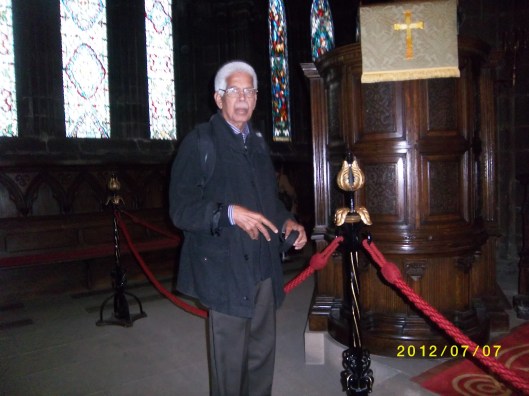
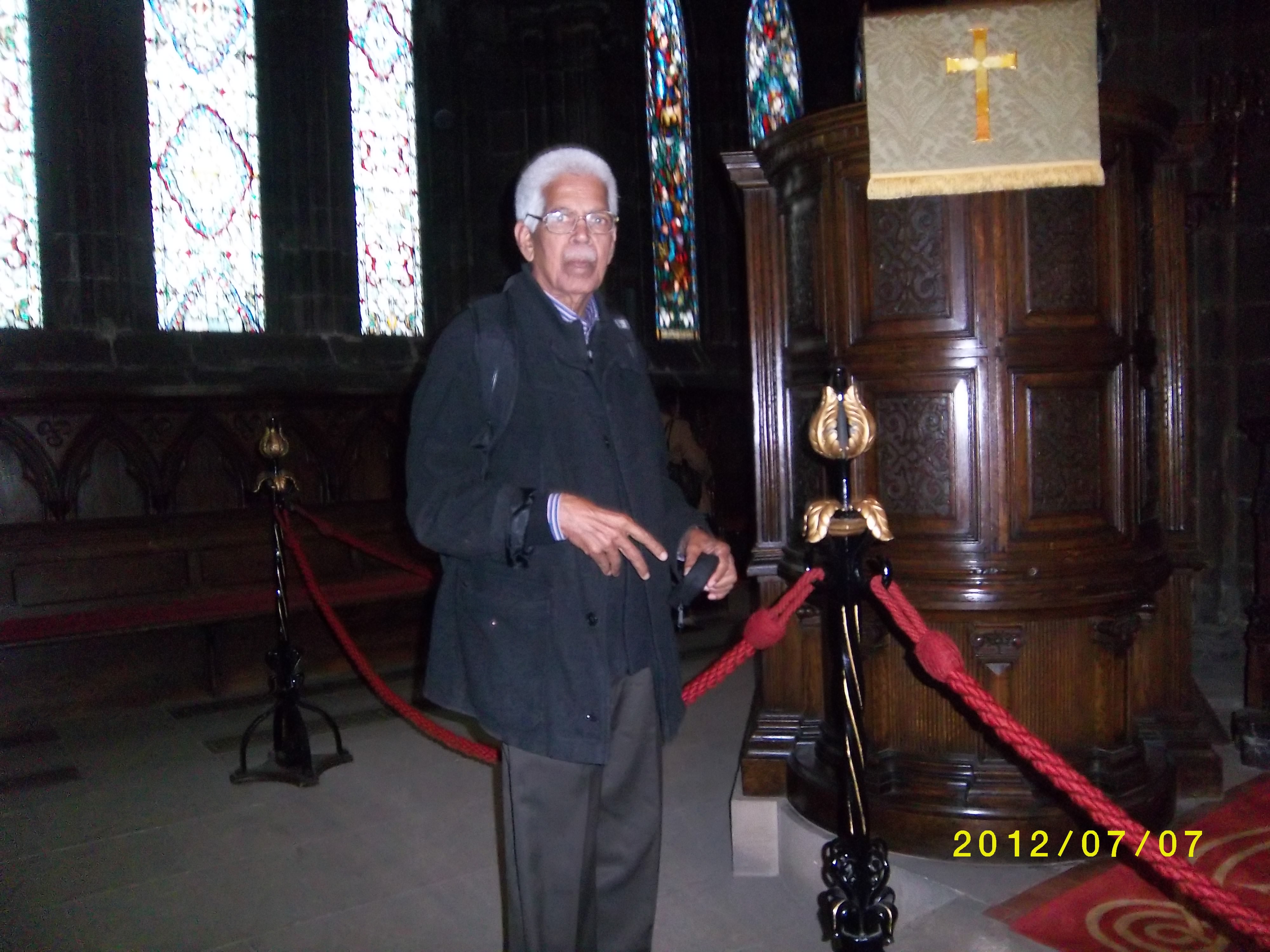
InsiIde Glasgow Cathedral

InsiIde Glasgow Cathedral

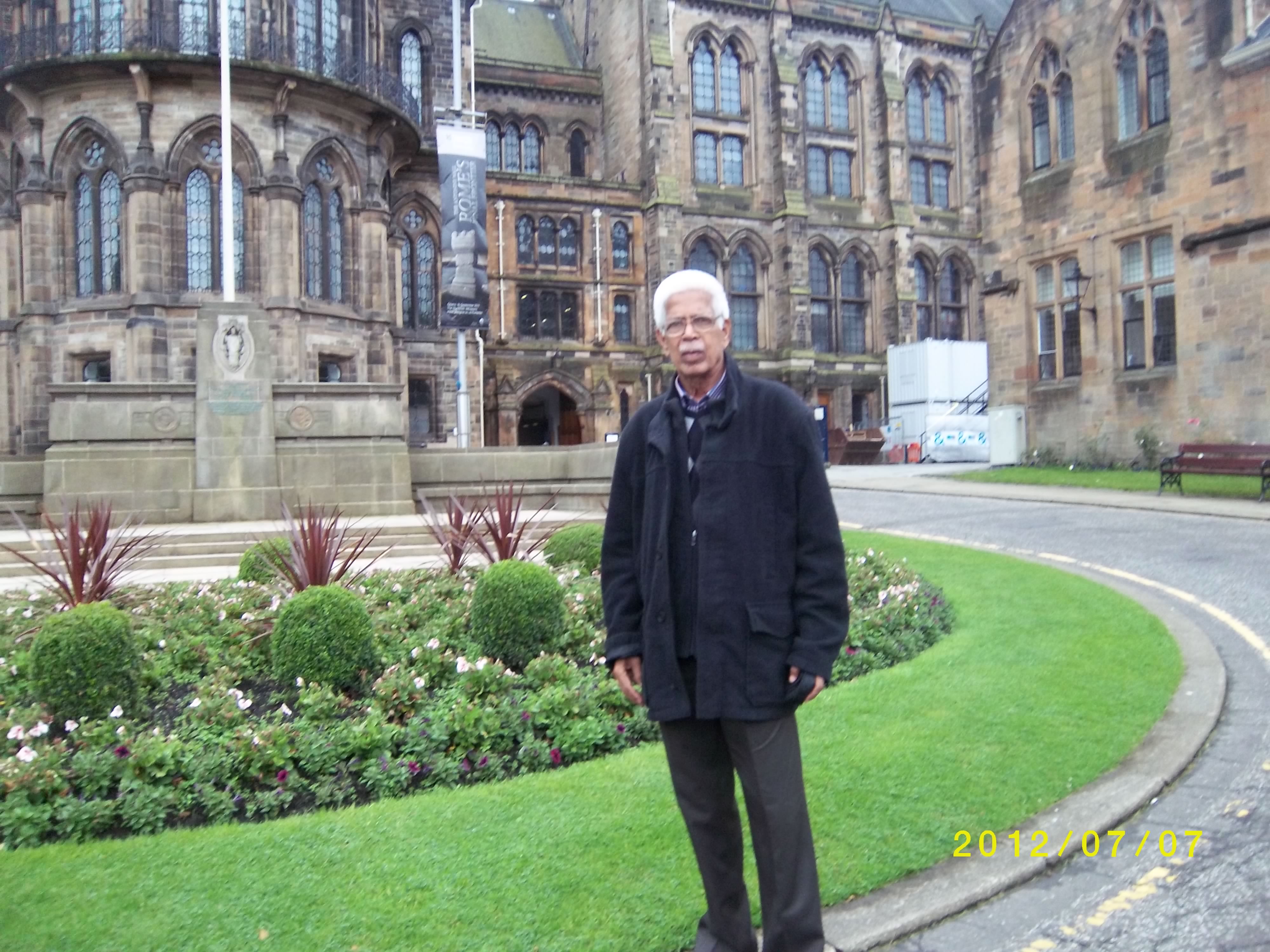
We reached Glasgow in the evening. It is one of the 4-5 big cities in U.K. The University of Glasgow is worth visiting and we had a small stop there. Then we visited the Glasgow Cathedral which is a double church, one above the other consecrated in the 12th century. It has withstood centuries of conflicts within the church, between the Catholics and the Jacobites, the latter being  prominent in Scotland.  It is dedicated to the Patron Saint of Glasgow, St. Mungo. We had a tour of the city in the coach till about 1900 hours after which we had a good Indian dinner in Indian Restaurant with  tasty food. Arrangement for stay was made in a good hotel.

08-07-12

The break-fast in the hotel was sumptuous with many vegetarian and non-vegetarian dishes and fruits. In UK and other European countries the hotels provide ‘Bed and Break fast’. The hotel charges include the breakfast also. We started at about 0900 hours and reached Fort William, a tourist centre. We had lunch there and a few minutes to see the place. Next point was Nevis Range, very beautiful scenery with mountains all around. We enjoyed the cable car which takes you to the high mountain and back, the entire operation for about 15 minutes for each side. It was very cold on the upper side. Many adventurous cyclists were going down the dangerous slopes. In fact the shops down were renting cycles for the same.
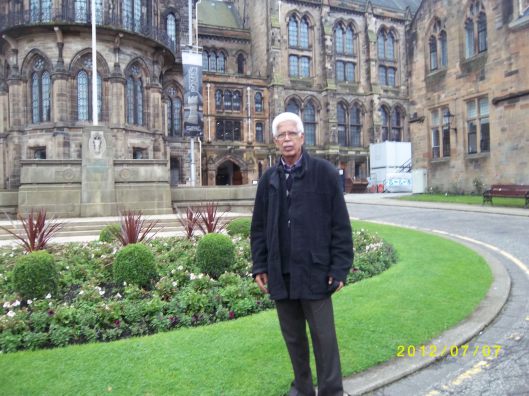
In front of Glasgow University

In front of Glasgow University

On the way toInverness, you will be passing on the side of the great Loch Ness ( big lake for a length of many miles ) which was enchanting. There are a number of such lochs in Scotland.

We stopped at Inverness for the night at a good hotel after dinner from an Indian restaurant.

09-07-2012

Now the journey started from Inverness to Edinburgh ( It is pronounced as Edinburr ). The first stop was at a Whisky Distillery. The staff of the factory showed us how whisky is being made. The process is not easy. Barrels and barrels of whisky produced decades before are kept in the storage. The tourists were offered small dose of sample of very old whisky for tasting. On our way we passed through the spectacular Forth Rail Bridges, old and new. By afternoon, we reached the historical city of Edinburgh, which is the capital of Scotland.
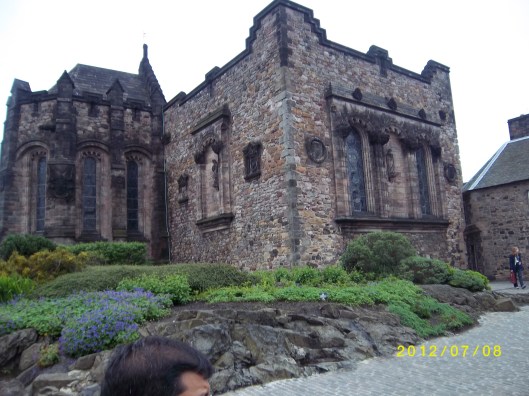
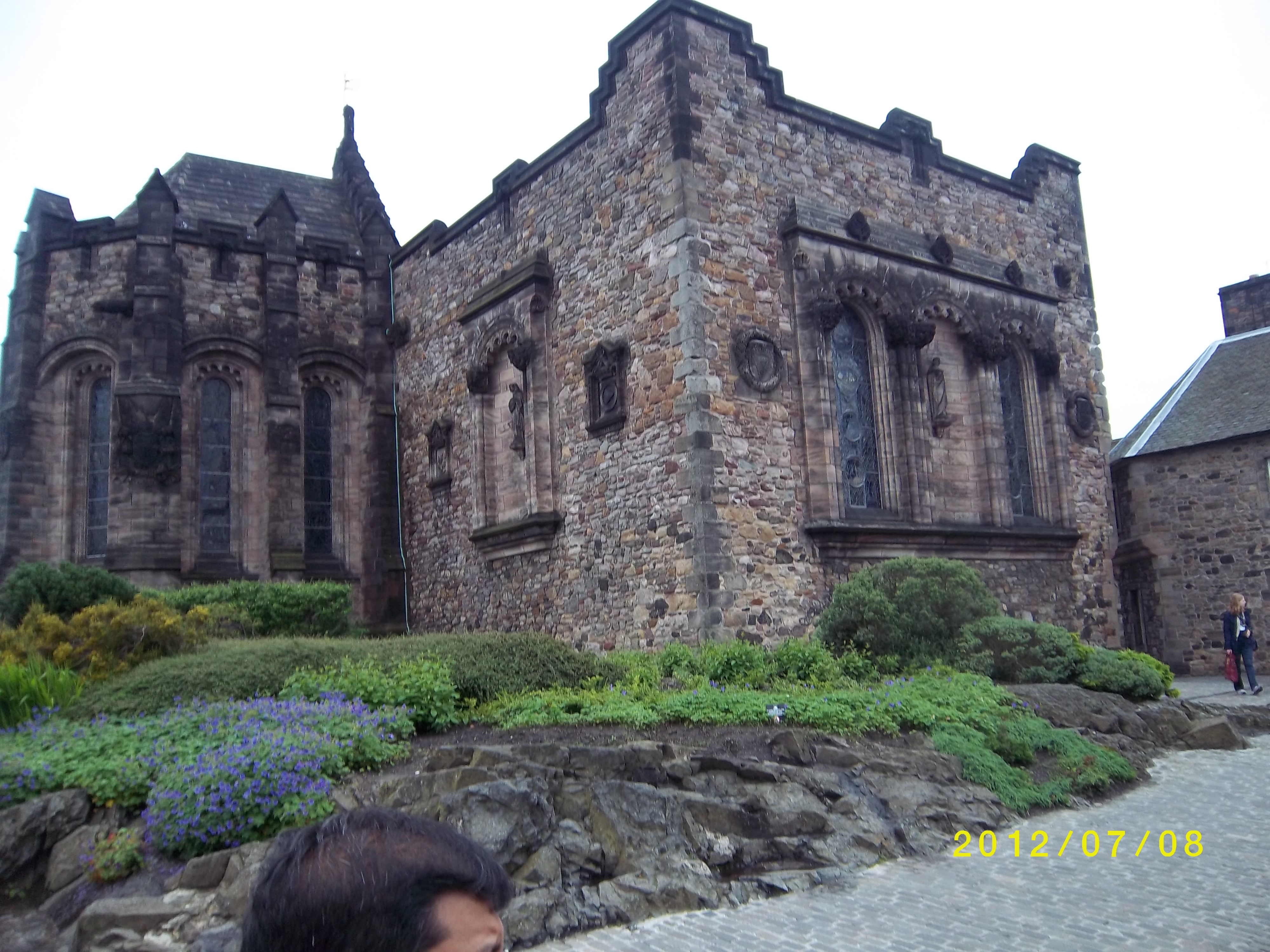
Edinburgh Castle

Edinburgh Castle

The coach went through the many roads of the old and new city. Old city comprises the fort and the historical places, while the new city constructed in the 19th century is well planned and modern. We could spend about one hour in the historical Edinburgh Fort, which has always been the headquarters of the Scot kings. It is not very big, but is well-built and kept till this date. Many antiques and symbols of royalty are kept there as also a memorial building for the Scots martyrs of the 1914-1918 First World War. The panoramic view from the Fort overlooking the entire city and the Loch is enchanting. There are a lot of good shops nearby selling woollen clothes/dresses, souvenirs etc. There are many old churches here having very high and pointed spires.

The dinner was from an Indian hotel as usual. Stay at a good hotel near Airport.

10-07-2012
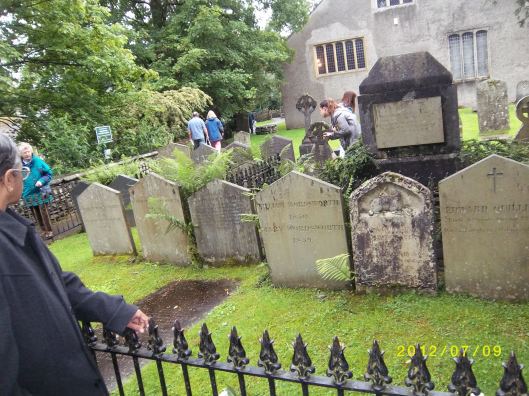
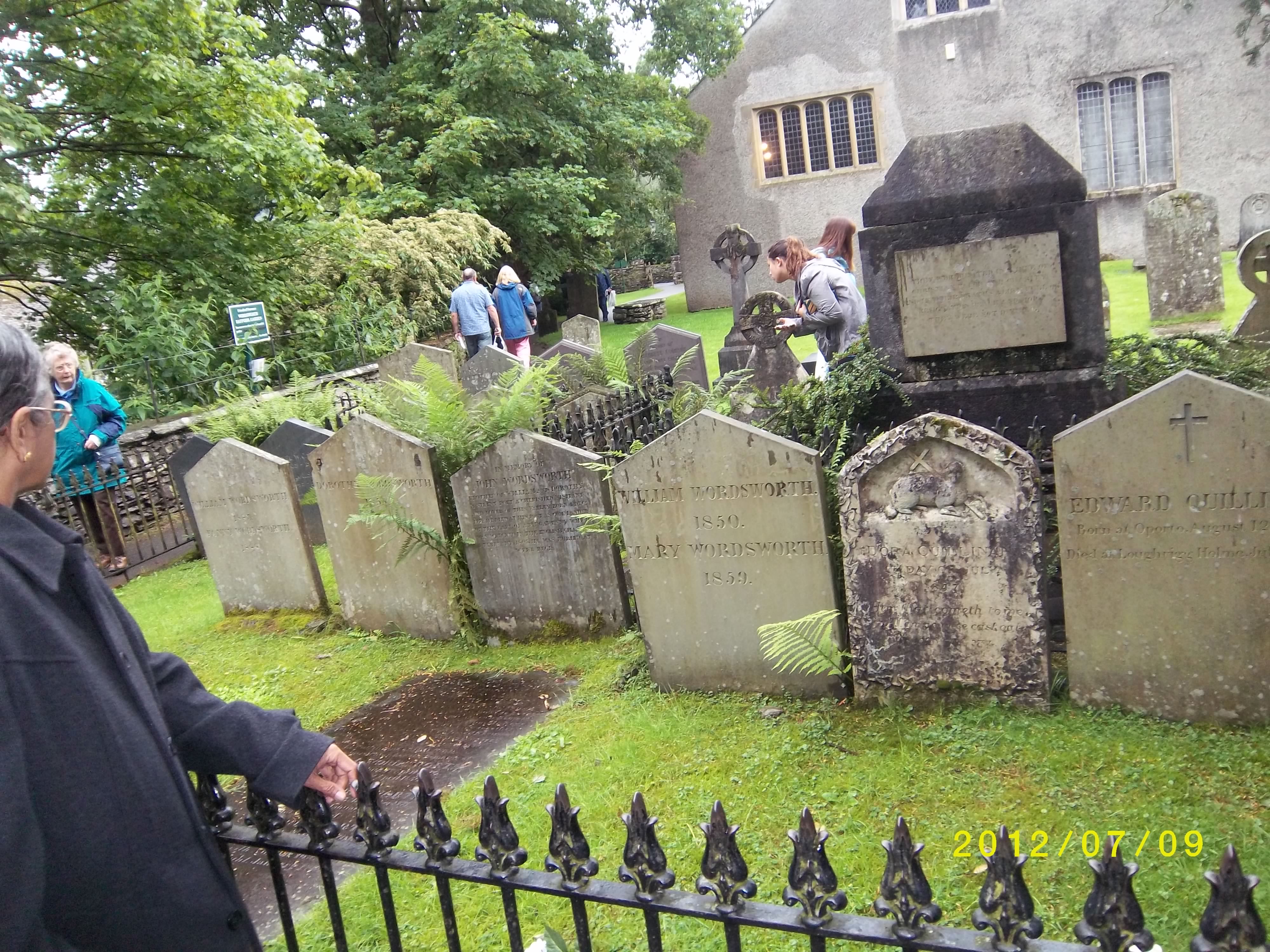
Resting place of William Wordsworth

Resting place of William Wordsworth


Today is the last day of the tour. Started from Edinburgh at 0800 hours and stopped at Grasmere, the village where romantic poet William Wordsworth lived and is put to rest. The village has kept its charm all these years. William Wordsworth is laid at the local church which we visited and paid our homage. In the corner reserved for the Wordsworth family, William and his wife Mary are laid to rest. The place is well maintained and there is a plaque with a small poem of Wordsworth. It was a memorable day for all of us to have visited this village which gave inspiration for his great poems. There is a museum in memory of the poet.

Next stop was at the great lake in the Lake District. The lake and the beautiful gardens were a treat. We went on a one hour tour in the lake in one of the many tourist boats. It was also a nice experience.

Next it was the long journey back to London. The youngsters sang and enjoyed. TV was on and a cinema was shown, but most were sleeping. BY 2100 hours we reached back to Wembley. Relatives of the passengers had been waiting. My son had come to pick me up. We all parted after greeting each other.

The tour was enchanting and memorable. The driver and the guide Mr Vazid and Mr Viral were very helpful and cared for all our needs.  Thanks to all, including the co-passengers for the very good tour.

.