
Posted by VAN NAMBOODIRI | Filed under Uncategorized

29 Thursday Aug 2024
07 Wednesday Aug 2024
Posted in Uncategorized
The landslide and flooding in Wayanad Disrict of Kerala has resulted in the death of more than 300 persons, an entire town as been washed away and more than 1600 people are staying in relief camps . The tragedy has no parallel in Kerala so far. The Chief minister has called for liberal donations for the relief and restoration of normal life there.
All are requested to give liberal donations to the CMDRF !
25 Thursday Jul 2024
Posted in Uncategorized
Dear Friends, Comrades and family members ,
14 Sunday Jul 2024
Posted in Uncategorized
It was 11 years back on this day, 15th July 2013, that Telegraph/ Telegram services in India were closed, a service maximum used and cherished by the people. The new generation may forget, but the old generation can not forget the telegraph/telegram services, which were almost an inseparable part of their life. It was on 24th October 1851 that the telegraph service was first introduced in India. It was in a small route between Calcutta, then capital of British India, and Diamond Harbour. The history of telegraphs started long back. The electrical telegraph was invented in 1775. The first commercial telegraphs were introduced by the Western Railways in Britain in the 1830s. It was introduced in India in 1850s along with the railways. The telephones were not invented then and the fastest communication system was the telegraphs. Only the Britishers were employed as telegraphists both in Railways and in Telegraph Offices in the initial stages due to its utmost importance and secrecy. The Britishers used the Telegraphs and Railways effectively to crush the First Independence War of 1857, which they called as ‘Sepoy Mutiny’. The Telegraphs grew fantastically during the second part of the 20th century and there were telegraph offices in all important cities and towns. In small places, the services were manned by the Postal officials called ‘Signallers’, who kept the connection between the cities and the villages through telegraph wires. Telegrams were sent by government as also by public to inform urgent and important news. The Central Telegraph Offices (CTOs) in the metro cities used to have about 100 or 200 telegraphists at the same time and round the clock. The telegrams were taken as official records in the courts etc. It was authentic and clear. Since the charge for sending telegram was on the basis of the number of words, the message was constructed briefly with minimum number of words. The message may be of great happiness or that of sorrow like death or disease. The unions used to organise ‘Telegram Campaigns’ as a method of protest sending the same in large numbers to the concerned authorities. After the growth of telephones and mobile services, the importance of telegraphs started to wane. By the second decade of 21st century it was almost limited to certain official messages. According to the government and the BSNL, there was much loss and it can not be continued as a viable service. When the government decided to close the telegraph offices and telegraph/telegram services from 15th July, BSNL Unions put up strong protest and organised protest meetings. As President of BSNLEU, I went to Mumbai and Kolkata offices and held press conferences for getting the support of the people at large for continuing the services. Telegraph is a heritage service and accommodated in heritage buildings in the big cities. CTO buildings in Mumbai, Delhi, Kolkata etc. are heritage buildings, which have to be maintained as such. Lakhs and lakhs of documents connected with the history of the Mughal, British rule etc. are there in the old documents of the telegraph offices. Just like Western Court building in Delhi is occupied by a hotel, telegraph offices are being taken over by others for other purposes. A PLI case was filed in the court, but did not get any relief. It can only be said that the BSNL management had taken an unwise anti-people decision as also without taking in to confidence the unions, which were trying to improve the services and make the company financially viable. Despite all efforts to ensure that the telegraph services are kept as a token of the past, as in the case of trams in Kolkata, neither the government nor the BSNL agreed. It was finally decided to close it on 15th July 2013 forever. Nobody expected what happened on the day. It was a pleasant surprise. Thousands of people gathered in front of telegraph offices to send their last telegrams to their near and dear ones. Even after midnight of 15/16 July, the queue did not stop and many people had to return disappointed that they could not send the last telegram. Their spontaneous response on the last day showed their love and appreciation of the telegraph services. Nine years are over after closure of telegraph services. The people have almost forgotten the ‘telegram’. The new generation may wonder what is ‘telegraphs’ and ‘telegram’? But those who knew telegram and sent or received them, still remember the same. For them it is nostalgia indeed!
11 Thursday Jul 2024
Posted in Uncategorized
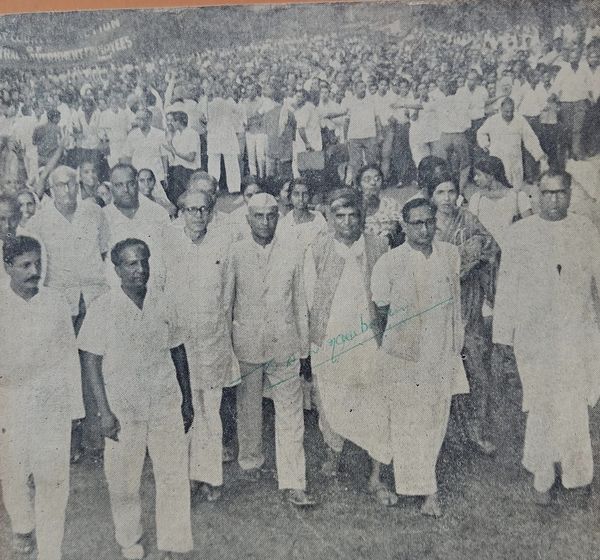
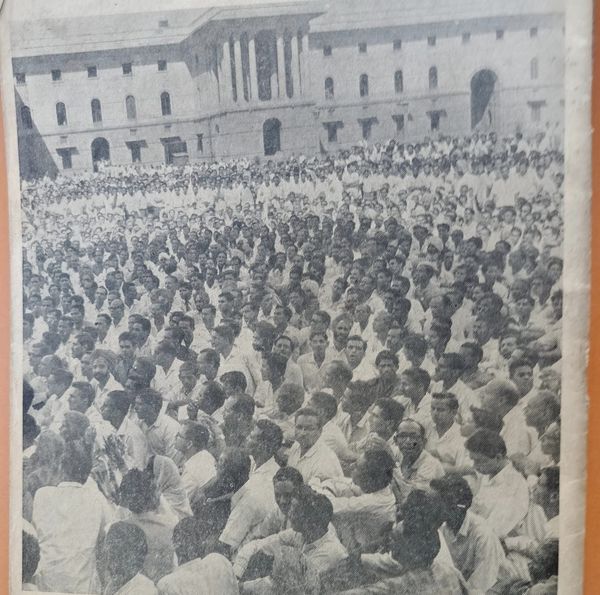
Red Salute to the valiant fighters of 1946 and 1960 Central Employees Strikes!
Today, 11th July 2024, is the 78th Anniversary of the 1946 P & T strike, which is also considered as part of the Independent Struggle and also the 64th Anniversary of 5 days strike of Central government employees strike in 1960 against which the entire cruel machinery of the government was used to suppress the same.
While the British govt was compelled to negotiate and agree for all the demands raised in the 1946 strike, the govt of free India dealt the 1960 Strike as a political strike and suppressed it using the army and all draconian rules, arresting thousands of leaders and workers as also dismissing tens of thousands. 17 comrades became Martyrs in that strike being shot down, crushed under train, beaten up etc.
Workers can not be kept silent for long. Another histric strike was organised on 19th September 1968 on the same demands as in 1960.
No strike is in vain. It is through such heroic strikes that workers have achieved their rightful demands.
Red Salute to the Martyrs who laid down their valuable lives in these struggles! Workers will continue their struggles and move forward in the route shown by them.
( photos : Central govt employees and their leaders marching in tens of thousands to meet the Prime Minister demanding vacation of victimisation of the 1968 strike.)
V A N Namboodiri Patron NCCPA
25 Saturday May 2024
Posted in Uncategorized
Kattakada Ramachandran, Kali Prasad and 3 others
25 Saturday May 2024
Posted in Uncategorized

Sreekumar G Puam Sreekumar, Abdul Latheef PT and 118 others
25 Saturday May 2024
Posted in Uncategorized

Madhavan Nair Thiruvattar, Purushottam Hedawoo and 9 others
18 Saturday May 2024
Posted in Uncategorized
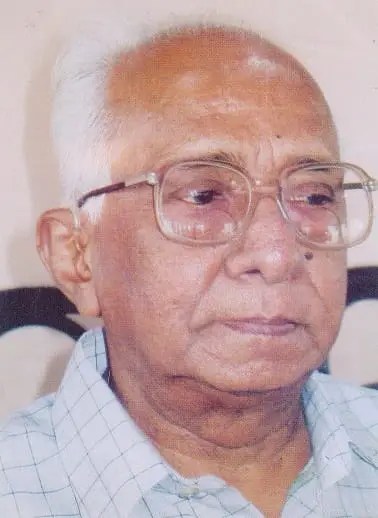
Red Salute to Com.Moni Bose on his 14th death anniversary!
19th May 2024 is the 14th death anniversary of Com.Moni Bose, former General Secretary of E.III Union and the first Patron of BSNLEU. Since his joining the P&T in the 1945, he was active in the P&T Union movement and participated in the historic 1946 P&T strike and was terminated from service for leading the proposed 1949 strike.
He was never taken back in service, but continued his service to the workers in the Union till his death in 2010. He fought for the correct policies in NFPTE along with his elder brother and President of NFPTE Com.K.G.Bose. It was a great moment for the entire telecom workers, when he was elected as the General Secretary of E.III Union in 1991. Later he became President in 1994. He was late elected as Patron, when the BSNLEU was formed.
He was a comrade in its real meaning. I cherish the more than 40 years of close comradeship with him. His life partner Com.Jytosna was a partner both in his union activities and personal life. She also passed a few years back.
Red Salute to Com.Moni Bose!
18 Saturday May 2024
Posted in Uncategorized

Ravi Keyan
 VAN Namboodiri's Blog