• ‘My Story’ by Com. Jyoti Basu
  • About
  • Settlement of Medical Bills of Pensioners
  • Historic Victory!
  • Disclosure Policy

VAN Namboodiri's Blog

~ Welcome to V.A.N. Namboodiri's blog…

VAN Namboodiri's Blog

Monthly Archives: December 2020

MY LIFE AND STRUGGLES – 14 HISTORIC STRIKE OF JULY 1960

09 Wednesday Dec 2020

Posted by VAN NAMBOODIRI in Uncategorized

≈ Leave a comment

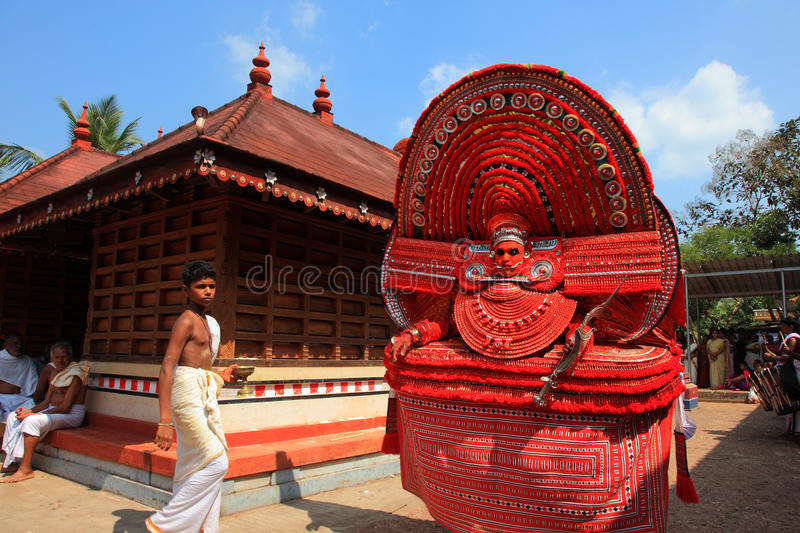
MY LIFE AND STRUGGLES – 14HISTORIC STRIKE OF JULY 1960For the first time, it was in 1946 that a Pay Commission for central government employees was appointed, which is called as First Central Pay Commission, with Federal Court Judge Shrinivas Baradacharya as Chairman. Raising the major demands of the workers, All India Postmen and Lower Grade Staff Union, under the leadership of its President Shri V.G.Dalvi, Bar-at-Law, issued a strike notice for indefinite strike from 11 July 1946, which spread like wild-fire all over India. In Bengal and some other states it expanded in to a P and T strike. The strike continued for long 22 days. All India Trade Union Congress (AITUC), the only national trade union then, fully supported and organised solidarity general strike in major cities like Calcutta, Madras, Bombay etc. participated by lakhs of workers. Pandit Jawaharlal Nehru and some other Congress leaders as also Communist Party of India fully supported the strike.Government was compelled to discuss with the union leaders and settlement reached with all 12 main demands in strike notice accepted. A great victory for workers.National Federation of P and T Employees (NFPTE) formed on 24th November 1954 by merging all existing unions under Realignment Scheme, demanded formation of II Central Pay Commission and issued strike notice in 1957, as government did not concede the demand. However, just before strike, government declared appointment of II CPC with Supreme Court Justice Jagannath Das as Chairman with six other members. Strike was withdrawn.II CPC submitted its report in November 1959, which was completely retrograde. It neither did recommend Need Based Minimum Wage nor D.A. according to increasing cost of living index. It recommended Rs. 75 as lowest pay instead of Rs. 125/-, which is the need based minimum wage as per principles accepted by 15th Tripartite Labour Conference held in 1957. There was no recommendation to increase Dearness Allowance according to increase in cost of living index based on the increase of prices of essential commodities. II CPC recommended pay scales, simply by merging together existing pay and DA. This was worse than recommendations of First CPC.Confederation of Central Government Employees and Workers, All India Railwaymens Federation (AIRF), All India Defence Employees Federation (AIDEF) and NFPTE met and formed a Joint Council of Action, which served notice to central government intimating its decision for an Indefinite Strike with effect from midnight of 11/12 July 1960.Instead of meeting JAC and discussing the demands, central government called the proposed strike as ‘Civil Rebellion’ and caused President of India to promulgate ‘Essential Service Maintenance Ordinance’ (ESMO), banning strike in essential government services like Railways, Defence, P and T, Civil Aviation etc. Those who go on strike will be punished by 6 months rigorous imprisonment and Rs. 500 fine; and those who instigate for strike will be punished by rigorous imprisonment for one year and fine of Rs. 1,000! Continuous news of drastic punishments was published in newspapers. All India Radio broadcasted against strike. CID, Special Branch and similar agencies started roaming in offices and residences of employees, creating terror. Prime Minister’s speech against the strike was continuously relayed through AIR. This was the pre-strike situation all over India, including Kerala. Black-legs were being recruited to work during strike. Unfortunately, some of the state government employees also volunteered to work.Shifted my residence from Poduval lodge to another lodge, as it became a disturbance to other inmates, who were other than CG employees, due to continuous presence of police and Special Branch. But disturbance by the police continued. We started a new P and T lodge near the telephone exchange with only employees of our department. We got adjusted to the police presence. Comrades K. Karunakaran Nair, K.P.Krishnamoorthy, P.Govindan Nair and K.L.Jose from the Head Post Office, M.Achuthan Kutty, M.N.Narayanan Namboodiri, C.Sreedharan Nair, K.Kumaran, M.A.Rappai, and I from Telephones were the inmates. Most of them were comparatively new recruits, me being the senior most in the telephones, with about barely two years of service. Of course, senior leaders of NFPTE were in Postal side like Comrades T.M.Janardanan, N.O.Anandan etc. to guide. Records of the union were safely kept with lady comrades staying in hostel.Continuous meetings were held in preparation for strike. Individual members were met to ensure participation. But, a section of seniors were vacillating. Orders after orders were circulated among employees intimating drastic punishments that will be imposed on strikers. Many of us were determined that whatever happens, we shall go on strike. It was call of our union.For the first time in Independence India, a mighty strike was going to take place. Workers were prepared to fight for their rights and Government determined to crush the strike with all the arsenals in their hands. The arrest of Secretary General of NFPTE Com. P.S.R.Anjaneyulu and making him walk through the Delhi roads handcuffed to Tihar Jail, just before start of strike gave indication, how government was going to deal with strikers. All members of Joint Action Council were arrested and jailed even before the strike. (To be continued). (For detailed information about the 1960 strike, kindly go through ‘History of P and T TU Movement’ authored by me).

Share this:

  • Share on Facebook (Opens in new window) Facebook
  • Share on X (Opens in new window) X
  • Print (Opens in new window) Print
  • Email a link to a friend (Opens in new window) Email
Like Loading...

MY LIFE AND STRUGGLES – 13 AT CANNANORE (CONTD)

08 Tuesday Dec 2020

Posted by VAN NAMBOODIRI in Uncategorized

≈ Leave a comment

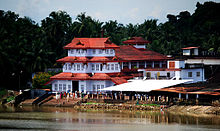
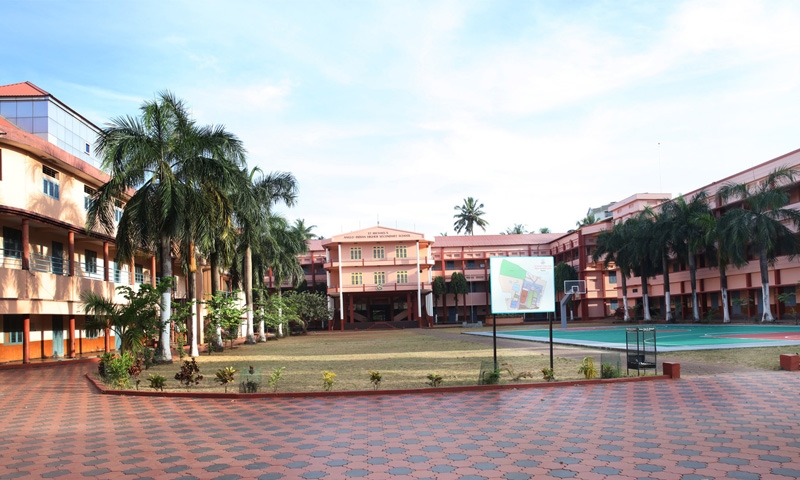
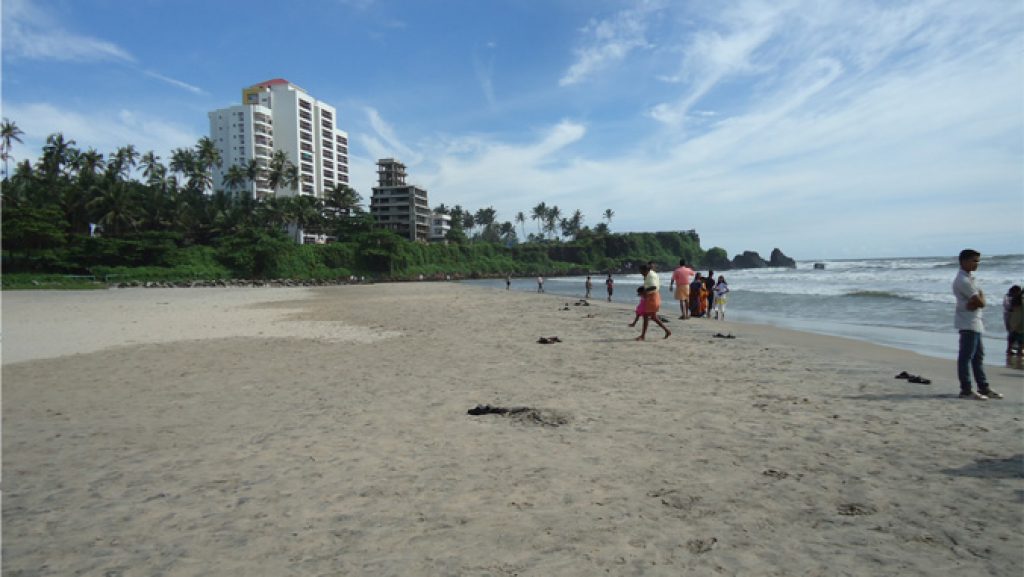
MY LIFE AND STRUGGLES – 13AT CANNANORE (CONTD)I stayed about one year at Cannanore while undergoing teachers’ training and then again about 5 years while working in telephones. Cannanore always held a fascination, not only because my home is near, but also a large number of relations, friends and comrades are there. After Cannanore became district headquarters, it spread beyond its original boundaries.Cannanore was one town, where Persian and Arabian merchants visited for business purposes. Later, Europeans started occupying and fortifying the place due to its importance for navigation and defence. St. Angelo’s Fort is part of this tradition. There is a similar fort at Tellicherry. The Bekal Fort (now in Kasargode District) also has a long history. There was a big military barrack at Cannanore. One interesting factor is that many of the British Officers stationed here, married local women and while going back, provided them with shelter and money to sustain a comparatively better living. St. Michaels Anglo Indian School, founded in 1865, provided English medium education for both British as well as Indians.Arakkal kingdom, near Cannanore, was the only Muslim Kingdom in Kerala coast. Its history goes to 17th century or earlier. Its rulers were called Arakkal Sultan or Arakkal Beebi, as the case may be. A portion of the Arakkal palace is now a well maintained museum.Theyyam, a ritualistic form of art, is a religious-cultural tradition of this area. Many of the theyyams are based on life and achievements of local chieftains or martyrs. The ritual is performed by expert artists. Kerala Government has formed a Folk Lore Academy for promotion of such traditional arts. Happy to state that Com.Keecheri Raghavan, former BSNLEU leader, is the present Secretary of this Academy.Famous Parassinikkadavu Muthappan Temple, on side of Valapattanam river, visited by large number of devotees, is also near. The deity is Muthappan, a manifestation of Lord Shiva, as per folk lore.Another important place is long and wide Payyambalam Beach which hundreds of people visit every day. On one side of the beach, memorial structures of politicians and cultural leaders can be seen. These include that of Swadeshabhimani Ramakrishna Pillai, a fearless journalist who criticised the wrong doing of Dewan of Travancore Raja and was banished from the kingdom. He died at Kannur in 1916 and is buried at Payyambalam. Memorial to Com. A.K.Gopalan, one of the greatest working class leaders, is also here. Memorials of Comrades E.K.Nayanar (former Chief Minister), C.Kannan, O.Bharathan, CITU leaders as also Coms.N.P.Padmanabhan and T.M.Janardhanan, two stalwarts of the P and T trade union movement are there.Central Jail is nearby, which accommodates maximum number of prisoners of Malabar region. During my service at Cannanore, used to visit these places.Lot of changes have taken place. A new Telephone Exchange has been constructed near railway station by 1970s. General Manager Telecom Office is working in a building about one km away. City has become very congested.A ball badminton court was prepared on the side of the telephone exchange, where we used to play in evenings. It was very popular game in Cannanore area. Our team won and got first position in Calicut Division twice. I was part of the team. Used to play chess and carroms in the club. Com. T.M.Koya, senior telephone operator (brother of Shri T.Abdul Rehman, well known foot-ball player), was adept in foot-ball, chess, caroms etc. There were many other sportsmen and players.As Recreation Club Secretary, I once asked the Baliapattam Plywood Company, one of the biggest plywood factories, to supply a carrom board, which they used to manufacture. They made it and supplied, one of the best carrom board I have ever seen; specially made for us. When I asked the price to pay for the same, the person who brought said that it is a present from the owner, Mr. Kader Kutty, who was a well-known industrialist of the area. We had to accept the gift. In the same way, when the telephone staff approached subscribers for collection of funds for Conference or so, which were very rare, subscribers used to donate liberally. There was a close bond between the staff and the subscribers. (To be continued). Photos (1) Theyyam (2) Parassini Kadavu (3) St.Michaels School (4) Payyambalam Beach (5) Arakkal palace

12Sankar K R Poonithura, Vijayan Nocholipoyil and 10 others

Share this:

  • Share on Facebook (Opens in new window) Facebook
  • Share on X (Opens in new window) X
  • Print (Opens in new window) Print
  • Email a link to a friend (Opens in new window) Email
Like Loading...

ORGANISE NATIONAL PENSIONERS DAY ON 17TH DECEMBER – AIBDPA

07 Monday Dec 2020

Posted by VAN NAMBOODIRI in Uncategorized

≈ Leave a comment

Organise National Pensioners Day on   17th December.

 It was on 17th December 1982 that the historic judgment on pension was delivered by the Five Member Bench of Supreme Court, consisting of Chief Justice Y.V.Chandrachud, Justice V.D.Tulzapurkar, Justice D.A.Desai, Justice O.Chinnappa Reddy and Justice Baharul Islam,which  is called  as the ‘Magna Carta’ of the  Pensioners. The judgment was delivered in the case filed by ShriD.S.Nakara, a civil servant, who retired as Financial Advisor in Defense Ministry.

Shri. D S Nakera was compelled to approach the court, as the liberal Pension System, comparatively beneficial to the pensioners,  implemented in 1979 was limited to those retired after 31-03-1979.

The judgment clearly stated that “the pensioners for  receiving Pension form a class and there is no criterion on which  classification of pensioners retiring prior to specified date and retiring subsequent to that date can provide a rational principle co-related to the object viz. object underlying payment of pensions…”

It also pointed out “(i) that Pension is neither a bounty nor a matter of grace depending upon the sweet will of the employer and that it creates a vested right subject to 1972 Rules which are statutory in character, because they are enacted in exercise of powers conferred by the Provisio to Art. 309 and Clause (5) of Art. 148 of the Constitution; (ii) that Pension is not an ex-gratia payment, but it is a payment for the past service rendered; and (iii) that it is a social welfare measure rendering socio-economic justice to those who in the heyday of their life ceaselessly toiled for the employer on an assurance that in their old age, they would not be left in lurch…”

It also mentioned that “…A Pension Scheme consistent with available resources must provide that the pensioner would be able to live (i) free from want and with decency, independence and self-respect (ii) at a standard equivalent at the pre-retirement level..”

A good number such forceful statements are part of the judgment. But despite the judgment, the central government has not yet done justice to the pensioners, including non-implementation of the one-rank-one pension, in its true spirit, for the Ex- Servicemen of the Armed Forces despite sustained struggle by them. Option 1, which would have ensured parity in pension to a certain extent, recommended by the VII CPC was also rejected by the Government on flimsy grounds.

When we observe the National Pensioners Day this time, the pensioners are subjected to new form of attacks. The Government under the cover of Covid-19 pandemic is curtailing the existing benefits of the pensioners. Pension Revision to BSNL pensioners due from 01-01-2017 is being denied without any justice. The increased D.R installments for 18 months from 1st January 2020 for central pensioners are frozen. Increased IDA from 01-10-2020 is not paid to BSNL retirees. BSNL pensioners are also being harassed by denying their medical benefits.  (AIBDPA Website)

AIBDPA calls upon all its units to observe Pensioners Day on 17th December suitably, jointly with other pensioners’ organizations, as far as possible according to local conditions, high lighting the judgment as also focusing on the present day demands of the pensioners.

Share this:

  • Share on Facebook (Opens in new window) Facebook
  • Share on X (Opens in new window) X
  • Print (Opens in new window) Print
  • Email a link to a friend (Opens in new window) Email
Like Loading...

RED SALUTE TO COM.K.G.BOSE ON HIS 46TH DEATH ANNIVERSARY!

07 Monday Dec 2020

Posted by VAN NAMBOODIRI in Uncategorized

≈ Leave a comment

11th December 2020 is the 46th death anniversary of Comrade K.G.Bose, the great inspiration of the entire P and T workers and Central government employees. Com. K.G. entered the P and T Department in 1942 and within no time became very active in union activities. He, along with Dada Ghosh, founder General Secretary of NFPTE, led the successful Postal Strike of July 1946 in Bengal. He, along with other progressive leaders took initiative in the formation of Union of P and T Workers (UPTW) and later that of National Federation of P and T Employees (NFPTE) in 1954.

Com. K.G.Bose was arrested, jailed and dismissed from service in connection with the proposed strike of 1949 and was never reinstated. But he continued his service to the union. He was elected as the President of NFPTE in 1970 at the Vijayawada Federal Council to re-elected  next year at Calcutta Federal Council. Already he has been elected as the Circle Secretary of Postal Employees Union Class III  and Telecom Employees Union Class III of W.Bengal. Also elected as the All India President of the Postal Employees Union Class III. He was a charismatic leader with massive popularity. He encouraged young workers to take more interest in union activities.

He was elected to the W.Bengal Assembly as also appointed as a Member of the Pay Commission for the state government employees.

Continued tour and hectic activities resulted in deterioration of his health. He was found to be affected by Cancer and was sent to London for expert medical treatment. But he could not be saved. Com.K.G.Bose passed away on 11th December 1974 leaving his family, friends and comrades in deep grief. He was only 54.

AIBDPA pays its respectful homage to the revolutionary leader Com.K.G.Bose! (AIBDPA Website)

Share this:

  • Share on Facebook (Opens in new window) Facebook
  • Share on X (Opens in new window) X
  • Print (Opens in new window) Print
  • Email a link to a friend (Opens in new window) Email
Like Loading...

MY LIFE AND STRUGGLES – 12 AT CANNANORE

07 Monday Dec 2020

Posted by VAN NAMBOODIRI in Uncategorized

≈ Leave a comment

AT CANNANORE

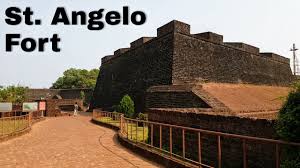
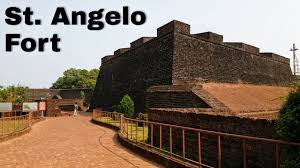
Reported at Cannanore Telephone Exchange in February 1959, on transfer from Kottayam.  The exchange was situated in eastern end of Fort Maidan and near General Hospital. Famous St. Angelo Fort, through which the ground got its name, was constructed by  Portuguese in 1505, conquered by Dutch and later captured by British. It was an important fortification and controlled sea movements. Recently, excavations have been made and guns, ammunitions etc. were found in there. Large number of people used to visit fort. A portion of  maidan was converted in to a football court, where  famous Gymkhana Foot Ball Club practiced. Cannanore, a centre of football fans. Almost always, there used to be food ball tournaments and large number of enthusiastic spectators, cheering players. We also used to be there.

Beyond road on eastern side of exchange, there was a very old Christian cemetery, which was full of big trees covering tombs. Many tombs belonged to British military officers, who died during  battles British have fought to conquer India. Details of their life, mission, date of birth and death were marked. Roots of the trees were a danger to the existence of tombs. Gate of the cemetery seemed to be rarely opened. However, visited the same two three times and went through writings on tombs. They were remarkable.

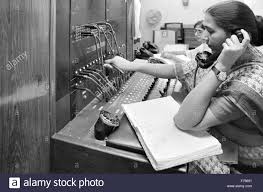
Cannanore was a CB Exchange, not yet upgraded to automatic. Three Local Boards, one Record Position and two Trunk Boards. It was all in same room. About 300 subscribers. Trunk lines to Calicut, Tellicherry, Mangalore, Kasargode, Kanhangad, Payyanur and Baliapattam. About forty employees including one Engineering Supervisor, who is the Officer-in-Charge, two Phone Inspectors, three or four LSG Monitors (Supervisors), Telephone Operators, Mechanics, Line Inspector, Sub-Inspectors, Linemen, class IV etc. Night duty only to male operators, though almost half were lady operators. It was a small building. There was scarcely space for dormitory, recreation club and other facilities. But as in case of all small exchanges, there was full co-operation and co-ordination amongst staff.

Many operators were Tamilians, probably because recruitment was made by P.M.G. Madras, waiting for transfer to their own state. They took me to the lodge where they were staying. It was run by Shri Poduval of Payyanur, who was the owner of a hotel functioning near railway Station. Meals will be brought to lodge for those who were not on duty. Duty staff will take meals from hotel.

Adjusted quickly with daily routine. Since lady operators liked morning duties, men operators took evening duties exchanging their morning duty with ladies. Some arrangements were there for making tea in the exchange, but for breakfast and meal you had to go to nearby hotels.

Union functioning was systematic. Collection of subscription on first day of month itself, when  Postman delivers salary Money  Order. On lower portion of M.O. form, details of pay, allowances, deductions etc. will be noted. Necessary to keep them for verifying later. Union general body meetings will be organized at least once in two months. Individual copy of union monthly journals from Central Head Quarters and Madras Circle used to be received in bundle, which will be supplied to members. Com.P.Narayanan, a Supervisor at Payyanur, was Branch Secretary. All exchanges from Kasargode to Tellicherry were under  Cannanore branch. In next annual branch meeting, I was elected as treasurer. Balance of Rs. 6, handed over to me. Monthly subscription was Re. one for Class III Union and 0.50 paise for Class IV Union.

Used to spend time after duty hours in Public Library near  telephone exchange as also in Khadi Stores, where I used to hand over khadi thread made by mother and receive khadi clothes. Shri Pampan Madhavan, senior Congress leader used to be present. Swami Chinmayananda used to deliver Gita Classes in Sreekandeswara Temple Talap, Cannanore. Some of used to go there to hear his excellent speech. In the morning, we used to swim and take bath in the temple tank.

It was very difficult to get leave due to staff shortage. Medical certificate was necessary even to get one day casual leave.  One day, approached Dr. Major(Retd) C.Raman in his clinic at Talap for one day Medical certificate. He started full test after asking me to remove shirt. Then he started shouting: ‘It is because of unhealthy persons like you working in the exchange, that we are not getting immediate attention when we lift our telephone. All of you require treatment here.’ He gave me some medicine free and also MC for one week, which I did not actually require. He did not take any fee, told me to come and test now and then. Of course, I did not go.  He was really a kind hearted man, but dealt with the patients in his army way. His brother was Professor C.Narayanan, who was the Principal of Guruvayoorappan College, Calicut.

Once in a week I will go home, meet parents and brothers. By   this time, both my sisters ere married. Elder sister Parvathi was married to Shri Ayadam Madhavan Namboodiri near famous Katathanad Temple  and sister Sreedevi  was married to Shri V.T.C.Kesavan Namboodiri of Veetiyot Illam at Kadiyangad, near Perambra. Eldest brother Kesavan Namboodiri with wife Sreevi Anterjanam and children had shifted to Chirakkal, where he was teaching in Raja’s High School. Brother Parameswaran Namboodiri was staying at Peruvallur near his school. Father, mother, brother Sankaran Namboodiri, his wife Sreedevi and children were at home.

Registered for appearing in Intermediate Examination of Utkal University. Also registered for Postal Tuition of British Institutes to prepare for appearing in departmental examination of Engineering Supervisor.  Started serious study for both. There was sufficient time and had full confidence of being successful. Had I continued as a teacher, I could have simultaneously continued studies and appeared in examinations. Was determined to continue studies to the extent possible. My elder brother had passed M.A. in Hindi, Malayalam and Sanskrit by that time.

I used to read English Daily ‘The Hindu’ from student days. On Saturday or Sunday will go to ‘Kunhi Palathra’ Illam, where Shri Thrivikraman Namboodiri, who was sub-Editor Hindu, had Hindu brought through post. This helped  improving my English to a certain extent. (To be continued).

Share this:

  • Share on Facebook (Opens in new window) Facebook
  • Share on X (Opens in new window) X
  • Print (Opens in new window) Print
  • Email a link to a friend (Opens in new window) Email
Like Loading...

MY LIFE AND STRUGGLES – 11 KOTTAYAM DAYS

06 Sunday Dec 2020

Posted by VAN NAMBOODIRI in Uncategorized

≈ Leave a comment

MY LIFE AND STRUGGLES – 11

KOTTAYAM DAYS

As stated earlier, colleagues in Kottyam Telephone exchange were very helpful. They took care of this slender young man from Malabar. Com.E.S.S.Namboodiri, a senior operator, made arrangements for stay at Nagampadam in a Kovilakam situated by side of famous River Meenachil. Was allotted a convenient room. No others staying there, family residing at Kumarakom Kovilakam, few miles away on other side of river. Young Thampuran (Raja) will come now and then, stay few days. We became great friends.

There were four or five canoes, big and small, parked in the family jetty, including a very small one, ‘Kothumbu vallam’. I knew swimming well, having practiced in temple tank near my home almost daily. But I did not know rowing. I will climb in the Kothumbu Vallam, practice rowing through riverside. Many times it turned over throwing me in river. Gradually became adept. Once in a while, if somebody came to cross river, rowed the big canoe also. When royal family came, they will call from the other side; I will row and bring them this side. Once when family with many children came, I rowed to the other side and rowed them back. Children were playing in the canoe with all of them on one side and canoe turned over, me unable to keep boat balance. All those in boat, including women, were thrown overboard. I was shocked. All of them knew swimming well and there was no casualty. They consoled me, treating it as a joke. Was relieved at their noble gesture.

Exchange was on side of the main road near Thirunakkara Maidan. Temple festivals, public meetings used to be held there. Since there was sufficient time after duty, used to walk through the town aimlessly, seeing various shops, bakeries etc. There were a good number of schools in town. Public Library in the midst of town had large number of books. Used to be a regular visitor. National Book Stall was another attraction. Head office of Malayala Manorama, leading daily of Kerala also at Kottayam. Once or twice I went to the famous Ettumanoor Temple, a few miles away from town, which was a tourist centre.Used to have breakfast, meals etc. from vegetarian hotel just opposite telephone exchange. Hotel could be seen from trunk exchange and tea used to be ordered from there, which will be delivered within minutes. Sub-Divisional Officer was in- charge of exchange, whose office was in upstairs.

Union leaders approached for membership. All of us new recruits joined. All India Telegraph Engineering Employees Union Class III (called E.III Union in short) was one of the 9 affiliated unions of NFPTE (National Federation of P and T Employees). These 9 Unions were, two unions each in Postal, R.M.S., Telegraph and Telephones for class III and Class IV separately and one union for class III and class IV employees of P.M.G.Office. Since there was only one union for each sector as mentioned above, employees were either a union member or not. No rival unions. Hence, almost everybody a union member. We regularly attended union meetings.

Within days of joining, some telephone operators from Calicut approached me for mutual transfer. Applied for mutual transfer with Com. Chellamma, first operator who approached. Within few months, orders were issued granting mutual transfer. She got transfer to Kottayam and me to Cannanore, since Calicut was a feminized exchange, where only women operators were posted.

Almost all major exchanges in the country like Delhi, Bombay, Calcutta, Madras, Bangalore and Hyderabad were feminized. In Kerala, Ernakulam and Calicut were feminized ones.Probably British rulers thought that for discipline as well as courteous behavior, women were better. They were granted one advance increment in service, if they did not marry. After independence that condition was removed. Even when I entered service there were many unmarried women operators drawing special increment.This discrimination against women continued even after Independence for Air Hostesses and Nurses. It was only after sustained struggles and court judgments that these anti-women rules were cancelled. Even though women have entered almost all avenues including space travel, defence sector etc., male dominated society still continues to keep them away from strategic spheres. If a check is made about top posts in government, Ministers, M.P.s etc. one will find that women are a small minority. This injustice has got to be removed.

Cannanore was the nearest exchange to my home. We were happy. (to be continued). Photoes (1) Meenachil River (2) T.O.s working (3) Kottayam Telephone Exchange (4) Kottayam Public Library

Share this:

  • Share on Facebook (Opens in new window) Facebook
  • Share on X (Opens in new window) X
  • Print (Opens in new window) Print
  • Email a link to a friend (Opens in new window) Email
Like Loading...

MY LIFE AND STRUGGLES – 10 TELEPHONES AND TELEGRAPHS

05 Saturday Dec 2020

Posted by VAN NAMBOODIRI in Uncategorized

≈ Leave a comment

MY LIFE AND STRUGGLES – 10
TELEPHONES AND TELEGRAPHS.
After returning home from Training Class, made arrangements for journey to Kottayam. Parents and elders gave their blessings. Mother consoled herself that though I will be away, it was for a better future.
Joined Trunk Telephone Exchange, Kottayam on 2nd August 1958. I was 20 years old. Other three training mates had already joined. We were gladly welcomed. New appointments were a relief to existing staff, burdened with heavy work.
Telephones were discovered and services started first in European countries. Started in India by British rulers during last decades of 19th century. Initially, most of the telephone exchanges in India were based either on Magneto or Central Battery system.
Automatic Exchanges have been installed in metropolitan cities like Delhi, Bombay, Calcutta, Madras and a few other metropolitan cities only. However Maharaja of Travancore took initiative, got installed automatic exchanges in four important towns of his kingdom viz. Trivandrum, Quilon, Kottayam and Alleppey. Many official telephones like Collectorate, Police Station, Transport Station etc. in all these four exchanges were same. Interestingly, during Raja’s rule, Electricity and Telephones used to be under same department. Even now, electricity equipment can be seen in some old exchange buildings.
Magneto exchanges were introduced first. The system runs by magnetic power, as its name denotes. Then Central Battery system was introduced. Later, automatic and electronic exchanges. Technology was advancing fast. Small exchanges were run either on magneto or CB system.
In magneto system, subscriber has to rotate the handle fixed on right side of the telephone instrument to call telephone exchange. The cover plate on the hole of the subscriber’s number on the switch board in the exchange will fall and operator will answer “Number Please” by putting a cord in the hole, asking which local number the subscriber wants. When he tells number, other end of cord will be put in the hole of demanded number, give a ring by rotating handle on board. Ring will go to called subscriber and when answers, call is connected and both can speak. After conversation, connected cords will be disconnected.
In CB system, two types of switch boards are available viz. single and multiple. Instead of cover plates falling, bulbs above particular number will light when subscriber lifts telephone. Single board is used for small exchanges with less than 100 numbers. In multiple board system, more switch boards are available with multiple holes for each subscriber, so that connections can be made from any switch-board.
In automatic exchanges subscriber need not depend upon telephone operator for local call. One can dial required number and get connected.
In all these systems, booking for trunk calls, subscriber will have to ask for / dial trunk booking number, then book call. Operator will note down number of calling subscriber, station and number of required party and if necessary, required particular person. Priority calls like urgent, important etc. will be charged higher. After getting required number from distant station on line, operator will connect calling subscriber and call starts. Usually, the charging unit for a call is 3 minutes, which will be extended to 6 minutes on request.
(After many years, facility for operator to dial distant exchange number was introduced. Later facility for subscriber to directly dial required number in distant exchange was provided. Now any subscriber can dial and speak with any other subscriber in the world. Technology moves fast).
Even for Ministers and top officers, assistance of telephone operators was necessary to get telephone connections at that time.
Telegram services were used to send urgent messages. Telegraphists in the Telegraph Offices or Signallers in the Post Offices, sent these messages in related equipment using Morse Code. Later Teleprinters were introduced. Telegraph Messengers / Post Men will take these messages to addressees. Marriage Greetings, Birth Day Greetings, Result of examinations, as also news of death, accidents etc. were conveyed through telegrams. Military, Banks and Business concerns used telegram services on a large scale. (Telegram services were closed in 2013 despite strong protest from the Unions).
Telephone Exchanges have to function 24 hours / 365 days without break. Operators, Mechanics and similar cadres will work on shift system. Duty time for operators was 7.30 hours a day, while for the mechanics it was 8 hours, 7 hours, 6 hours according whether day, day and night or night shift. Night shifts will have less number of staff.
Punctuality was most important since you are expected to relieve your predecessor on time. No operator was expected to vacate switch board without substitute. Hence T.O.s used to attend duty before 5-10 minutes earlier than exact time to adjust the makeover /take over. Half hour for meals relief and 15 minutes for tea break. If one is late for duty three times, one casual leave is cut.
Such were the conditions during the period when I joined department as a telephone operator. However, we used to get more rest time at Kottayam, as staff was sanctioned on the basis number of calls disposed and required numbers of boards were absent. One operator will stand behind and help the operator on switch board to arrange tickets on basis of priority, write enquiry particulars on ticket etc. During heavy traffic, only most efficient operators were put on board. One hour work and the operator will be completely exhausted. (to be continued).
<img class="j1lvzwm4" src="data:;base64, ” width=”18″ height=”18″ />

Share this:

  • Share on Facebook (Opens in new window) Facebook
  • Share on X (Opens in new window) X
  • Print (Opens in new window) Print
  • Email a link to a friend (Opens in new window) Email
Like Loading...

MY LIFE AND STRUGGLES – 9 TELEPHONE OPERATOR TRAINING AT BANGALORE

04 Friday Dec 2020

Posted by VAN NAMBOODIRI in Uncategorized

≈ Leave a comment

TELEPHONE OPERATOR TRAINING AT BANGALORE.

While coming home from Peravoor, I used to get down at Mattanur,  visit both AEO office as well as Post Office – to meet my cousin brother A.P.Namboodiri and Post Master Shri N.O.Naryanan Master respectively. Postmaster will be keeping letters addressed to me, a good number of them from foreign pen friends. One day when I met him, Post Master told that P and T department has called for applications from candidates and gave me a copy of advertisement published in Mathrubhoomi daily to that effect, which he had kept for me. The advertisement was by Post Master General, Madras calling for applications for posts of Postal Clerks, R.M.S.Sorters, Telegraphists and Telephone Operators. Selection was by marks in S.S.L.C. / Matriculation Examination and additional 10% marks or so will be added in case of graduates. No interview, but straight selection based only on marks. As suggested by  PM,  applied for all  four cadres.

After some days, telegrams were received from PMG intimating selection to all four categories. Had to select one. Consulted Post Master. He told me that work of postal clerk is very difficult with so many duties pertaining to accounts etc. Responsibility was more, promotion almost nil. Recommended that it is better to accept the post of Telephone Operator, duty time of which was limited to 7.30 hours and promotion chances better, being a new service. Transfer liability was less in his opinion. Accordingly intimated PMG by telegram, giving option to the post of TO.

Another telegram was received from PMG directing to join Telephone Operator Training Class at Bangalore on 2nd of July 1958. On 30th June I resigned from Peravoor School. I was given a warm send off by the teachers, with whom very friendly relation existed. All of them congratulated me for getting job in the prestigious P and T Department. Salary was higher than the Rs. 40 + 20 to Rs. 60 + 50, almost double. Salary will be paid on the first day of  month without any hitch. Resigned from the post of Secretary, Teachers Association and handed over charge to new incumbent. Resigned LIC Agency, entrusted all concerned files to another teacher, who was to be the next agent. I was aware that the central government was very strict that its employees should not take any other work, especially having remuneration. Even for writing literary articles and publication, permission was required from government. Strict British rules continued still. Did not want to take any risk. Closed P.O. SB Account,  withdrawing full amount.

My family was very happy that I got a job with better salary. All arrangements were made for going to Bangalore training class on first of July itself. After taking breakfast went to Mattanur early, got  bus to Mysore, on way to Bangalore. Met with a young boy and his mother who were also travelling to Bangalore. From Mysore we got train to BG. It was almost night. They did not know the way (neither me). On their request, accompanied them to her brother’s staff quarters. Her brother, Mr. Nambiar, was the Manager of the Military Canteen. He was very glad to accommodate me in his quarters, which was very convenient. It was for first time that I saw mosquito net, which was put around the bed to block mosquitoes. He invited me to stay the entire two months period of training in his quarters. But did not want to trouble him more. Next day he took me in his jeep to the training class and saw that I got good accommodation in a nearby lodge. I was much obliged for all arrangements. It is an interesting matter that the boy (Balakrishnan Nambiar, if my memory is correct) also got selection as Telephone Operator after a few years and was posted at Mangalore Telephone Exchange. Later he resigned and joined LIC. I met him once or twice.

Joined T.O.Training Class on 2nd July 1958. There were four other trainees from Kerala, Miss P.K.Sarada, S/Shri K.B.Gopinathan Pillai, N.Janardhanan Pillai and R.Ramachandran Nair. Others were from Madras, Karnataka and Andhra Pradesh. There were a total of 40 trainees.

Instructors were very capable and strict. They taught us operating procedure of various types of exchanges viz. automatic, central battery, magneto etc. Maintaining punctuality was a must. One should always be courteous and should not get provoked with telephone subscribers whatever be the provocation from them.  You are performing great service providing communication to all. Your subscribers include Ministers, top government officers, businessmen, industrialists, public personalities and common people. You should be courteous and helpful to all of them.  You may hear many secrets and other important information while performing duty, but you have to keep them all to yourself and not to divulge to others. Codes of cities, states etc., as also other connected matters necessary for daily work were taught.

I used to go to Nambiar’s house on Sundays, as he insisted. Had meals with them. In the evenings went round the beautiful city, enjoyed the parks and markets. Roads were not as jammed as at present.  Bangalore is a city of military garrisons. Large number of retired top military officers had settled there.  Bangalore is also  headquarters of many PSUs. There were hundreds of buses of ITI, HMT, HAL and other PSUs  to bring employees to offices and return. We saw these prestigious PSUs from outside with much appreciation of their grandeur. It is another story that years afterwards, I could establish a very close connection with these PSUs. That story later.

Final examination was over after two months. All passed the rigid tests. We got posting orders by telegram on 30th August 1958. Miss Sarada was posted to Mangalore and other four from Kerala to Kottayam Trunk Exchange. Option for the required division was sought for at the time of recruitment itself. I could see only Trivandrum Division in Kerala and opted for it. Calicut, Cannanore, Mangalore etc. were in Coimbatore division. Sarada opted for Coimbatore Division and got posted at Mangalore. We gave a reception to the instructors and staff.  Two months of hard training and sweet memories! (to be continued)

Share this:

  • Share on Facebook (Opens in new window) Facebook
  • Share on X (Opens in new window) X
  • Print (Opens in new window) Print
  • Email a link to a friend (Opens in new window) Email
Like Loading...

AIBDPA SUPPORT TO FARMERS’ STRUGGLE.

04 Friday Dec 2020

Posted by VAN NAMBOODIRI in Uncategorized

≈ Leave a comment

HEARTY CONGRATULATIONS TO ALL THE PARTICIPANTS.

CHQ gave the call only on 2nd December for Solidarity Dharna/ Demonstration preferably on 4th December in support of the agitating farmers. In many places, our comrades had participated in the Solidarity programmes called by BSNLEU, CITU, Farmers Co-ordination Committee etc.

In Tamil Nadu and Kerala there was heavy rain and threat of Buravi cyclone. In Kerala nowadays the Corona Virus infection is increasing and restrictions are strictly imposed against gatherings. In spite of all these odds, our Comrades have shown their commitment to the cause of the farmers. In most of the districts of Kerala, our comrades staged Dharna at their homes with family members.

Share this:

  • Share on Facebook (Opens in new window) Facebook
  • Share on X (Opens in new window) X
  • Print (Opens in new window) Print
  • Email a link to a friend (Opens in new window) Email
Like Loading...

BSNL C.O. RELEASES FUNDS FOR MEDICAL BILLS FOR RETIREES.

03 Thursday Dec 2020

Posted by VAN NAMBOODIRI in Uncategorized

≈ Leave a comment

BSNL corporate Office had asked the circles to intimate the requiremnt of funds to clear the pending medical claims of retirees.

Kerala Circle has promptly sent the required details and allotment of fund is received for clearing the pending medical reimbursement bills, both indoor and outdoor, upto 31-03-2019.

However, no fund is allotted for payment of medical allowance. There are certain SSAs in circles like Maharashtra where not a sigle installment of medical allowance is paid after medical allowance was restored. We strongly protest against this discrimnation to those who opted the allowance.

Circle Secretaries are requested to contact their respective circle office and ascertain the poition and intimate CHQ for further action in the matter. (aibdpa website_

Share this:

  • Share on Facebook (Opens in new window) Facebook
  • Share on X (Opens in new window) X
  • Print (Opens in new window) Print
  • Email a link to a friend (Opens in new window) Email
Like Loading...
← Older posts
Newer posts →

Welcome to my blog…

Unknown's avatarWelcome to my personal blog. Kindly let me know your comments and suggestions...

Blog Stats

  • 1,639,481 hits till today

Enter your email address to subscribe to this blog and receive notifications of new posts by email.

Join 3,101 other subscribers

Facebook link

Facebook link

Flag Counter (Latest)

free counters

Tag Cloud

78.2% 78.2% IDA AIBDPA Air india black money Bonus BSNL BSNLCCWF BSNLEU BSNL for Better Service BSNL strike Casual labour CEC CG employees CITU closure CMD CMD BSNL Contract workers corruption CPI(M) Cuba death anniversary Defence Delhi Dharna Disinvestment DOT EPF EPFO FDI Forum Gratuity Greece India India corruption Kerala Left Parties Merger Minimum Wage MTNL National convention NCCPA NPA opposition Palestine Parliament. Parliament March penalty pension Pensioners privatisation Protest PSU PSU Banks PSUs Railways Revival of BSNL Save BSNL SBI SC Spectrum Spectrum Auction strike Telecom Telecom TU Movement Tower company TRAI US VII CPC Vodafone W.Bengal Wage revision wages WFTU

Categories

  • 2G Scam Corruption
  • AIBDPA – BSNL DOT Pensioners
  • AUAB
  • B.N.Ghosh Book
  • BSNL
  • BSNL – Better Service to the Nation
  • BSNL News
  • BSNLCCWF – Casual and Contract workers
  • BSNLEU
  • CG Employees
  • CITU
  • coal gate scam
  • Corruption
  • CTU
  • Disinvestment
  • Forum
  • General
  • General Elections 2014
  • History
  • IDA
  • Independence Struggle
  • India Left
  • Kerala
  • Kerala floods
  • Kerala LDF Government
  • Left News
  • Membership Verification
  • NCCPA
  • Neo-liberal policy
  • News
  • Obituary, Tributes
  • P&T TU History
  • P&T TU Movement
  • Parliament
  • Pension
  • Politics India
  • Post
  • Postal Service
  • Price Rise
  • privatisation
  • PSU
  • Railway
  • Railway
  • SAVE BSNL CAMPAIGN
  • SCFWA
  • Spectrum
  • Sustained struggles
  • Telecom
  • Telecom TU Movement 1991-2015
  • Train Journeys
  • TU News
  • TU News – India
  • TU News – International
  • TU News – Telecom specific
  • TUI of P&R
  • TUI of Pensioners and Retirees
  • Uncategorized
  • VII CPC
  • VII Membership Verification
  • VISIT THE PAST
  • Wage Revision BSNL – 2017
  • WFTU
  • Women
  • WORLD NEWS

Archives

  • January 2026
  • September 2025
  • August 2025
  • July 2025
  • May 2025
  • April 2025
  • March 2025
  • February 2025
  • November 2024
  • October 2024
  • September 2024
  • August 2024
  • July 2024
  • May 2024
  • April 2024
  • March 2024
  • January 2024
  • December 2023
  • November 2023
  • October 2023
  • September 2023
  • August 2023
  • July 2023
  • May 2023
  • March 2023
  • February 2023
  • January 2023
  • December 2022
  • November 2022
  • October 2022
  • September 2022
  • August 2022
  • July 2022
  • June 2022
  • May 2022
  • April 2022
  • March 2022
  • February 2022
  • January 2022
  • December 2021
  • November 2021
  • October 2021
  • September 2021
  • August 2021
  • July 2021
  • June 2021
  • May 2021
  • April 2021
  • March 2021
  • February 2021
  • January 2021
  • December 2020
  • November 2020
  • October 2020
  • September 2020
  • August 2020
  • July 2020
  • June 2020
  • May 2020
  • April 2020
  • March 2020
  • February 2020
  • January 2020
  • December 2019
  • November 2019
  • October 2019
  • September 2019
  • August 2019
  • July 2019
  • June 2019
  • May 2019
  • April 2019
  • March 2019
  • February 2019
  • January 2019
  • December 2018
  • November 2018
  • October 2018
  • September 2018
  • August 2018
  • July 2018
  • June 2018
  • May 2018
  • April 2018
  • March 2018
  • February 2018
  • January 2018
  • December 2017
  • November 2017
  • October 2017
  • September 2017
  • August 2017
  • July 2017
  • June 2017
  • May 2017
  • April 2017
  • March 2017
  • February 2017
  • January 2017
  • December 2016
  • November 2016
  • October 2016
  • September 2016
  • August 2016
  • July 2016
  • June 2016
  • May 2016
  • April 2016
  • March 2016
  • February 2016
  • January 2016
  • December 2015
  • November 2015
  • October 2015
  • September 2015
  • August 2015
  • July 2015
  • June 2015
  • May 2015
  • April 2015
  • March 2015
  • February 2015
  • January 2015
  • December 2014
  • November 2014
  • October 2014
  • September 2014
  • August 2014
  • July 2014
  • June 2014
  • May 2014
  • April 2014
  • March 2014
  • February 2014
  • January 2014
  • December 2013
  • November 2013
  • October 2013
  • September 2013
  • August 2013
  • July 2013
  • June 2013
  • May 2013
  • April 2013
  • March 2013
  • February 2013
  • January 2013
  • December 2012
  • November 2012
  • October 2012
  • September 2012
  • August 2012
  • July 2012
  • June 2012
  • May 2012
  • April 2012
  • March 2012
  • February 2012
  • January 2012
  • December 2011
  • November 2011
  • October 2011
  • September 2011
  • August 2011
  • July 2011
  • June 2011
  • May 2011
  • April 2011
  • March 2011
  • February 2011
  • January 2011
  • December 2010
  • November 2010
  • July 2010

Meta

  • Create account
  • Log in
  • Entries feed
  • Comments feed
  • WordPress.com

Meta

  • Create account
  • Log in
  • Entries feed
  • Comments feed
  • WordPress.com

Pages

  • ‘My Story’ by Com. Jyoti Basu
  • About
  • Disclosure Policy
  • Historic Victory!
  • Settlement of Medical Bills of Pensioners
  • RSS - Posts
  • RSS - Comments

Create a free website or blog at WordPress.com.

  • Subscribe Subscribed
    • VAN Namboodiri's Blog
    • Join 470 other subscribers
    • Already have a WordPress.com account? Log in now.
    • VAN Namboodiri's Blog
    • Subscribe Subscribed
    • Sign up
    • Log in
    • Report this content
    • View site in Reader
    • Manage subscriptions
    • Collapse this bar
 

Loading Comments...
 

    %d