75,000 jobs lost in Telecom last year
16 Thursday Nov 2017
Posted in BSNL

16 Thursday Nov 2017
Posted in BSNL
16 Thursday Nov 2017
Posted in General
The Kerala State government has announced a Health Insurance Scheme for the employees as well as pensioners with effect from 1st April 2018. This is in addition to the existing schemes. This is being implemented on the basis of the recommendations of the Tenth State Pay Commission.
Congratulations to the Kerala LDF Government!
16 Thursday Nov 2017
Posted in General, Uncategorized
One more Children’s Day had been celebrated. But even after 70 years of Independence and celebrating Children’s Day for more than 50 years, still children are dying in thousands without getting medical care. Child labour continues in many parts of the country with brutal exploitation. Children are compelled to beg for their existence. Universal education is not implemented. Children die due to poverty. Children, who should get priority and protection, are ignored.
The Governments, both Central and states should act to protect and help the children! There should be a change of approach to the children’s issue.
14 Tuesday Nov 2017
Posted in General

Com. Tapan Sen, General Secretary, CITU, addressing the NCCPA Dharna at New Delhi on 25th October 2017. NCCPA leaders including Coms. VAN Namboodiri, Patron, K.K.N.Kutty, General Secretary and other leaders can be seen in the dais.
14 Tuesday Nov 2017
Posted in General
Tags
Herewith reproducing the RBI circular providing certain facilities to the Senior Citizens and Disabled. Read and help the senior citizens and disabled.
RBI CIRCULAR ON BANKING FACILITY TO SENIOR CITIZENS AND DIFFERENTLY ABLED.
Statement on Developmental and Regulatory Policies – October 4, 2017- Banking Facility for Senior Citizens and Differently abled Persons
RBI/2017-18/89
DBR.No.Leg.BC.96/09.07.005/2017-18
November 9, 2017
All Scheduled Commercial Banks (including RRBs)
All Small Finance Banks and Payments Banks
Dear Sir/ Madam
Statement on Developmental and Regulatory Policies – October 4, 2017-Banking Facility for Senior Citizens and Differently abled Persons
Please refer to Paragraph 8 of Statement on Developmental and Regulatory Policies, released by Reserve Bank of India on October 4, 2017 as part of Fourth Bi-monthly Monetary Policy Statement 2017-18, a copy of which is enclosed. It has been observed that there are occasions when banks discourage or turn away senior citizens and differently abled persons from availing banking facilities in branches. Notwithstanding the need to push digital transactions and use of ATMs, it is imperative to be sensitive to the requirements of senior citizens and differently abled persons.
2. In view of the above, banks are required to put in place appropriate mechanism with the following specific provisions for meeting the needs of such customers so that they are able to avail of the bank’s services without difficulty.
(a) Dedicated Counters/Preference to Senior Citizens, Differently abled persons
Banks are advised to provide a clearly identifiable dedicated counter or a counter which provides priority to senior citizens and people who are differently abled including visually impaired persons.
(b) Ease of submitting Life Certificate
As per extant guidelines issued by Department of Government and Bank Accounts, in addition to the facility of Digital Life Certificate under “Jeevan Praman” Scheme (refer circular DGBA.GAD.H-2529/45.01.001/2014-15 dated December 9, 2014), pensioners can submit physical Life Certificate form at any branch of the pension paying bank. However, it is observed that often the same is not updated promptly by the receiving branch in the Core Banking Solution (CBS) system of the bank, resulting in avoidable hardship to the pensioners. It is, therefore, advised that banks shall ensure that when a Life Certificate is submitted in any branch, including a non-home branch, of the pension paying bank, the same is updated/ uploaded promptly in CBS by the receiving branch itself, to avoid any delay in credit of pension.
(c) Cheque Book Facility
(i) Banks shall issue cheque books to customers, whenever a request is received, through a requisition slip which is part of the cheque book issued earlier.
(ii) Banks are advised to provide minimum 25 cheque leaves every year, if requested, in savings bank account, free of charge.
(iii) Banks shall not insist on physical presence of any customer including senior citizens and differently abled persons for getting cheque books.
(iv) Banks may also issue cheque books, on requisition, by any other mode as per bank’s laid down policy.
It is further clarified that providing such facility in BSBDA will not render the account to be classified as non-BSBDA (c.f. Bank’s response to query number 14 and 24 of our circular “DBOD.No. Leg. BC.52/09.07.005/2013-14 dated September 11, 2013 on Financial Inclusion – Access to Banking Services – BSBDA – FAQs”).
(d) Automatic conversion of status of accounts
Presently, in some banks, even fully KYC – compliant accounts are not automatically converted into ‘Senior Citizen Accounts’ on the basis of date of birth maintained in the bank’s records. Banks are advised that a fully KYC compliant account should automatically be converted into a ‘Senior Citizen Account’ based on the date of birth available in bank’s records.
(e) Additional Facilities to visually impaired customers
Banks are advised that the facilities provided to sick/old/incapacitated persons vide Paragraph 9 of our Master Circular DBR.No.Leg.BC.21/09.07.006/2015-16 dated July 1, 2015 on Customer Service in Banks (regarding operations of accounts through identification of thumb/toe impression/mark by two independent witnesses and authorising a person who would withdraw the amount on behalf of such customers) shall also be extended to the visually impaired customers.
(f) Ease of filing Form 15G/H
Banks are advised to provide senior citizens and differently abled persons Form 15G/H once in a year (preferably in April) to enable them to submit the same, where applicable, within the stipulated time.
(g) Door Step Banking
We have issued instructions on Doorstep Banking vide circular DBOD.No.BL.BC.59/22.01.010/2006-2007 dated February 21, 2007 under Section 23 of Banking Regulation Act, 1949. However, in view of the difficulties faced by senior citizens of more than 70 years of age and differently abled or infirm persons (having medically certified chronic illness or disability) including those who are visually impaired, banks are advised to make concerted effort to provide basic banking facilities, such as pick up of cash and instruments against receipt, delivery of cash against withdrawal from account, delivery of demand drafts, submission of Know Your Customer (KYC) documents and Life certificate at the premises/ residence of such customers.
3. Banks are advised to implement these instructions by December 31, 2017 in letter and spirit and give due publicity in their bank branches and website.
Yours faithfully
(Saurav Sinha)
Chief General Manager
Statement on Developmental and Regulatory Policies, Reserve Bank of India issued by the Governor on October 4, 2017
8. Banking Facility for Senior Citizens and Differently abled Persons
It has been reported that banks are discouraging or turning away senior citizens and differently abled persons from availing banking facilities in branches. Notwithstanding the need to push digital transactions and use of ATMs, it is imperative to be sensitive to the requirements of senior citizens and differently abled persons. It has been decided to instruct banks to put in place explicit mechanisms for meeting the needs of such persons so that they do not feel marginalised. Ombudsmen will also be advised to pay heed to complaints in this context. Necessary instructions in this regard will be issued by end-October 2017.
13 Monday Nov 2017
Posted in Uncategorized
We have been informed that Com. Bachan Mohapatra, RCWU Secretary, Rourkala died in an accident at Pendra Railway Station, while returning from the 3 days Mahapadav at New Delhi from 9th to 11th November 2017.
Com.Mustafa, BSNL Contract worker from Karnataka, expired at Delhi Railway Station due to severe heart attack while returing from Maha Padav. .
We pay our respect and express our deep anguish at the sad incidents. We convey our geartfelt condolences to the families, friends and comrades of the deceased.They laid their lives while fighting for the workers’ cause.
13 Monday Nov 2017
Posted in WFTU
WFTU solidarity statement on the three days’ mass action in India
09 Nov 2017ASIA, INDIA
A huge countrywide three-days’ mass action against the anti-worker, anti-people and anti-national policies of the government has started at the Parliament in the National Capital of India.
The protest is organized by the Joint Platform of Central Trade Unions, comprising Central Trade Union Organizations and all major industry/establishment wise federations and tens of thousands of militant workers are attending the demonstration from every corner of India.
The Joint Trade Union Platform represents workers and employees from all major sectors of industries and services viz., coal, steel, transport, telecom, petroleum, electricity, port & docks, engineering, construction, scheme-workers etc and employees of Central government and state government, Railways, banks, insurance, defense production, etc.
This protest is intended to demand the government to concede the unanimous demands which the joint trade union movement has been raising since the last over eight years. It is a step towards preparation for the next higher phase of united struggles including indefinite countrywide strike action, if the government continues to ignore the demands of the workers and proceed with its pro corporate agenda.
The World Federation of Trade Unions and its 92 million workers in the 5 continents join their voices with the Indian working class and its militant struggle against the anti-labour policies of the government and the bourgeois class their country. We express our support and solidarity to the class-oriented trade union movement of India and we want to affirm that will stand on their side for the fully acceptance and implementation of their fair demands in favor of the popular strata and the ordinary people.
The Secretariat
13 Monday Nov 2017
Posted in Uncategorized
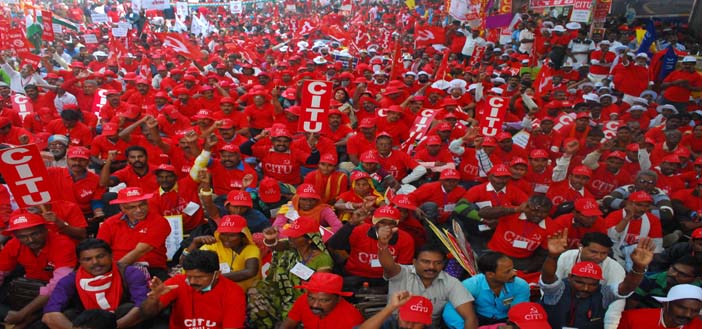
NEW DELHI: They came in the thousands. They came from all over India. They came to demand their rights. They were in Delhi for three days.
They were the workers of India, the mazdoors, the oppressed labour. Amongst them were hundreds of women, as vocal, as aware of their rights as the men. They came in protest against the anti-
worker policies of the current government, to raise an united voice, to demand their rights.
They were blacked out by the big media. Not a word appeared on television channels, in the major newspapers, about this huge protest in the heart of the national capital. It was as if it did not happen where the media was concerned, redefining news in its desire to please the corporate and political bosses.
Is this not news:
The workers come in the way of this corporate-political nexus. This is the first reason why the huge rally that continued for three days, with the workers drawn from all segments of life—industrial, agrarian, mining—giving an insight into the India that seems to have been factored out of the headlines of the corporate driven media. Both suspicious and fearful of the organised trade union movement, with the massive mobilisation by the Left parties in particular, adding to the rich and powerful paranoia.
Media houses and corporate houses worked to destroy the trade unions in newspapers through the 19980-1990’s to ensure that the press workers and the working journalists were contained and controlled. Television ensured a crippling blow with contracts favouring the management replacing the daily wage board pay scales. And as the trade unions disappeared one by one in the newspaper industry , the management control over the workers intensified, with even editors now hired and fired at will with merit and capability hardly being the qualification.
Second, the workers are seen as anti-employers. Their demands thus increase the pressure on the business houses, and the governments that are resistant to conceding what the poor of India need and want. For instance on the last day Parliament street had turned into a sea of women asking for better wages, health and education care, all pretty low on the list of those who are in government and those who control government. Hence the media, that works under the employers, decided not to give space to over a lakh of workers and their demands.As pressure makes the ‘employers’ uncomfortable and thus is has become the duty of the owned and subservient media to ensure that comfort levels are not damaged.
Wages was a major issue. No revision of wages, low wages, undue cut of wages, and various methods used to ensure that the workers do not get what is their due.
“Jo hamse takrayega, choor choor ho jayega” shouted the workers as their leaders told the handful of reporters who were there representing alternative media that the central employees felt cheated, betrayed, over the 7th Planning Commission. They spoke of how work had increased manifold, wages had not, as government jobs were not filled and vacancies continued. There has been no wage revisions for instance of postal employees working in the rural areas, no confirmations, no revision. Trade union facilities are being withdrawn instead, and the government-corporate nexus is working in unison to marginalise the workers.
Those who own the newspapers too feel vulnerable against workers unity, and hence are at one with the nexus to black out the poor of India.
Three, workers are India’s toiling masses from coal mines, to anganwadis, to landless labour. They are not the consumer class, and bring no direct benefit to the advertising and TRP linked revenues of the big media. Giving them even a passing mention is thus worthless, as it brings no money and instead for the reasons cited above actually cuts into the revenue with the workers demanding a fair slice of the growth pie. By giving them space the big media does not want to justify or highlight their cause. Somehow the ostrich like approach has replaced conscientious and fair reportage, a belief that if the media ignores an event and buries its head in the sand, it will pass.
But as the workers said without hesitation, they have no respect left for the media. “Who cares whether they report or do not, your reporters are just bought by big money,” a woman from ASHA said smiling through the apparent belligerence. There was not a single voice that spoke of the media with any level of regret saying instead, “why should we bother, you are not going to write about us here or in our work place, you are not interested but the people’s voice cannot be stopped. A trade union leader pointed out, “we were here a few years ago, over a lakh of workers right outside Parliament but your media did not even notice us.”
From The CITIZEN
12 Sunday Nov 2017
Posted in Obituary, Tributes, Uncategorized
With extreme sorrow and pain, it is intimated that Com.Mustafa (37), BSNL contract labour from Bidar, Karnataka, who had come to Delhi to attend the Maha Dharna called by the central trade Unions, passed away due to heart attack at the New Delhi railway station at about 2000 hours on 11th November 2017. He was to return after participating in the Dharna.
BSNLEU and BSNLCCWF leaders at New Delhi are making all arrangements for taking the body to his native place.
We convey our deep sorrow and heartfelt condolences to the bereaved family, friends and comrades!
11 Saturday Nov 2017
Posted in BSNL
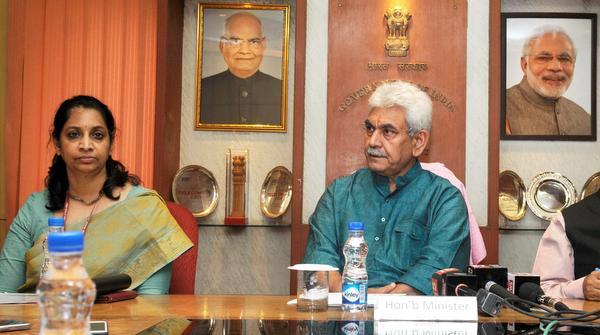
The Press Report released by Communications ministry is given below. According to this, the Government will finalize the New Telecom Policy -2018 by February 2018. NTP (1994)and NTP (1999)have both granted increased favours to the private companies and discriminated BSNL. It is certain that the NTP -2018 will not be different, especially since all the private telcos are demanding for more and more more concessions after the entry of Reliance Jio.
NEW DELHI, NOVEMBER 7:
The Telecom Ministry hopes to finalise the new national telecom policy by February 2018. It is planning to seek public comments by December-end.
Addressing mediapersons here, Telecom Minister Manoj Sinha also said the BharatNet project is going on at a faster pace, and firms such as Airtel, Reliance Jio and Vodafone are ready to provide services to rural areas. Under BharatNet, the Centre plans to provide broadband connectivity to 2.5 lakh gram panchayats (GPs).
“Telecom services providers have come forward for utilising BharatNet connectivity. Airtel has shown interest in 10,000 GPs for taking 1 Gbps connectivity on lease, while Reliance Jio, Vodafone and Idea are interested in taking 100 Mbps connectivity on lease in about 30,000, 2,000 and 1,000 GPs, respectively,” Sinha said.
“The rolling out of services by TSPs in these GPs is expected to trigger the village-level ecosystem, thereby widening the extent to cover more number of GPs in near future. This will give an impetus to broadband facilities in rural India.”
Sinha said that as of November 5, optical fibre cable connectivity has been achieved in 1,03,275 GPs by laying fibre for 2,38,677 km. GPON (Gigabit-capable Passive Optical Networks) equipment have been installed in 85,506 GPs, and 75,082 GPs are services ready.
For asymmetrical bandwidth between blocks and GPs, the charges per annum varies from ₹700 per Mbps for up to 10Mbps to ₹200 per Mbps for 1 Gbps. However, for symmetrical bandwidth between blocks and GPs, annual charges have been prescribed as ₹1,000 per Mbps up to 10Mbps, and ₹500 per Mbps for 100 Mbps. Tariff for any intermediate bandwidth will be calculated on pro-rata basis.
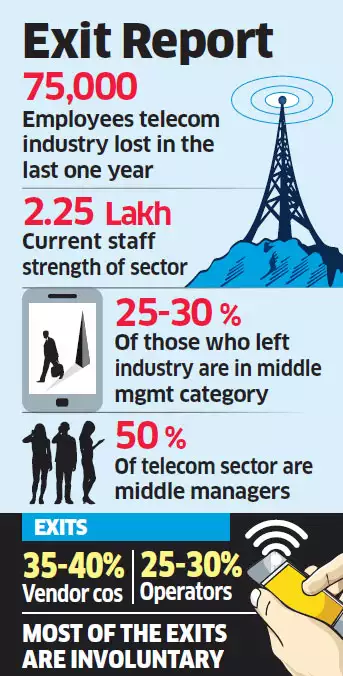 The telecom sector is in crisis after the entry of the Reliance Jio. More than 75,000 jobs have been lost last year. In BSNL, about 10,000 workers are retiring every year year with out any filling up of the posts. Government is not at all worried. Fresh Recruitment in BSNL has become an immediate task.
 VAN Namboodiri's Blog